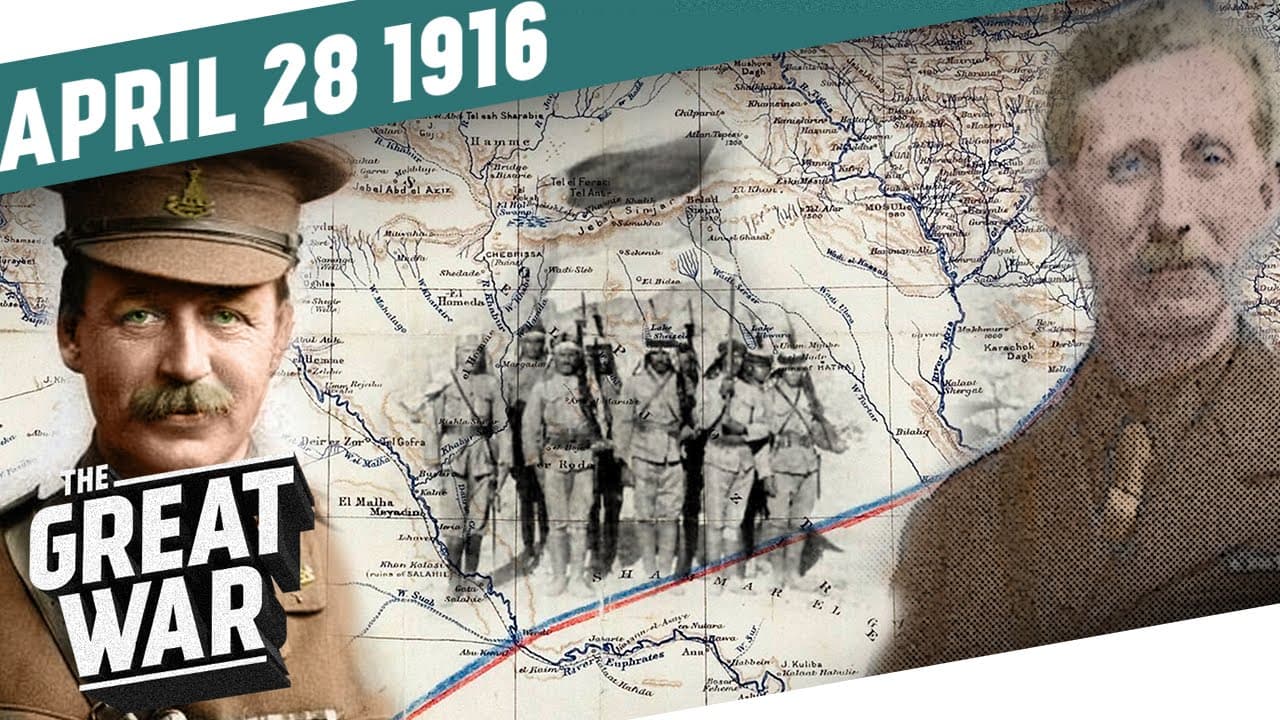
Dividing Up The Middle East - The Sykes-Picot Agreement I THE GREAT WAR Week 92
TL;DR
The Sykes-Picot Agreement divided the Middle East, shaping today's conflicts.
Transcript
This week 100 years ago was the week of the Easter Uprising in Ireland, a pivotal point in Irish history, but that’s not my “hook” today. Instead we made a whole special episode about it so I can look at it a little deeper. But something else happened this week 100 years ago that still has major repercussions today; 100 years ago the Allies were pl... Read More
Key Insights
- The Sykes-Picot Agreement was a secret pact between Britain and France, with Russian approval, to divide the Middle East post-WWI, significantly impacting the region's future conflicts.
- The agreement's borders ignored ethnic and tribal boundaries, leading to long-term instability and conflict in the Middle East, including the Israeli-Palestinian conflict.
- The agreement contradicted British promises to Arabs for a homeland, straining Western-Arab relations and fueling resentment that persists today.
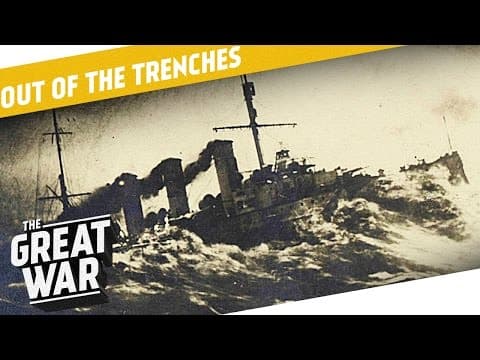
- The British Grand Fleet regained naval superiority over Germany by 1916, despite earlier concerns over German U-Boat successes and fleet deployments to secondary theaters.
- The German navy, seeking prestige, engaged in aggressive actions against Britain, including a battle involving zeppelins and submarines, but faced limitations due to British naval blockades.
- In Mesopotamia, the British attempted to negotiate with Ottoman forces to free besieged troops at Kut, highlighting the ongoing challenges in the region despite the Sykes-Picot Agreement.
- General Sir Archibald Murray led the Egyptian Expeditionary Force in securing the Suez Canal, employing innovative strategies like wire roads and water pipelines to support troop movements in the desert.
- The Easter Uprising in Ireland during the same period had significant implications for British domestic politics and international relations, prompting a dedicated episode for further exploration.
Install to Summarize YouTube Videos and Get Transcripts
Explore YouTube Video Summarizer or Get YouTube Transcript Extractor
Questions & Answers
Q: What was the Sykes-Picot Agreement?
The Sykes-Picot Agreement was a secret 1916 pact between Britain and France, with Russian approval, to divide the Middle East into spheres of influence after World War I. It ignored ethnic and tribal boundaries, creating artificial borders that have led to long-term regional instability and conflict.
Q: How did the Sykes-Picot Agreement affect Western-Arab relations?
The Sykes-Picot Agreement negatively impacted Western-Arab relations by contradicting British promises to Arabs for a homeland in Greater Syria. This betrayal fueled resentment and distrust towards Western powers, contributing to ongoing tensions and conflicts in the Middle East.
Q: What was the state of British naval power in 1916?
By 1916, the British Grand Fleet had regained naval superiority over Germany, aided by the addition of the Italian fleet and the destruction of German raiding cruisers. Despite earlier concerns about German U-Boat successes, the British maintained a significant advantage in Dreadnoughts, battle cruisers, and smaller vessels.
Q: How did the German navy attempt to gain prestige during World War I?
The German navy sought prestige through aggressive actions against Britain, engaging in battles involving zeppelins, submarines, and surface ships. However, these efforts were limited by British naval blockades, which forced German operations to be hit-and-run attacks near their own coastlines.
Q: What challenges did British forces face in Mesopotamia during World War I?
In Mesopotamia, British forces faced significant challenges, including being besieged at Kut. Attempts to negotiate with Ottoman commanders for the release of troops were unsuccessful, highlighting the ongoing difficulties in the region despite the strategic plans outlined in the Sykes-Picot Agreement.
Q: What was the significance of the Easter Uprising in Ireland?
The Easter Uprising in Ireland in 1916 was a pivotal event with significant implications for British domestic politics and international relations. It highlighted Irish nationalist aspirations and contributed to a broader context of unrest and resistance within the British Empire during World War I.
Q: What innovative strategies did the British use in the Suez Canal region?
In the Suez Canal region, British forces employed innovative strategies such as wire roads and water pipelines to support troop movements in the desert. These measures ensured a steady supply of water and facilitated transportation, allowing the British to maintain control and disrupt potential Turkish advances.
Q: How did the Sykes-Picot Agreement influence future Middle Eastern conflicts?
The Sykes-Picot Agreement's arbitrary borders ignored ethnic and tribal divisions, contributing to long-term instability and conflict in the Middle East. It played a role in shaping the Israeli-Palestinian conflict and other regional disputes, as well as fueling resentment towards Western intervention in Arab affairs.
Summary & Key Takeaways
-
The Sykes-Picot Agreement of 1916 was a secret plan between Britain and France, with Russia's approval, to divide the Middle East after World War I. This agreement disregarded ethnic and tribal boundaries, creating artificial borders that have contributed to ongoing conflicts in the region.
-
Despite earlier concerns about German naval power, the British Grand Fleet regained superiority by 1916, aided by the addition of the Italian fleet and the destruction of German raiding cruisers. German naval actions were aggressive but limited by British blockades.
-
In Mesopotamia, British forces attempted to negotiate with Ottoman commanders to free besieged troops at Kut. Meanwhile, the Easter Uprising in Ireland posed domestic challenges for Britain, prompting a special episode to explore its global ramifications.
Read in Other Languages (beta)
Share This Summary 📚
Summarize YouTube Videos and Get Video Transcripts with 1-Click
Try YouTube Summary with ChatGPT & Claude or YouTube Transcript Generator
Explore More Summaries from The Great War 📚
Summarize YouTube Videos and Get Video Transcripts with 1-Click
Try YouTube Summary with ChatGPT & Claude or YouTube Transcript Generator