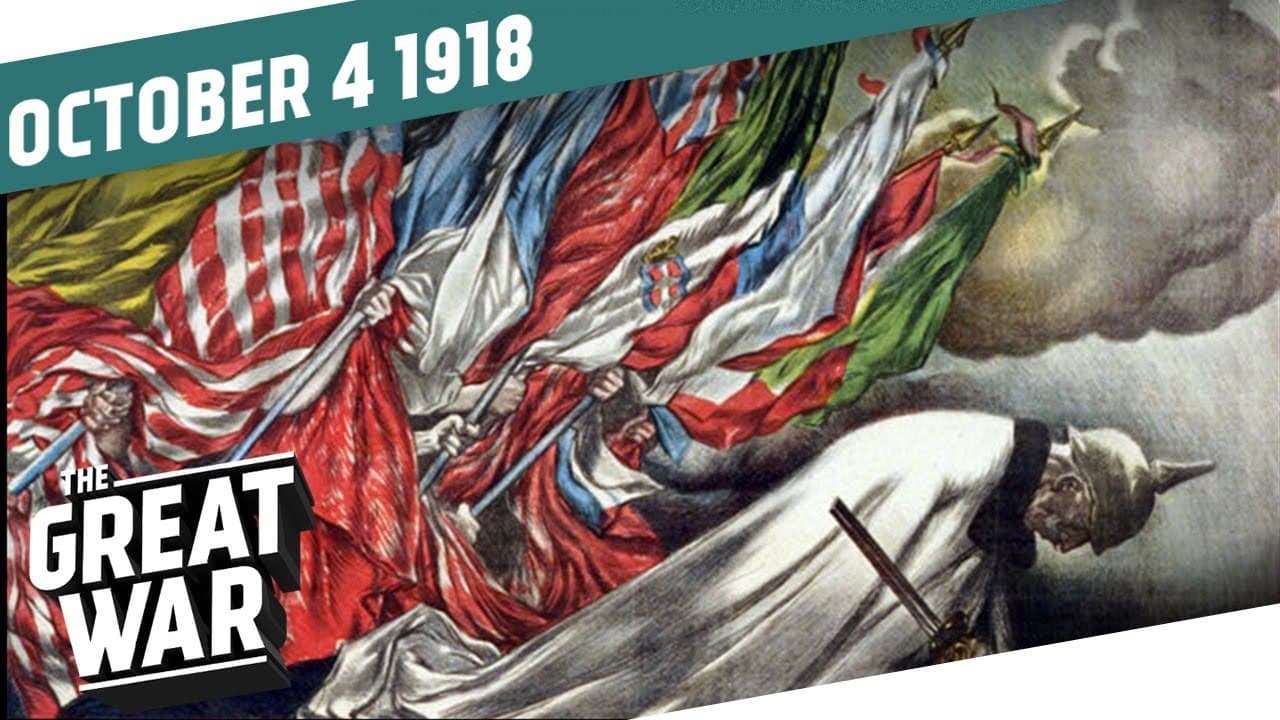
Germany's Reckoning - Bulgarian Armistice I THE GREAT WAR Week 219
TL;DR
Bulgaria exits the war while Allies breach the Hindenburg Line.
Transcript
The Allies had lost a major player in this war, Russia, and the Serbian lands had been overrun, but the four Central Powers had held fast. Until this week, for this week Bulgaria leaves the war. I’m Indy Neidell; welcome to the Great War. Last week the Allied routs on the Palestine and Macedonian fronts continued, while on the Western Front two new... Read More
Key Insights
- Bulgaria signed the Armistice of Salonika, becoming the first of the Central Powers to exit the war, significantly impacting the Central Power's strategic position.
- The Allies launched multiple offensives on the Western Front, with one breaking through the formidable Hindenburg Line, marking a significant turning point in the war.
- The German High Command, recognizing the deteriorating situation, sought an armistice, prompting a political shift towards a parliamentary regime in Germany.
- The German leadership, facing immense pressure, initiated a 'revolution from above' to democratize the government and potentially secure a more favorable negotiation position.
- The collapse of the Macedonian Front and the subsequent withdrawal of Bulgaria opened the southern approach to Austria, further weakening the Central Powers' strategic hold.
- In Palestine, British forces, in conjunction with the Arab Revolt, successfully captured Damascus, ending centuries of Ottoman rule in the region.
- The German army, although strategically retreating, still posed a formidable defense, particularly in the Argonne, where American forces faced logistical challenges.
- The appointment of Prince Max von Baden as Chancellor marked a significant political change in Germany, though his noble status led the Allies to view it as insufficient for genuine change.
Install to Summarize YouTube Videos and Get Transcripts
Explore YouTube Video Summarizer or Get YouTube Transcript Extractor
Questions & Answers
Q: What was the significance of Bulgaria signing the Armistice of Salonika?
Bulgaria signing the Armistice of Salonika was significant as it marked the first exit of a Central Power from World War I. This development weakened the Central Powers' strategic position, particularly in the Balkans, and opened the southern approach to Austria, allowing the Allies to advance further into Central Europe.
Q: How did the Allies manage to break the Hindenburg Line?
The Allies managed to break the Hindenburg Line through a combination of strategic planning and sheer determination. The British 4th Army, supported by artillery and tanks, launched a well-coordinated assault, exploiting weaknesses in the German defenses. This breach was a major military achievement, significantly impacting the course of the war.
Q: What prompted the German High Command to seek an armistice?
The German High Command sought an armistice due to the deteriorating military situation, including the breach of the Hindenburg Line and Bulgaria's exit from the war. These developments, coupled with internal political unrest and the realization that the war was unsustainable, forced German leaders to pursue peace negotiations.
Q: What was the 'revolution from above' initiated by Germany?
The 'revolution from above' was a political shift initiated by the German leadership to transition towards a parliamentary regime. This change aimed to democratize the government by giving more power to the Reichstag, hoping to present a more favorable image to the Allies and potentially secure better terms in armistice negotiations.
Q: What impact did the capture of Damascus have on the war?
The capture of Damascus by British and Arab forces marked the end of centuries of Ottoman rule in the region. This victory was part of a broader campaign that significantly weakened the Ottoman Empire's influence, contributing to the overall decline of the Central Powers and altering the geopolitical landscape in the Middle East.
Q: Why was Prince Max von Baden's appointment as Chancellor significant?
Prince Max von Baden's appointment as Chancellor was significant because it represented a shift towards a more democratic government in Germany. However, his noble status led the Allies to view his appointment as insufficient for genuine change, casting doubt on Germany's commitment to political reform and complicating armistice negotiations.
Q: What challenges did American forces face in the Argonne?
American forces in the Argonne faced significant challenges, including logistical issues and strong German defenses. The congestion of supply and communication lines hindered their advance, and despite having a numerical advantage, they struggled to overcome the well-fortified German positions, highlighting the difficulties of warfare in this region.
Q: How did the political changes in Germany affect the Allies' perception?
The political changes in Germany, while significant internally, were perceived by the Allies as insufficient for genuine reform. The appointment of a noble, Prince Max von Baden, as Chancellor suggested continuity rather than change, leading the Allies to remain skeptical of Germany's intentions and complicating the path to peace.
Summary & Key Takeaways
-
This week marked significant developments in World War I as Bulgaria signed the Armistice of Salonika, becoming the first Central Power to exit the war. This change weakened the Central Powers' strategic position and opened the southern approach to Austria.
-
On the Western Front, the Allies launched multiple offensives, with one successfully breaching the Hindenburg Line. This breakthrough was a major feat, signaling a turning point in the war and putting additional pressure on the German High Command.
-
In response to these setbacks, Germany initiated a political shift towards a parliamentary regime, seeking an armistice. The capture of Damascus by British and Arab forces ended Ottoman rule in the region, further diminishing the Central Powers' influence.
Read in Other Languages (beta)
Share This Summary 📚
Summarize YouTube Videos and Get Video Transcripts with 1-Click
Try YouTube Summary with ChatGPT & Claude or YouTube Transcript Generator
Explore More Summaries from The Great War 📚

Summarize YouTube Videos and Get Video Transcripts with 1-Click
Try YouTube Summary with ChatGPT & Claude or YouTube Transcript Generator