The Physics of Roller Coasters
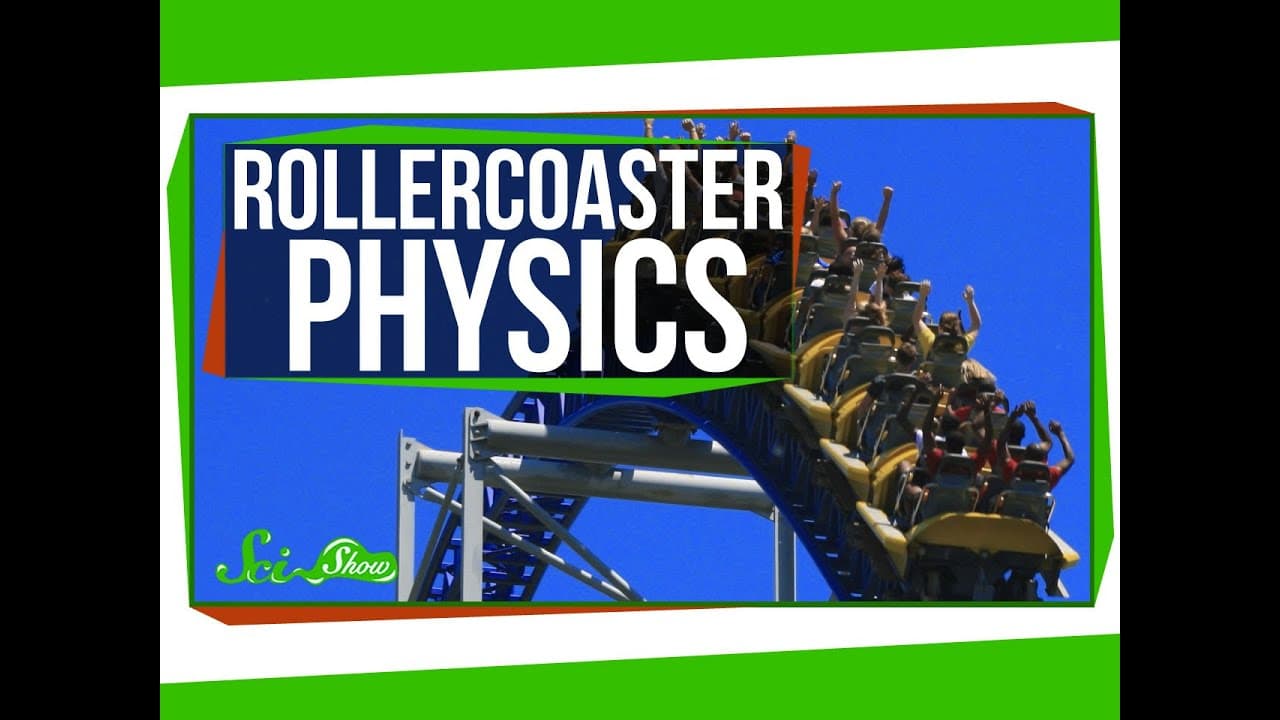
TL;DR
Roller coasters use hydraulics and physics principles like incompressibility of liquids and frictionless brakes to create thrilling and safe rides.
Transcript
Imagine being strapped into a big chunk of metal raised over a hundred twenty meters into the sky and then dropped whizzing over hills and even looping upside down. When you put it that way roller coasters can seem a little terrifying but they're also exhilarating and involve some really interesting physics make all those speedy gut dropping thrill... Read More
Key Insights
- 🎢 Roller coasters use hydraulic launch systems to rapidly propel the train forward, utilizing the incompressibility of hydraulic fluid and the increase in pressure.
- 🎢 During freefall on a roller coaster, riders experience a weightless sensation due to the absence of any supporting force.
- 🎢 Frictionless brakes in roller coasters utilize magnetic fields and eddy currents to convert kinetic energy into heat energy and bring the train to a stop.
- 🎢 Roller coasters require robust design and strict safety measures to ensure the safety of riders during high-speed maneuvers.
- 🎢 Understanding the physics behind roller coasters can enhance appreciation for the thrill and engineering involved in creating these amusement park attractions.
- 🎢 The use of hydraulic launch systems allows roller coasters to achieve rapid acceleration and exhilarating thrills.
- 🫢 Incompressibility of hydraulic fluid and the compression of nitrogen gas contribute to the functioning of hydraulic launch systems.
Install to Summarize YouTube Videos and Get Transcripts
Explore YouTube Video Summarizer or Get YouTube Transcript Extractor
Questions & Answers
Q: How do hydraulic launch systems work in roller coasters?
Hydraulic launch systems work by using a cable attached to a catch-car and a winch. The hydraulic fluid in the system increases pressure, and when a valve is opened, the hydraulic fluid rushes out to power the winch, accelerating the train.
Q: Why do riders experience a weightless sensation during freefall on a roller coaster?
Riders experience a weightless sensation during freefall because they are not being supported by anything, and gravity is the only force acting on their bodies.
Q: What are frictionless brakes in roller coasters?
Frictionless brakes in roller coasters rely on magnetic fields and eddy currents. As the metal fins on the train pass through the magnetic field, it induces an eddy current, dissipating the kinetic energy of the train as heat and eventually bringing it to a stop.
Q: How do roller coasters ensure the safety of riders during high-speed maneuvers?
Roller coasters ensure rider safety through various mechanisms, such as sturdy structural design, harnesses or restraints, and rigorous safety inspections and protocols.
Summary & Key Takeaways
-
Roller coasters use hydraulic launch systems, which use a cable attached to a catch-car and winch, to rapidly propel the train forward.
-
The hydraulic launch system utilizes incompressibility of hydraulic fluid to increase pressure and accelerate the train.
-
During freefall, riders experience a weightless sensation due to the absence of any force pushing upward on their bodies.
-
Some roller coasters use frictionless brakes that employ magnetic fields and eddy currents to convert kinetic energy into heat energy and stop the train.
Read in Other Languages (beta)
Share This Summary 📚
Summarize YouTube Videos and Get Video Transcripts with 1-Click
Try YouTube Summary with ChatGPT & Claude or YouTube Transcript Generator
Explore More Summaries from SciShow 📚






Summarize YouTube Videos and Get Video Transcripts with 1-Click
Try YouTube Summary with ChatGPT & Claude or YouTube Transcript Generator