Shark Weapons
TL;DR
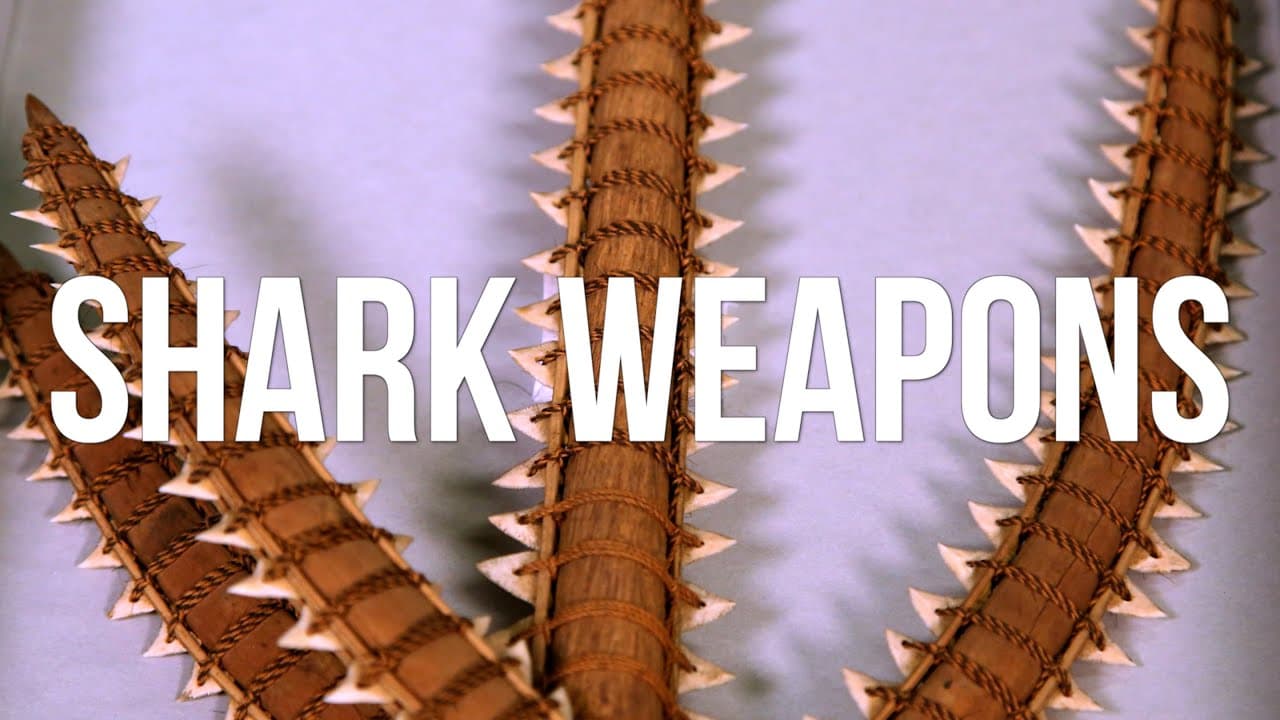
Field Museum biologists analyze weaponry studded with shark teeth to uncover the historical distribution of Central Pacific sharks.
Transcript
Here’s a question for you: if we have no written record to where a species may have been found over time, what sort of evidence can we look for in order to determine where it may have once lived? I bet “weaponry” wasn’t the first thing that came to mind, but, sure enough, that’s exactly what Field Museum biologists and anthropologists use to collab... Read More
Key Insights
- 🦈 Field Museum biologists use weaponry studded with shark teeth to study the historical distribution of Central Pacific sharks.
- 🦷 Shark teeth have unique identifying markers that help determine the species they came from.
- 🦷 Six shark species remain in Kiribati today, while teeth from two other species have not been found in modern surveys.
- 🦈 Possible reasons for the disappearance of certain shark species include trading, overfishing, and changes in ocean temperatures.
- 🤨 Museum collections like the one at Field Museum offer unexpected insights into the past and raise new questions.
- 🦷 The people of Kiribati used coconut fibers, human hair, and blowfish for protection against shark-tooth weaponry.
- 🦷 The weaponry studded with shark teeth exhibits a wide variety in design, showcasing creativity and innovation.
Install to Summarize YouTube Videos and Get Transcripts
Explore YouTube Video Summarizer or Get YouTube Transcript Extractor
Questions & Answers
Q: How do Field Museum biologists determine the distribution of Central Pacific sharks from historical times?
Field Museum biologists use weaponry studded with shark teeth from their anthropology collection to identify shark species and determine their historical distribution. The unique identifying markers on shark teeth allow them to determine the specific species.
Q: What are the possible reasons for the disappearance of certain shark species in Kiribati?
There are several possible reasons for the disappearance of certain shark species. One possibility is that the people of Kiribati obtained teeth from neighboring islands, travelers, or whalers. Overfishing and changes in global climate leading to fluctuating ocean temperatures could also be contributing factors.
Q: How did the people of Kiribati protect themselves against shark-tooth weaponry?
The people of Kiribati used the abundant resources available to them for protection. They made armor out of coconut fibers and human hair, and would wear blowfish as an armored helmet.
Q: What is the variety seen in the weaponry studded with shark teeth?
The weaponry studded with shark teeth in the Field Museum's collection displays a diverse range of designs. Some have single shafts with multiple rows of teeth, while others have distinct prong formations. Some weapons even reach heights of 25 feet.
Summary & Key Takeaways
-
Field Museum's anthropology collection contains 123 weapons from Kiribati, studded with shark teeth, providing evidence of the historical distribution of Central Pacific sharks.
-
Marine conservation biologist Joshua Drew identified teeth from eight different shark species, with only six species still found in Kiribati today.
-
Possible factors contributing to the disappearance of certain shark species include trading, overfishing, and fluctuating ocean temperatures.
Read in Other Languages (beta)
Share This Summary 📚
Summarize YouTube Videos and Get Video Transcripts with 1-Click
Try YouTube Summary with ChatGPT & Claude or YouTube Transcript Generator
Explore More Summaries from thebrainscoop 📚






Summarize YouTube Videos and Get Video Transcripts with 1-Click
Try YouTube Summary with ChatGPT & Claude or YouTube Transcript Generator