How Adaptive Constraints Enhance Motor Learning
TL;DR
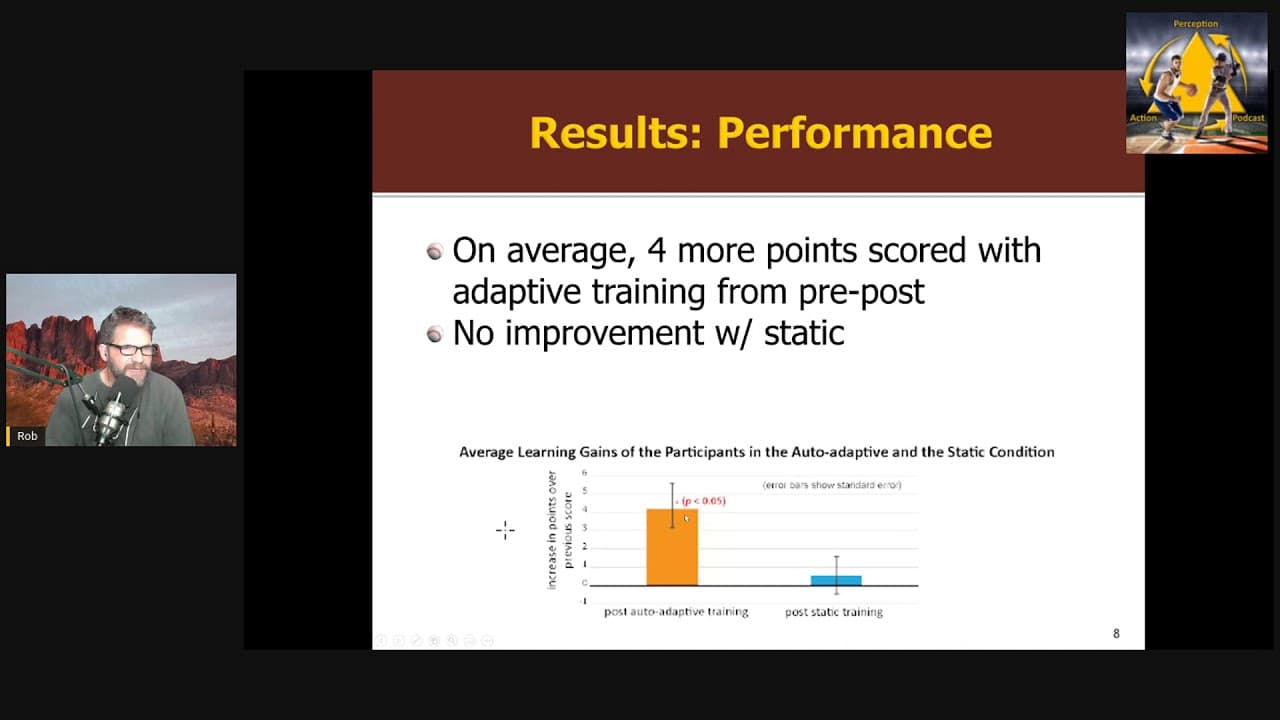
Adaptive constraints in training can significantly enhance motor learning by maintaining an optimal level of challenge. This approach adjusts task difficulty based on performance, preventing tasks from becoming too easy or too difficult. A study showed that adaptive training led to greater improvements in basketball shooting skills compared to static or self-adjusted training methods.
Transcript
hi everyone this is rob gray from asu in the perception action podcast back with another article review today i want to look at constraints an issue of how to go about changing them when you're manipulating them in a practice or learning design so it's well documented that changing constraints can have you know aid motor learning and skill acquisit... Read More
Key Insights
- Adaptive constraints adjust task difficulty based on performance to maintain optimal challenge.
- Scaling task constraints aids beginners in skill acquisition by adjusting equipment size or task conditions.
- Adaptive training maintains a challenge level that prevents tasks from being too easy or too difficult.
- A study on basketball shooting showed adaptive training improved performance more than static training.
- Participants in adaptive training experienced a significant performance increase compared to static training.
- Self-adjusted training did not maintain optimal challenge levels, leading to less effective learning.
- Adaptive methods can use algorithms or simple rules like 'win shift, lose stay' for constraint adjustments.
- Learners often lack intuition on optimal difficulty levels, highlighting the need for guided adaptive training.
Install to Summarize YouTube Videos and Get Transcripts
Explore YouTube Video Summarizer or Get YouTube Transcript Extractor
Questions & Answers
Q: How do adaptive constraints enhance motor learning?
Adaptive constraints enhance motor learning by adjusting the difficulty of tasks based on the learner's performance. This ensures the challenge remains at an optimal level, preventing tasks from becoming too easy or too difficult. By maintaining this balance, learners can progress more effectively, as seen in studies where adaptive training led to significant improvements in skills like basketball shooting.
Q: What are examples of adaptive constraints in training?
Examples of adaptive constraints in training include adjusting the size of sports equipment or modifying task conditions based on performance. For instance, using adjustable basketball hoops that change height and rim diameter based on the player's success rate ensures the challenge remains optimal, promoting better motor learning outcomes compared to static or self-regulated methods.
Q: Why is maintaining an optimal challenge level important in training?
Maintaining an optimal challenge level in training is crucial because it ensures tasks are neither too easy nor too difficult, facilitating effective learning. This balance helps learners stay engaged and motivated, leading to better skill acquisition. Studies have shown that adaptive training, which adjusts difficulty based on performance, results in greater improvements in motor skills compared to static training methods.
Q: How does adaptive training compare to static training?
Adaptive training outperforms static training by continuously adjusting task difficulty based on the learner's performance, ensuring an optimal challenge level. In a study on basketball shooting, participants using adaptive training showed significant performance improvements, while those in static training did not. This highlights the effectiveness of adaptive methods in promoting motor learning by maintaining appropriate challenge levels.
Q: What challenges do learners face with self-adjusted training?
Learners often struggle with self-adjusted training because they may not have the intuition to maintain optimal challenge levels. Without guidance, they might choose tasks that are too easy or too difficult, hindering effective learning. Studies have shown that adaptive training, which uses performance-based adjustments, leads to better outcomes than self-regulated methods, highlighting the need for guided constraint adjustments.
Q: What is the 'win shift, lose stay' method in adaptive training?
The 'win shift, lose stay' method is a simple adaptive training approach where task difficulty increases after a successful attempt ('win shift') and remains the same after a failure ('lose stay'). This method helps maintain an optimal challenge level, ensuring tasks remain engaging and appropriately difficult, which promotes effective motor learning by preventing tasks from becoming too easy or too hard.
Q: Why might learners not adjust tasks optimally on their own?
Learners might not adjust tasks optimally on their own due to a lack of intuition about appropriate challenge levels. They may choose tasks that are too easy, leading to boredom, or too difficult, causing frustration. This can hinder effective learning. Adaptive training methods, which adjust difficulty based on performance, provide a structured approach that ensures tasks remain challenging yet achievable, enhancing skill acquisition.
Q: What evidence supports the use of adaptive constraints in training?
Evidence supporting adaptive constraints in training includes studies showing significant improvements in motor skills when using adaptive methods compared to static or self-adjusted training. For example, a study on basketball shooting demonstrated that adaptive training led to greater performance gains by maintaining an optimal challenge level. This approach effectively balances task difficulty, fostering better learning outcomes and skill development.
Summary & Key Takeaways
-
Adaptive constraints help maintain an optimal challenge level in motor learning, preventing tasks from becoming too easy or difficult. A study on basketball shooting showed that adaptive training significantly improved performance compared to static training. This method adjusts constraints based on performance, ensuring consistent progress.
-
In a study, participants using adaptive training for basketball shooting improved significantly more than those in static or self-adjusted training. This suggests adaptive constraints effectively maintain optimal challenge levels, enhancing motor skill acquisition.
-
Adaptive training uses performance-based adjustments to keep tasks challenging yet achievable. This approach outperformed static and self-adjusted methods in a study on basketball shooting, demonstrating its effectiveness in promoting motor learning by maintaining an optimal challenge.
Read in Other Languages (beta)
Share This Summary 📚
Summarize YouTube Videos and Get Video Transcripts with 1-Click
Try YouTube Summary with ChatGPT & Claude or YouTube Transcript Generator
Explore More Summaries from Rob Gray 📚
Summarize YouTube Videos and Get Video Transcripts with 1-Click
Try YouTube Summary with ChatGPT & Claude or YouTube Transcript Generator