The British Surrender At Kut - Germany Restricts The U-Boats I THE GREAT WAR - Week 93
TL;DR
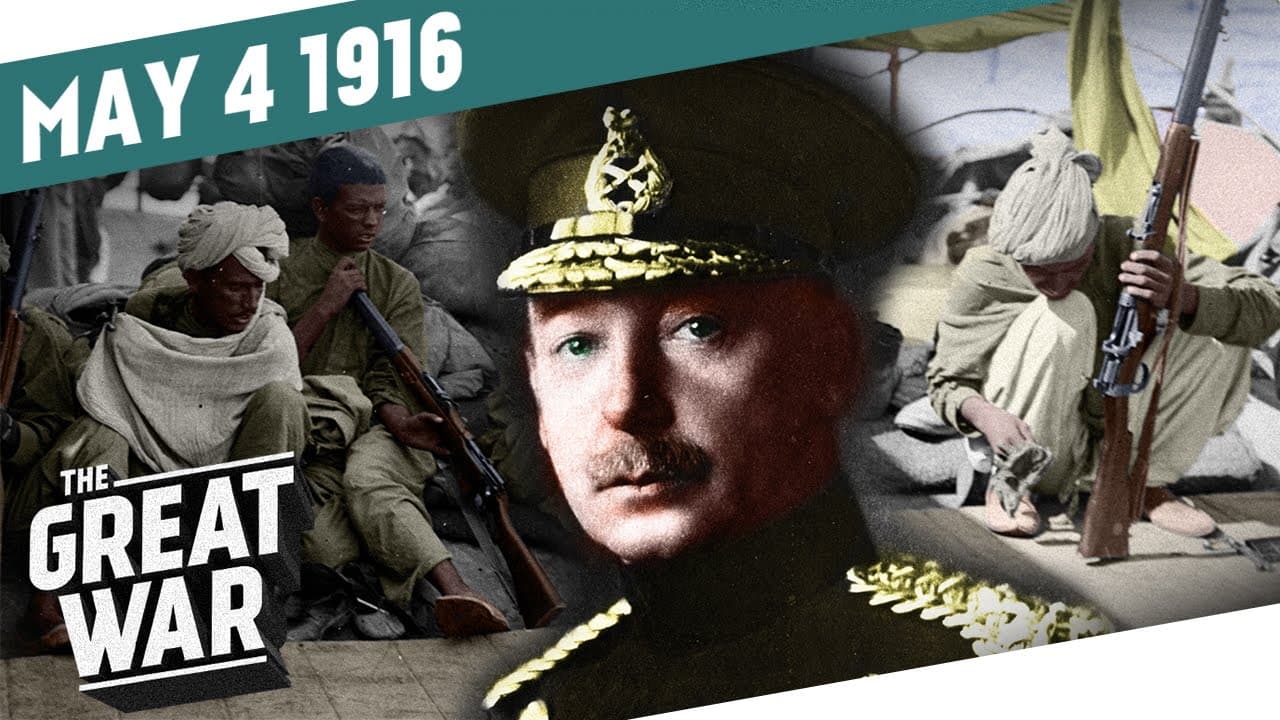
The British and Indian army at Kut surrenders to the Ottoman Empire.
Transcript
For over 140 days they’ve stood out, but now they can no longer. This week the British and Indian army at Kut surrenders to the Ottoman Empire. I’m Indy Neidell; welcome to the Great War. Last week saw naval action off the English coast though the European fronts were mostly quiet because of rains and floods, but in the Middle East the British posi... Read More
Key Insights
- The British and Indian army's surrender at Kut was a significant defeat, with more men captured than at Yorktown, marking a major victory for the Ottoman Empire.
- The Siege of Kut lasted over 140 days, with British forces suffering from starvation and disease, leading to a massive surrender.
- The Italian Front saw increased activity as Luigi Cadorna planned a new offensive, focusing on the Isonzo River with enhanced forces and strategies.
- General Luigi Capello's strategic planning involved detailed reconnaissance and improved communication between artillery and infantry, aiming to overcome previous battle challenges.
- The German artillery assault on Cote 304 at Verdun was intense, with heavy bombardment and close combat, ultimately leading to German control of the strategic position.
- The Sussex Pledge marked Germany's temporary halt to unrestricted submarine warfare, influenced by diplomatic pressure from the United States.
- German censorship during the war kept the public largely unaware of the civilian casualties caused by U-boat campaigns, maintaining support for aggressive naval tactics.
- The German gas attacks on the Western Front were devastating, affecting both soldiers and animals over a wide area, demonstrating the brutal nature of chemical warfare.
Install to Summarize YouTube Videos and Get Transcripts
Explore YouTube Video Summarizer or Get YouTube Transcript Extractor
Questions & Answers
Q: What was the significance of the British surrender at Kut?
The British surrender at Kut was significant because it marked one of the largest capitulations in British military history, with over 9,000 troops, including British and Indian soldiers, captured by the Ottoman Empire. This defeat was a major blow to British prestige and morale, especially following the recent failure at Gallipoli.
Q: How did Luigi Cadorna plan to improve the Italian offensive strategy?
Luigi Cadorna planned to improve the Italian offensive strategy by enhancing the size and capabilities of the forces along the Isonzo River. He focused on detailed reconnaissance, better communication between artillery and infantry, and creating a mobile response force to address the exhaustion of troops after initial successes. This approach aimed to overcome previous strategic challenges.
Q: What were the conditions like for the troops at the Siege of Kut?
The conditions for the troops at the Siege of Kut were dire, with starvation and disease rampant among the besieged forces. The troops were suffering from dysentery, beriberi, scurvy, malaria, and enteritis, with no adequate medical supplies or transport. The surrender followed months of hardship and a lack of successful relief efforts.
Q: What was the outcome of the German assault on Cote 304 at Verdun?
The German assault on Cote 304 at Verdun resulted in the capture of the strategic position after intense artillery bombardment and close combat. The assault was part of the larger Battle of Verdun, and the capture of Cote 304 marked a significant breakthrough in the French Line of Resistance, setting the stage for further German advances.
Q: What was the Sussex Pledge, and why was it significant?
The Sussex Pledge was Germany's commitment to halt unrestricted submarine warfare, specifically agreeing not to sink merchant vessels without warning and ensuring the safety of passengers and crew. This pledge was significant as it was a response to diplomatic pressure from the United States, aiming to prevent further escalation and maintain diplomatic relations.
Q: How did German censorship affect public perception of the U-boat campaign?
German censorship during the war presented the U-boat campaign in boastful terms, largely omitting the civilian casualties and non-combatant deaths caused by submarine attacks. This selective reporting ensured that the German public remained supportive of the aggressive naval tactics, unaware of the broader humanitarian impact of the campaign.
Q: What were the effects of the German gas attacks on the Western Front?
The German gas attacks on the Western Front had devastating effects, impacting both military personnel and animals over a wide area. The gas spread over 10 kilometers behind British lines, incapacitating over 500 soldiers and killing many, along with numerous animals. This highlighted the brutal and indiscriminate nature of chemical warfare during World War I.
Q: What challenges did the British face in Mesopotamia leading up to the surrender?
In Mesopotamia, the British faced significant challenges, including being undermanned and under-equipped, with no effective supply chain. They were up against well-supplied Ottoman forces with modern weapons. The British troops suffered from severe health issues, such as dysentery and malaria, and lacked adequate medical care, contributing to their eventual surrender at Kut.
Summary & Key Takeaways
-
The British and Indian army's surrender at Kut Al-Amara marked a significant defeat, with over 9,000 troops captured by the Ottoman Empire. This event shocked the British public, coming shortly after the Gallipoli campaign failure.
-
On the Italian Front, Luigi Cadorna orchestrated a new offensive with improved strategies and larger forces, aiming to capture key positions and advance across the Isonzo River. The plan included detailed reconnaissance and better coordination between artillery and infantry.
-
Germany's temporary halt to unrestricted submarine warfare, known as the Sussex Pledge, was influenced by diplomatic pressure from the United States. However, internal divisions within Germany suggested a potential return to aggressive naval tactics in the future.
Read in Other Languages (beta)
Share This Summary 📚
Summarize YouTube Videos and Get Video Transcripts with 1-Click
Try YouTube Summary with ChatGPT & Claude or YouTube Transcript Generator
Explore More Summaries from The Great War 📚

Summarize YouTube Videos and Get Video Transcripts with 1-Click
Try YouTube Summary with ChatGPT & Claude or YouTube Transcript Generator