Soon, Balloons Could Carry You to Space
TL;DR
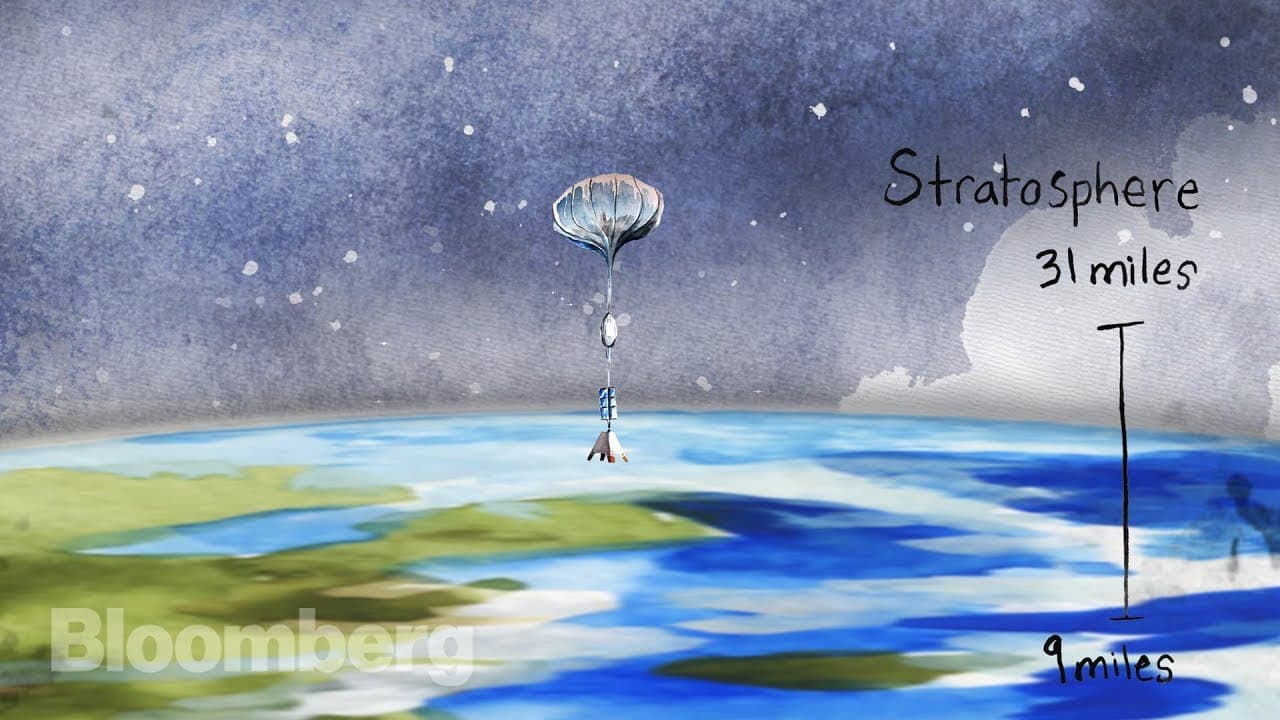
Balloons could revolutionize space travel by offering silent, sustainable access.
Transcript
When it comes to getting into space, well we've been pretty much doing it one way. Each year nearly 300 smaller rockets are used in scientific studies of near space. Rockets have taken animals into space to prepare for the day when man himself will make the trip. But this woman thinks the way we should be getting there is balloons. If you're going ... Read More
Key Insights
- Jane Poynter, CEO of World View Enterprises, envisions using high-altitude balloons to transport people and instruments to the stratosphere, offering a new perspective on space travel.
- The Stratollite, a giant balloon filled with helium, can maintain its position in the stratosphere for extended periods, unlike traditional satellites, allowing for continuous data collection.
- This balloon technology is silent and relies on gravity, offering a unique, environmentally friendly approach to space exploration compared to conventional rockets.
- World View's balloons could transform global connectivity by providing internet access to billions of people currently offline, particularly in remote areas.
- The technology could revolutionize weather forecasting and disaster response, offering improved tracking and communication during severe storms and aiding first responders.
- Poynter's vision for space travel was inspired by her experience in Biosphere 2, where she lived in a sealed dome, fostering a deep connection to Earth's biosphere.
- The ultimate goal is to take people to space, offering them a transformative experience that could change their perspective on Earth and inspire positive action.
- The initiative highlights a shift in space exploration from government-led missions to private enterprises, expanding possibilities for innovation and accessibility.
Install to Summarize YouTube Videos and Get Transcripts
Explore YouTube Video Summarizer or Get YouTube Transcript Extractor
Questions & Answers
Q: How does the Stratollite differ from traditional satellites?
The Stratollite differs from traditional satellites in that it can maintain a stationary position in the stratosphere for extended periods, ranging from days to months. This capability allows for continuous data collection and monitoring, unlike traditional satellites that orbit the Earth. The Stratollite achieves this through a combination of helium-filled balloons and smaller air-filled balloons that act as ballast, allowing it to sail the stratospheric winds and hold its position effectively.
Q: What inspired Jane Poynter's vision for space travel using balloons?
Jane Poynter's vision for space travel using balloons was inspired by her experience in Biosphere 2, where she lived for two years in a sealed dome designed to simulate life in a space colony. This experience gave her a profound appreciation for Earth's biosphere, as she and her fellow inhabitants recycled the same water and air, creating a visceral connection to the environment. This perspective, akin to the experience of astronauts viewing Earth from space, motivated her to develop a way to offer similar transformative experiences to the public.
Q: What are the potential applications of balloon technology in global connectivity?
Balloon technology has the potential to revolutionize global connectivity by providing internet access to billions of people who are currently offline, particularly in remote and underserved areas. By using Stratollites equipped with communication devices, World View Enterprises envisions creating a network that can deliver internet services from the stratosphere. This approach could bridge the digital divide, offering educational, economic, and social opportunities to communities that have been historically isolated from the global digital landscape.
Q: How could balloon technology improve weather forecasting and disaster response?
Balloon technology could significantly enhance weather forecasting and disaster response by providing more accurate and timely data on severe weather events. Stratollites equipped with weather instrumentation can remain in the stratosphere for extended periods, offering continuous monitoring of storms. This capability allows for better tracking of hurricanes and other severe weather, leading to improved warnings and preparation. Additionally, the balloons can provide communication support and real-time imagery to aid first responders during disaster relief efforts, potentially saving lives and reducing damage.
Q: What are the environmental benefits of using balloons for space exploration?
Using balloons for space exploration offers several environmental benefits compared to traditional rocket launches. Balloons operate silently and rely on natural forces like gravity and wind, reducing noise pollution and minimizing the carbon footprint associated with space travel. By eliminating the need for large amounts of fuel and complex propulsion systems, balloon technology presents a more sustainable and eco-friendly approach to accessing space. This method aligns with growing global efforts to reduce environmental impact and promote sustainable technological advancements.
Q: What is the significance of offering space experiences to the public?
Offering space experiences to the public holds significant potential for fostering a deeper appreciation and understanding of Earth's environment. By providing individuals with the opportunity to view Earth from the stratosphere, similar to the experience of astronauts, people may develop a heightened awareness of the planet's fragility and interconnectedness. This perspective shift can inspire individuals to engage in actions that promote environmental conservation and sustainable practices, ultimately contributing to positive global change and a more unified approach to addressing planetary challenges.
Q: How does World View Enterprises' approach differ from traditional space missions?
World View Enterprises' approach to space exploration differs from traditional space missions by focusing on high-altitude balloons rather than rockets. This method emphasizes sustainability, accessibility, and innovation, offering a quieter, less resource-intensive alternative to conventional space travel. Unlike government-led missions that often prioritize large-scale scientific objectives, World View aims to democratize space access, providing transformative experiences to the public and exploring practical applications like global connectivity and disaster response. This shift represents a broader trend of private enterprises leading new frontiers in space exploration.
Q: What challenges might World View face in implementing its balloon-based space travel vision?
Implementing World View's balloon-based space travel vision may involve several challenges, including technical, regulatory, and financial hurdles. Ensuring the safety and reliability of balloon systems for human transport requires rigorous testing and innovation. Navigating airspace regulations and securing permissions for stratospheric operations can be complex, requiring collaboration with national and international aviation authorities. Additionally, developing a viable business model to support large-scale operations and public access may demand significant investment and strategic partnerships. Addressing these challenges will be crucial for realizing the full potential of balloon-based space travel.
Summary & Key Takeaways
-
World View Enterprises, led by Jane Poynter, is pioneering the use of high-altitude balloons to transport instruments and potentially people into the stratosphere, offering a silent and sustainable alternative to rockets.
-
The Stratollite balloon can maintain its position in the stratosphere for days or months, enabling continuous data collection and offering potential applications in global connectivity and disaster response.
-
Inspired by her experience in Biosphere 2, Poynter aims to provide transformative space experiences to the public, fostering a deeper connection to Earth and inspiring positive global change.
Read in Other Languages (beta)
Share This Summary 📚
Summarize YouTube Videos and Get Video Transcripts with 1-Click
Try YouTube Summary with ChatGPT & Claude or YouTube Transcript Generator
Explore More Summaries from Bloomberg Originals 📚



Summarize YouTube Videos and Get Video Transcripts with 1-Click
Try YouTube Summary with ChatGPT & Claude or YouTube Transcript Generator