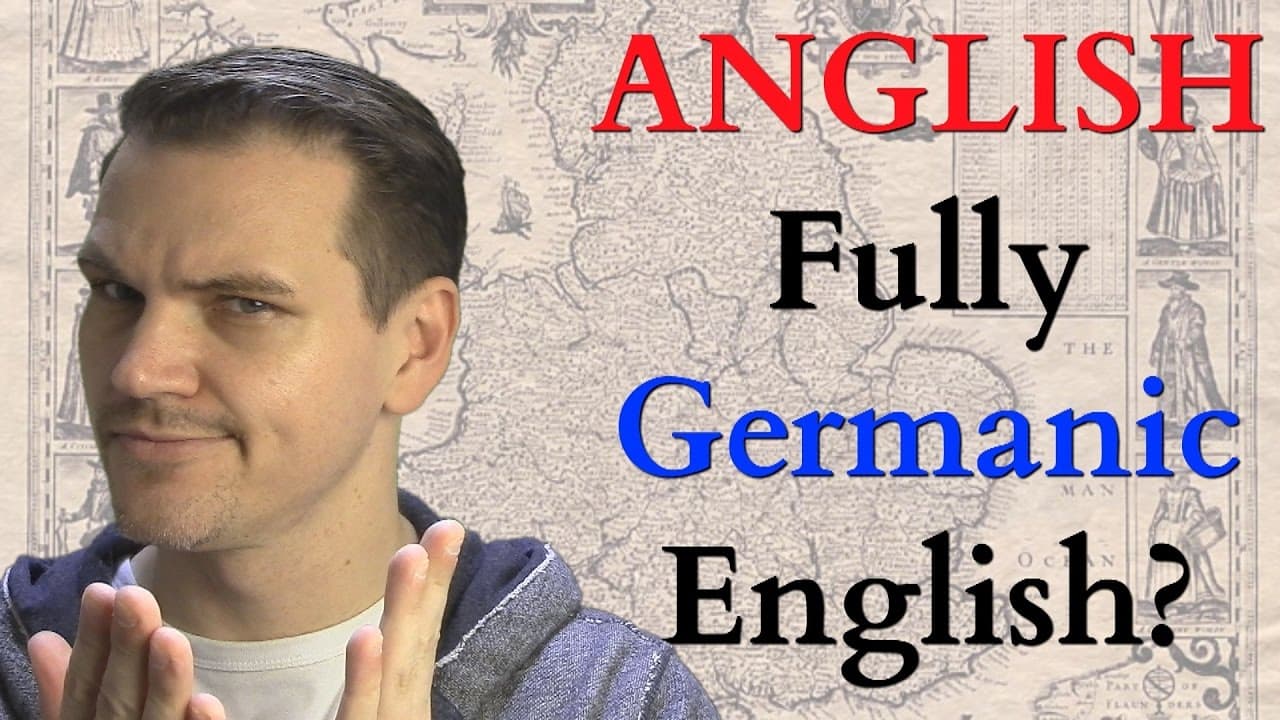
Anglish - What if English Were 100% Germanic?
TL;DR
Anglish is English stripped of non-Germanic influences.
Transcript
Follow Langfocus on Facebook, Twitter and Instagram! Hello everyone. Welcome to the Langfocus channel and my name is Paul. A couple of months back I made a video about whether English is really a Germanic language or not. And I made the rather controversial statement that in a sense, English is a hybrid language because so much of its vocabulary co... Read More
Key Insights
- Anglish is an attempt to create a version of English that is purely Germanic, removing all non-Germanic influences.
- The movement involves replacing Romance words with Germanic equivalents, reviving obsolete words, and creating new words from Germanic roots.
- Examples include using 'bookcraft' for 'literature' and 'forekind' for 'ancestor', showcasing how English can be spoken using only Germanic words.
- Anglish highlights how much English relies on non-Germanic vocabulary, though it demonstrates the possibility of communicating without them.
- The grammar of Anglish remains the same as modern English, requiring only vocabulary substitution to achieve linguistic purity.
- The concept of Anglish raises questions about linguistic purism and whether removing foreign influences is beneficial or detrimental to language development.
- Anglish is not widely adopted but offers an intriguing perspective on the evolution and hybrid nature of the English language.
- The movement provides insight into the historical roots of English and the potential for creating new linguistic forms based on those roots.
Install to Summarize YouTube Videos and Get Transcripts
Explore YouTube Video Summarizer or Get YouTube Transcript Extractor
Questions & Answers
Q: What is Anglish?
Anglish is a linguistic movement that seeks to create a version of English that is purely Germanic by removing all non-Germanic influences. This involves substituting Romance and other foreign words with Germanic equivalents, reviving obsolete words, and creating new words based on Germanic roots.
Q: How does Anglish differ from standard English?
Anglish differs from standard English primarily in its vocabulary. While the grammar remains the same, Anglish replaces non-Germanic words with Germanic ones, revives obsolete terms, and creates new words from Germanic roots. This results in a version of English that is stripped of foreign influences.
Q: What are some examples of words used in Anglish?
Examples of words used in Anglish include 'bookcraft' for 'literature', 'forekind' for 'ancestor', 'rainshade' for 'umbrella', and 'onlook' for 'respect'. These words illustrate how Anglish substitutes Germanic words for their Romance counterparts, emphasizing the movement's focus on linguistic purity.
Q: What is the purpose of the Anglish movement?
The purpose of the Anglish movement is to explore the possibility of an English language that is purely Germanic, free from foreign influences. It aims to highlight the Germanic roots of English and provide an alternative perspective on the language's evolution by emphasizing linguistic purism.
Q: How does Anglish address scientific vocabulary?
Anglish addresses scientific vocabulary by creating new words based on Germanic roots. For example, 'worldken' is used for 'physics', 'firststuffs' for 'elements', and 'waterstuff' for 'hydrogen'. This approach demonstrates the movement's commitment to maintaining linguistic purity even in specialized fields.
Q: What challenges does Anglish face?
Anglish faces challenges in achieving widespread adoption due to the difficulty of replacing well-established non-Germanic words and the need for speakers to learn and use archaic or newly created vocabulary. Additionally, the movement's focus on linguistic purity may not align with the natural evolution of language.
Q: What insights does Anglish provide about the English language?
Anglish provides insights into the hybrid nature of English, highlighting its reliance on non-Germanic vocabulary. It offers a glimpse into the language's historical roots and the potential for creating new linguistic forms. The movement also raises questions about the role of foreign influences in language development.
Q: Is Anglish widely adopted?
Anglish is not widely adopted, as it remains a niche movement within the linguistic community. While it offers an intriguing perspective on the English language, its focus on linguistic purism and the challenges of vocabulary substitution limit its appeal to a broader audience.
Summary & Key Takeaways
-
Anglish is a linguistic movement that aims to create a version of English stripped of all non-Germanic influences, focusing on using Germanic words and roots. This involves replacing Romance words with Germanic equivalents, reviving obsolete words, and creating new words from Germanic roots.
-
The movement showcases examples like 'bookcraft' for 'literature' and 'forekind' for 'ancestor', illustrating how English can be spoken using only Germanic words. Anglish emphasizes the extent to which modern English relies on non-Germanic vocabulary.
-
Anglish raises questions about linguistic purism and the role of foreign influences in language development. While not widely adopted, it offers an intriguing perspective on the evolution of English and highlights the potential for creating new linguistic forms based on historical roots.
Read in Other Languages (beta)
Share This Summary 📚
Summarize YouTube Videos and Get Video Transcripts with 1-Click
Try YouTube Summary with ChatGPT & Claude or YouTube Transcript Generator
Explore More Summaries from Langfocus 📚



Summarize YouTube Videos and Get Video Transcripts with 1-Click
Try YouTube Summary with ChatGPT & Claude or YouTube Transcript Generator