What Sparked the Greco-Turkish Conflict of 1919?
TL;DR
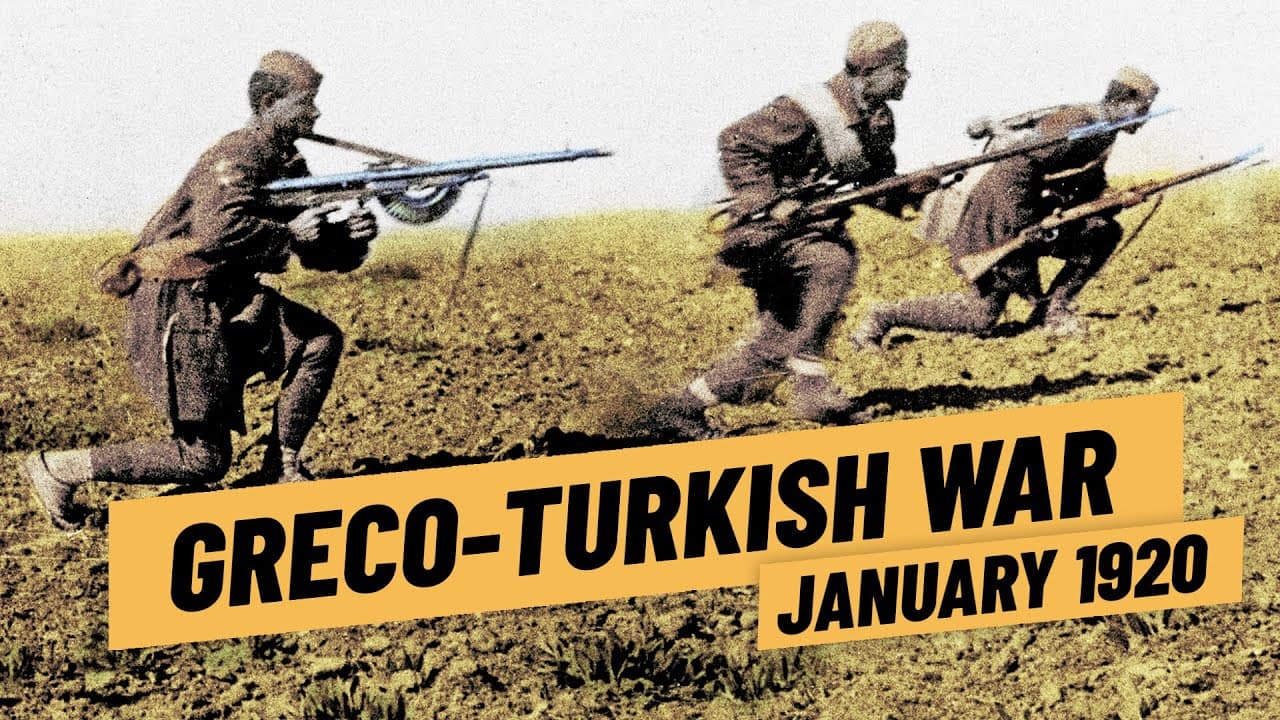
The Greco-Turkish War began after the Armistice of Mudros in 1918, as Greece aimed to expand its territory into areas with Greek populations in Turkey. This ambition was driven by the Megali Idea, which sought a Greater Greece. The conflict was exacerbated by the Allies' indecision and the rise of Turkish nationalism under Mustafa Kemal, leading to the Turkish War of Independence.
Transcript
In late October, 1918, the Armistice of Mudros had brought a stop to the war between the Allies and the Ottoman Empire. But the region was gripped by uncertainty made worse by hunger and the threat of violence between ethnic and religious groups, especially between Muslim Turks and Christian Armenians and Greeks. Although the armistice did not call... Read More
Key Insights
- The Armistice of Mudros ended hostilities between the Allies and the Ottoman Empire but left the region unstable.
- Allied forces occupied strategic areas in the Ottoman Empire, causing resentment among Turks.
- Greece aimed to expand its territory based on historical and ethnic claims, known as the Megali Idea.
- The Paris Peace Conference struggled with the Eastern Question, leading to conflicting Allied interests.
- Greek forces landed in Smyrna in May 1919, leading to violent clashes with Turkish forces.
- Mustafa Kemal emerged as a leader of Turkish nationalism, advocating for independence and territorial integrity.
- The Greek occupation of Smyrna galvanized Turkish resistance, leading to the Turkish War of Independence.
- The Allies were divided and unable to enforce a cohesive policy in the region, leading to further conflict.
Install to Summarize YouTube Videos and Get Transcripts
Explore YouTube Video Summarizer or Get YouTube Transcript Extractor
Questions & Answers
Q: What triggered the Greco-Turkish War in 1919?
The Greco-Turkish War was triggered by Greece's ambitions to expand its territory into areas of Turkey with significant Greek populations, following the Armistice of Mudros in 1918. This expansion was driven by the Megali Idea, a nationalist vision for a Greater Greece. The situation was further complicated by the Allies' conflicting interests and the rise of Turkish nationalism under Mustafa Kemal.
Q: How did the Allies' actions contribute to the conflict?
The Allies' actions contributed to the conflict by occupying strategic areas in the Ottoman Empire, which caused resentment among Turks. The Paris Peace Conference failed to resolve the Eastern Question, with conflicting interests and vague wartime agreements. This indecision and lack of a cohesive policy allowed tensions to escalate, leading to the Greek occupation of Smyrna and the subsequent rise of Turkish nationalism.
Q: What was the Megali Idea and how did it influence Greek actions?
The Megali Idea was a nationalist vision for a Greater Greece, aiming to expand Greek territory to include regions with historical and ethnic ties to Greece, such as parts of Anatolia and the Balkans. This idea influenced Greek actions by motivating the expansion into Turkish territories with Greek populations, such as Smyrna, following the Armistice of Mudros. The pursuit of this vision contributed to the outbreak of the Greco-Turkish War.
Q: How did Mustafa Kemal respond to the Greek occupation?
Mustafa Kemal responded to the Greek occupation by organizing Turkish nationalist forces to resist foreign presence in Anatolia. He aimed to create a new Turkish state with territorial integrity and independence, rallying support through the Amasya Circular and subsequent conferences. His leadership galvanized Turkish resistance, leading to the Turkish War of Independence and ultimately the expulsion of Greek forces.
Q: What role did the Paris Peace Conference play in the conflict?
The Paris Peace Conference played a significant role in the conflict by failing to resolve the Eastern Question and leaving the region in a state of uncertainty. Conflicting Allied interests and vague wartime agreements led to indecision and a lack of a cohesive policy. This allowed tensions to escalate, contributing to the Greek occupation of Smyrna and the rise of Turkish nationalism, which ultimately sparked the Greco-Turkish War.
Q: Why was the Greek occupation of Smyrna controversial?
The Greek occupation of Smyrna was controversial because it was seen as an annexation rather than a peacekeeping mission. The occupation led to violent clashes with Turkish forces and was met with resistance from Turkish nationalists. The Allies were divided on their approach, and the occupation exacerbated tensions in the region, ultimately contributing to the outbreak of the Turkish War of Independence.
Q: What were the key outcomes of the Turkish War of Independence?
The key outcomes of the Turkish War of Independence included the establishment of the Republic of Turkey under Mustafa Kemal's leadership, the expulsion of Greek forces from Anatolia, and the abrogation of the Treaty of Sèvres. The conflict resulted in the recognition of Turkey's territorial integrity and independence, leading to the Treaty of Lausanne in 1923, which defined the modern borders of Turkey.
Q: How did the Allies' indecision impact the region?
The Allies' indecision impacted the region by allowing tensions to escalate and contributing to the outbreak of the Greco-Turkish War. Their failure to resolve the Eastern Question and conflicting interests left a power vacuum in the former Ottoman territories. This indecision allowed Turkish nationalists to organize and resist foreign occupation, ultimately leading to the establishment of the Republic of Turkey and the expulsion of Greek forces.
Summary & Key Takeaways
-
The Armistice of Mudros in 1918 marked the end of conflict between the Allies and the Ottoman Empire but left the region in turmoil. Greece, motivated by the Megali Idea, aimed to expand into territories with Greek populations in Turkey. This ambition was met with resistance from Turkish nationalists led by Mustafa Kemal, sparking the Turkish War of Independence.
-
The Paris Peace Conference struggled to address the Eastern Question, with conflicting Allied interests and promises made during the war. Greek forces landed in Smyrna in May 1919, leading to violent clashes and escalating tensions. Mustafa Kemal's leadership and the rise of Turkish nationalism further complicated the situation.
-
The Greek occupation of Smyrna was intended to maintain order but resulted in violence and resistance from Turkish forces. The Allies were divided on their approach to the region, and their indecision allowed Turkish nationalists to rally and organize, ultimately leading to the Turkish War of Independence.
Read in Other Languages (beta)
Share This Summary 📚
Summarize YouTube Videos and Get Video Transcripts with 1-Click
Try YouTube Summary with ChatGPT & Claude or YouTube Transcript Generator
Explore More Summaries from The Great War 📚
Summarize YouTube Videos and Get Video Transcripts with 1-Click
Try YouTube Summary with ChatGPT & Claude or YouTube Transcript Generator