How This Nation's Controversial Recovery Defied Expectations
TL;DR
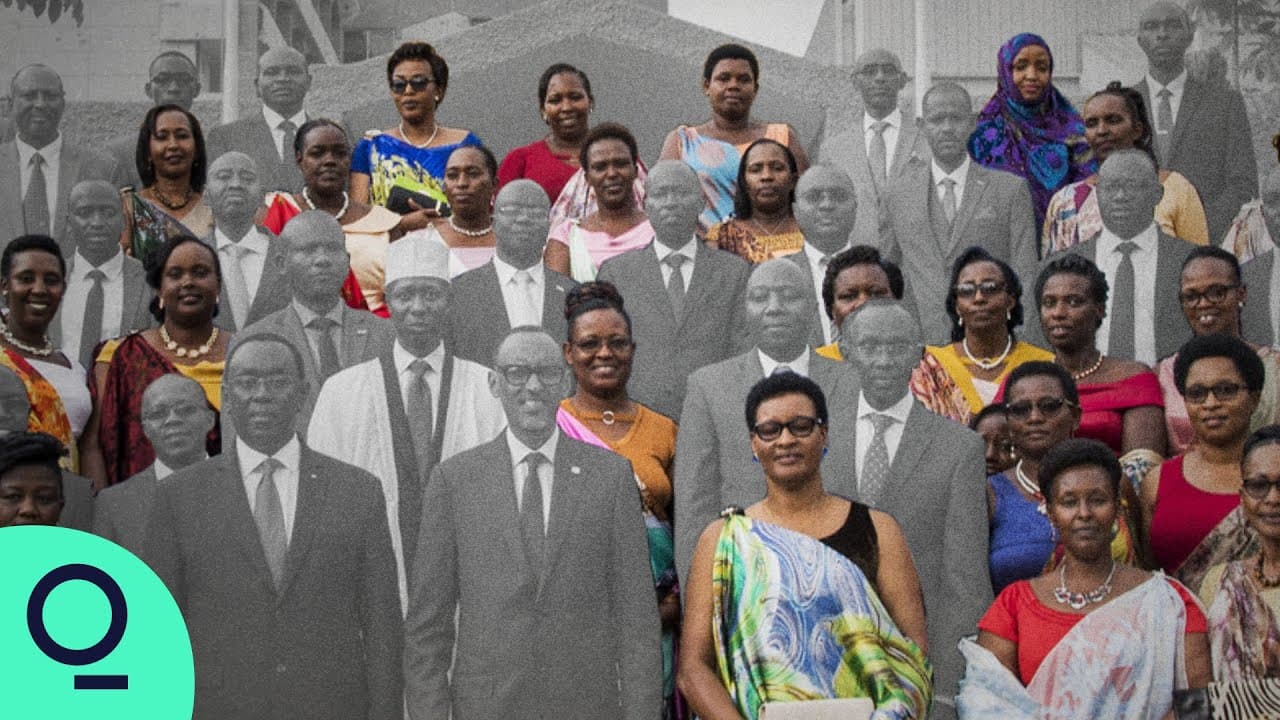
Rwanda's parliament is predominantly female, raising questions about true empowerment under Kagame.
Transcript
These are the faces of women who have come to represent progress. Rwanda has led the world in the levels of women in its parliament, now for over a decade. Nearly two thirds of Rwanda's parliament is made up of women. That's more than twice the global average. Countries that have more women in power tend to have a better outcomes for development. S... Read More
Key Insights
- Rwanda has the highest proportion of women in parliament globally, with nearly two-thirds of seats held by women, which is more than twice the global average.
- The genocide of 1994 was a turning point for women's roles in Rwanda, as they took on new responsibilities in rebuilding the country after the conflict.
- Women's organizations played a crucial role in Rwanda's recovery, forming over 15,400 groups initially focused on trauma support, later evolving into vocational training and businesses.
- Rwanda's Succession Law of 1999 granted women the right to inherit land and property, setting the stage for further gender equality legislation.
- Despite legislative progress, Rwanda faces criticism for its authoritarian governance under President Kagame, with concerns about political dissent and human rights abuses.
- The inclusion of women in politics in Rwanda is seen by some as a strategy by the ruling party to maintain control, with women's seats not affiliated with political parties.
- Rwanda's development progress is attributed to its authoritarian nature, which has ensured stability but limited freedoms and dissent.
- The empowerment of women in Rwanda is complex, with high political representation not necessarily translating to broader societal empowerment or reduced gender-based violence.
Install to Summarize YouTube Videos and Get Transcripts
Explore YouTube Video Summarizer or Get YouTube Transcript Extractor
Questions & Answers
Q: What is the significance of Rwanda's female representation in parliament?
Rwanda's female representation in parliament is significant because it is the highest in the world, with nearly two-thirds of seats held by women. This level of representation is more than twice the global average and has been linked to better outcomes in development, child mortality, and education. It showcases Rwanda's commitment to gender equality post-genocide.
Q: How did the 1994 genocide impact women's roles in Rwanda?
The 1994 genocide drastically altered women's roles in Rwanda. With a significant portion of the male population lost, women had to take on new responsibilities traditionally held by men, such as rebuilding communities, supporting orphans, and leading organizations. This shift was crucial in Rwanda's recovery and led to increased female participation in politics and society.
Q: What role did women's organizations play in Rwanda's recovery?
Women's organizations were pivotal in Rwanda's recovery, forming over 15,400 groups focused on grief, trauma, and support. These organizations evolved into vocational training and profit-making businesses, providing women with leadership opportunities and economic benefits. They also played a key role in advocating for legal reforms, such as the Succession Law, which granted women land inheritance rights.
Q: What is the Succession Law, and why is it important?
The Succession Law, passed in 1999, is crucial because it granted Rwandan women the right to inherit land and property for the first time. This law was a significant step towards gender equality, as it provided women with economic independence and security. It also laid the foundation for further legal reforms to protect women's rights and promote gender equality.
Q: How is Rwanda's governance under President Kagame criticized?
Rwanda's governance under President Kagame is criticized for being authoritarian, with concerns about political dissent and human rights abuses. Freedom House ranks Rwanda as not free, and Human Rights Watch highlights intolerance for dissent. Critics argue that the ruling party uses women's inclusion in politics to maintain control, rather than genuinely empowering them.
Q: What are the criticisms regarding women's empowerment in Rwanda?
Critics argue that Rwanda's high female political representation does not necessarily translate to broader societal empowerment. Despite legislative progress, gender-based violence remains high, and women's economic disenfranchisement persists. Additionally, the ruling party's motives in promoting women are questioned, with concerns about tokenism and political control.
Q: How does Rwanda's authoritarian nature affect its development progress?
Rwanda's authoritarian nature has contributed to its development progress by ensuring stability and preventing a return to violence. This has allowed for improvements in health, education, and longevity. However, it has also limited political freedoms and dissent, creating a complex situation where development gains coexist with restricted rights and liberties.
Q: What lessons can be learned from Rwanda's experience with women's empowerment?
Rwanda's experience shows that increasing women's political representation is just one aspect of empowerment. Genuine empowerment requires a strong women's movement rooted in civil society and efforts to dismantle patriarchal systems. Without these, women in government risk being tokenized, and broader societal changes necessary for gender equality may not occur.
Summary & Key Takeaways
-
Rwanda has achieved a remarkable level of female representation in its parliament, with women holding nearly two-thirds of the seats, a global record. This shift began after the 1994 genocide, as women took on new roles in rebuilding the nation.
-
Women's organizations have been instrumental in Rwanda's recovery, initially focusing on trauma and grief support, and later evolving into vocational training and economic ventures. The 1999 Succession Law further empowered women by granting them land inheritance rights.
-
Despite progress in gender equality, Rwanda's governance under President Kagame is criticized for authoritarian practices, limiting political dissent and human rights. The ruling party's motives in promoting women in politics are questioned, with concerns about genuine empowerment.
Read in Other Languages (beta)
Share This Summary 📚
Summarize YouTube Videos and Get Video Transcripts with 1-Click
Try YouTube Summary with ChatGPT & Claude or YouTube Transcript Generator
Explore More Summaries from Bloomberg Originals 📚






Summarize YouTube Videos and Get Video Transcripts with 1-Click
Try YouTube Summary with ChatGPT & Claude or YouTube Transcript Generator