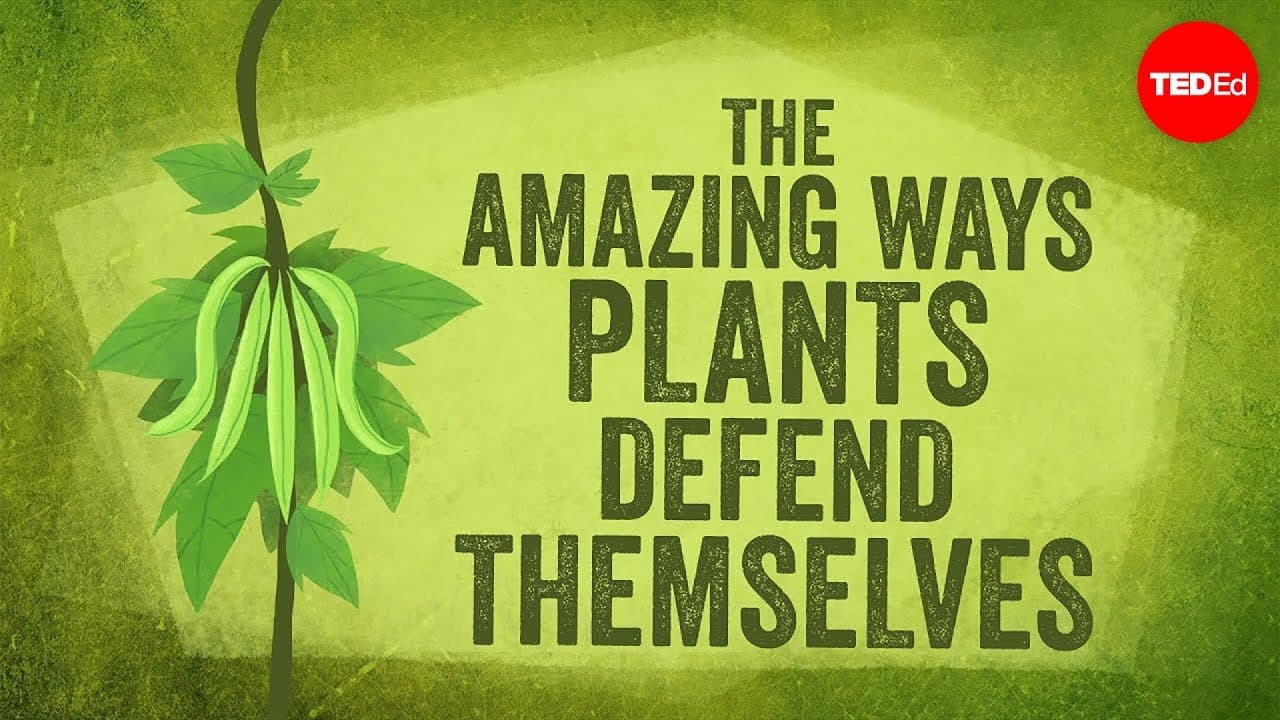
The amazing ways plants defend themselves - Valentin Hammoudi
TL;DR
Plants have intricate defense mechanisms, from physical structures to chemical compounds, to protect themselves from various threats.
Transcript
This is a tomato plant, and this is an aphid slowly killing the tomato plant by sucking the juice out of its leaves. The tomato is putting up a fight using both physical and chemical defenses to repel the attacking insects. But that's not all. The tomato is also releasing compounds that signal nearby tomato plants to release their own insect repell... Read More
Key Insights
- 🌱 Plants employ physical defenses like thorns, prickles, and trichomes to deter herbivores.
- 🦻 Chemical compounds like irritants, toxins, and histamine aid in fending off attackers.
- 🇼🇫 Internal defenses include a robust immune system that strengthens cell walls and produces toxic compounds.
- 🌱 Plants communicate through hormones, airborne compounds, and electrical signals to alert nearby plants of threats.
- 💁 Some plants form alliances with other species for mutual protection against predators.
- 🌱 Plant compounds used in drugs and medicines have evolved as part of their immune systems.
- 🤳 The plant immune response involves thickening cell walls, stronger guard cells, and self-destructing infected cells.
Install to Summarize YouTube Videos and Get Transcripts
Explore YouTube Video Summarizer or Get YouTube Transcript Extractor
Questions & Answers
Q: How do plants use physical defenses to protect themselves?
Plants utilize thorns, spines, and prickles to discourage larger herbivores and trichomes with sharp hair-like structures to deal with smaller pests.
Q: How does a plant's immune system work against pathogens?
Every plant cell can detect invaders through specialized receptors and respond by thickening cell walls, producing toxic compounds, and self-destructing infected cells.
Q: How do plants communicate with each other during an attack?
Plants release hormones, airborne compounds, and electrical signals to alert neighboring plants of an attack, triggering an increase in defensive compound production.
Q: How do plants form alliances with other species for protection?
Plants like cotton release specific chemicals to attract parasitic wasps that lay eggs inside herbivorous insects, forming alliances to combat common predators.
Summary & Key Takeaways
-
Plants use physical defenses like thorns and prickles to deter herbivores and chemical compounds like irritants to fend off insects.
-
Internal defenses include a plant-wide immune system that thickens cell walls, produces toxic compounds, and self-destructs infected cells.
-
Plants can also signal neighboring plants for help against attackers and form alliances with other species for protection.
Read in Other Languages (beta)
Share This Summary 📚
Summarize YouTube Videos and Get Video Transcripts with 1-Click
Try YouTube Summary with ChatGPT & Claude or YouTube Transcript Generator
Explore More Summaries from TED-Ed 📚





Summarize YouTube Videos and Get Video Transcripts with 1-Click
Try YouTube Summary with ChatGPT & Claude or YouTube Transcript Generator