Can Crypto Solve Its Massive Energy Problem?
TL;DR
Cryptocurrency's energy consumption poses significant environmental concerns.
Transcript
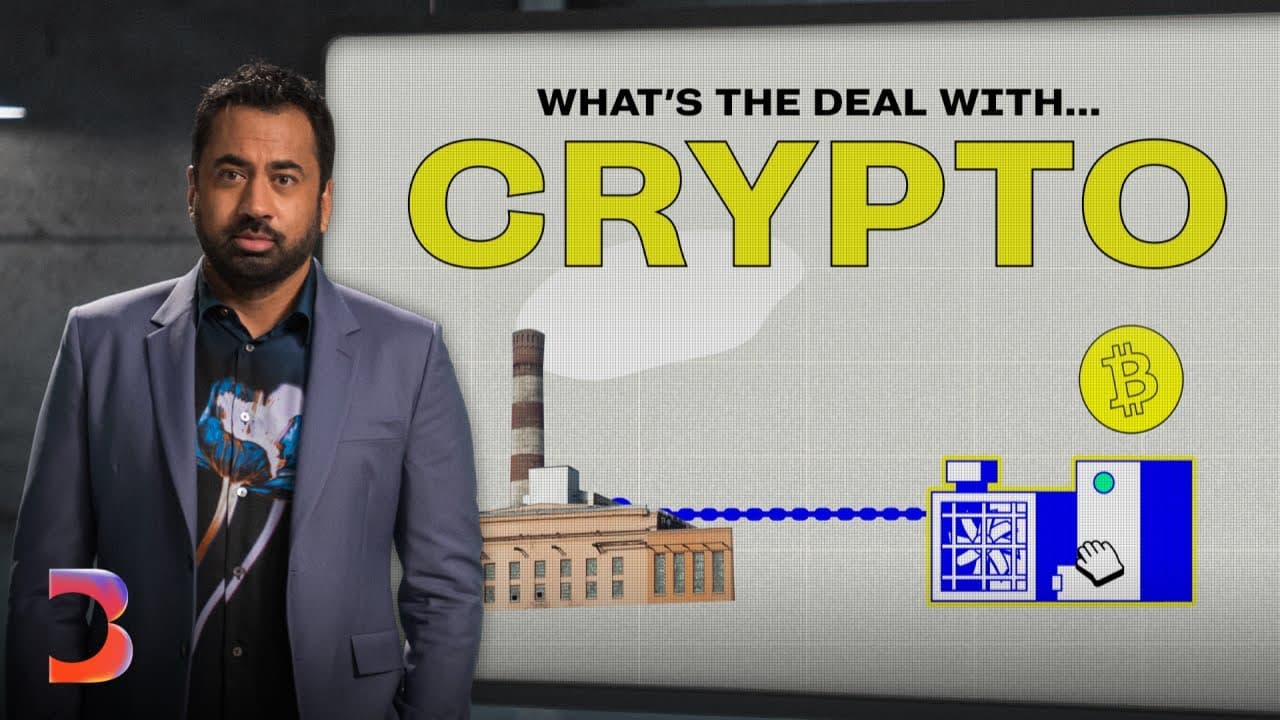
Hey, I'm Kal Penn, and this is Getting Warmer. Cryptocurrency is one of those things that's easy to dismiss as a fad, like canned wine or things being cake. But whether you're a crypto skeptic or a laser eyed diehard who tips their dry cleaner with Dogecoin, don't be that guy, you have to admit that cryptocurrency has become a fact of our economy. ... Read More
Key Insights
- Cryptocurrency, despite its market fluctuations, remains a significant economic factor with a market value nearing $1 trillion.
- The energy consumption of Bitcoin mining is substantial, comparable to entire countries like the Netherlands or Austria.
- The proof of work system, central to Bitcoin, involves miners solving complex calculations, which requires immense computational power and energy.
- China banned Bitcoin mining due to its excessive electricity consumption, highlighting the global concern over crypto's energy demands.
- Proof of stake is a potential alternative to proof of work, significantly reducing energy consumption by 99.9% according to some estimates.
- Ethereum's transition to proof of stake, known as 'the merge,' represents a major shift towards more sustainable cryptocurrency practices.
- Bitcoin miners are increasingly exploring renewable energy sources as electricity costs dominate their operational expenses.
- Kal Penn's show 'Getting Warmer' explores innovative solutions and challenges in the global transition to clean energy, including the impact of cryptocurrency.
Install to Summarize YouTube Videos and Get Transcripts
Explore YouTube Video Summarizer or Get YouTube Transcript Extractor
Questions & Answers
Q: What is the main environmental concern associated with cryptocurrency?
The primary environmental concern with cryptocurrency, particularly Bitcoin, is its massive energy consumption. The proof of work system requires miners to solve complex calculations, which demands significant computational power and results in high electricity usage. This energy demand is comparable to that of entire countries, contributing to carbon emissions and environmental degradation.
Q: How does the proof of work system contribute to high energy consumption?
The proof of work system contributes to high energy consumption by requiring miners to solve complicated mathematical problems to validate transactions and mine new coins. This process involves extensive computational effort, necessitating the use of powerful computers that consume large amounts of electricity. As more miners join the network, the complexity of calculations increases, further escalating energy demands.
Q: What is proof of stake and how does it differ from proof of work?
Proof of stake is an alternative to proof of work that significantly reduces energy consumption. Instead of solving complex calculations, miners in a proof of stake system validate transactions by holding and staking their cryptocurrency. This method eliminates the need for energy-intensive computations, making it a more sustainable option. Ethereum's transition to proof of stake illustrates the potential for reducing crypto's carbon footprint.
Q: Why did China ban Bitcoin mining?
China banned Bitcoin mining due to its excessive electricity consumption, which strained the country's energy resources. The high energy demands of Bitcoin mining operations were seen as unsustainable and environmentally detrimental. By banning mining, China aimed to reduce its carbon emissions and alleviate pressure on its electricity grid, highlighting the global concern over crypto's environmental impact.
Q: What role do renewable energy sources play in cryptocurrency mining?
Renewable energy sources play a crucial role in making cryptocurrency mining more sustainable. As electricity costs account for the majority of a Bitcoin miner's expenses, there is a growing incentive to seek cheaper, renewable energy options. By utilizing solar, wind, or hydroelectric power, miners can reduce their carbon footprint and align their operations with environmental sustainability goals.
Q: What was the significance of Ethereum's transition to proof of stake?
Ethereum's transition to proof of stake, known as 'the merge,' marked a significant shift towards more sustainable cryptocurrency practices. This change reduced Ethereum's energy consumption by 99.9%, demonstrating the potential for other cryptocurrencies to adopt similar methods. The transition serves as a model for reducing the environmental impact of digital assets while maintaining network security and efficiency.
Q: How does 'Getting Warmer' address the issue of cryptocurrency's environmental impact?
'Getting Warmer,' hosted by Kal Penn, addresses cryptocurrency's environmental impact by exploring its high energy consumption and potential solutions. The show investigates the proof of work system's role in carbon emissions and highlights alternatives like proof of stake. It also emphasizes the importance of transitioning to renewable energy sources to mitigate crypto's environmental footprint.
Q: What innovative solutions does 'Getting Warmer' explore regarding clean energy?
'Getting Warmer' explores various innovative solutions for clean energy, including the use of renewable energy in cryptocurrency mining. The show delves into the potential of proof of stake systems to reduce energy consumption and examines efforts to integrate renewables into mining operations. Additionally, it highlights broader climate solutions, such as urban designs for climate resilience and closed-loop supply chains for electric vehicles.
Summary & Key Takeaways
-
Cryptocurrency, particularly Bitcoin, has a significant environmental impact due to its high energy consumption, comparable to that of entire countries. The proof of work system is a major contributor to this issue, as it requires miners to solve complex calculations that demand substantial computational power.
-
Alternatives like proof of stake offer a more sustainable approach, reducing energy consumption by up to 99.9%. Ethereum's recent transition to this system exemplifies the industry's potential shift towards greener practices. However, Bitcoin remains tied to the energy-intensive proof of work model.
-
Kal Penn's 'Getting Warmer' addresses the environmental challenges posed by cryptocurrency and explores potential solutions. The show emphasizes the importance of transitioning to renewable energy sources and highlights innovative efforts to reduce the carbon footprint associated with digital assets.
Read in Other Languages (beta)
Share This Summary 📚
Summarize YouTube Videos and Get Video Transcripts with 1-Click
Try YouTube Summary with ChatGPT & Claude or YouTube Transcript Generator
Explore More Summaries from Bloomberg Originals 📚





Summarize YouTube Videos and Get Video Transcripts with 1-Click
Try YouTube Summary with ChatGPT & Claude or YouTube Transcript Generator