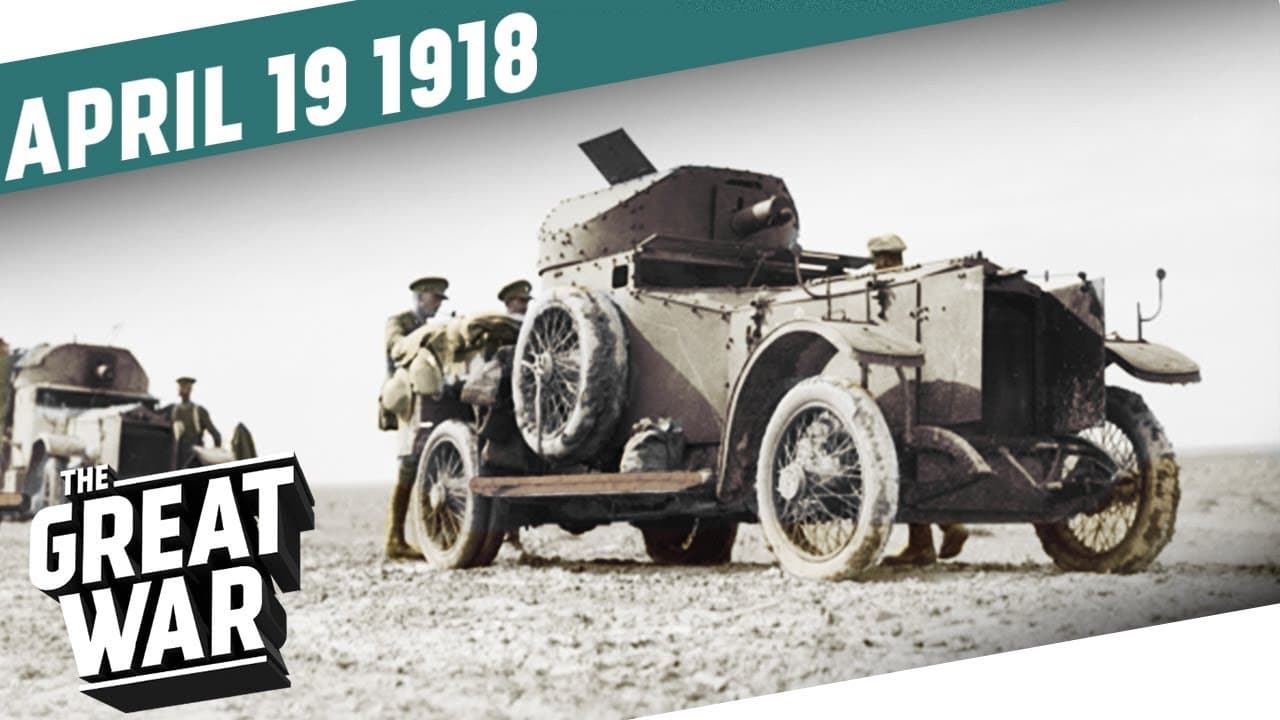
Knocking Out The Hejaz Railway I THE GREAT WAR Week 195
TL;DR
Lawrence of Arabia and Arab Revolt target Hejaz Railway.
Transcript
The Hejaz Railway was a vital supply and communications line for the Ottoman Empire, connecting Damascus and Medina, and this week, Lawrence of Arabia and the forces of the Arab Revolt take a big chunk of it. I’m Indy Neidell; welcome to the Great War. Last week Germany had renewed its Western Front offensives as Operation Georgette, the battle of ... Read More
Key Insights
- The Hejaz Railway was a critical supply line for the Ottoman Empire, connecting Damascus and Medina, and its disruption was a strategic blow to the Ottomans.
- Lawrence of Arabia played a significant role in the attacks on the Hejaz Railway, using explosives to destroy sections of the track and disrupt Ottoman operations.
- Operation Georgette saw the Germans advancing in Flanders, but they faced resistance and setbacks from the British and Belgians, leading to a battle of attrition.
- The Ottoman Empire was advancing in the Caucasus against Armenian forces, but the Armenians managed to mount a defense despite being outnumbered.
- The Transcaucasian Federation faced internal conflict regarding peace negotiations with the Ottomans, leading to a state of war after rejecting an ultimatum.
- In Palestine, British forces and the Arab Revolt launched attacks on Ottoman positions, aiming to prevent flanking attacks on British General Allenby's army.
- Austria-Hungary planned a new offensive against Italy, hoping to gain resources and restore its standing with Germany amidst internal challenges.
- The British military faced manpower challenges, leading to increased age limits for service and the potential for a national emergency declaration.
Install to Summarize YouTube Videos and Get Transcripts
Explore YouTube Video Summarizer or Get YouTube Transcript Extractor
Questions & Answers
Q: What was the significance of the Hejaz Railway for the Ottoman Empire?
The Hejaz Railway was a vital supply and communication line for the Ottoman Empire, connecting Damascus and Medina. Its disruption was a strategic blow, as it hindered the Ottomans' ability to transport troops and supplies, weakening their military position in the region.
Q: How did Lawrence of Arabia contribute to the attacks on the Hejaz Railway?
Lawrence of Arabia played a significant role in the attacks on the Hejaz Railway by leading and coordinating efforts to destroy sections of the track. He used explosives, such as gun cotton, to damage the railway infrastructure, effectively disrupting Ottoman operations and supporting the Arab Revolt.
Q: What challenges did the Germans face during Operation Georgette in Flanders?
During Operation Georgette, the Germans faced significant resistance from British and Belgian forces. Despite initial successes, their advance was slowed, and they encountered a battle of attrition. The strategic imperative to defeat the British was not achieved, and the operation failed to reach its objectives.
Q: What was the outcome of the Ottoman advance in the Caucasus against Armenian forces?
The Ottoman advance in the Caucasus faced resistance from Armenian forces, who, despite being outnumbered, managed to mount a defense. The Armenians concentrated their forces effectively, but ultimately retreated under pressure from Turkish reserves, leading to a complex and ongoing conflict in the region.
Q: How did internal conflicts affect the Transcaucasian Federation's negotiations with the Ottomans?
Internal conflicts within the Transcaucasian Federation complicated negotiations with the Ottomans. While some factions wanted to accept an Ottoman ultimatum for territory, others rejected it, leading to a state of war. This division hindered a unified response and strained efforts to reach a peaceful resolution.
Q: What were the objectives of British and Arab forces in Palestine?
In Palestine, British and Arab forces aimed to disrupt Ottoman positions and prevent flanking attacks on British General Allenby's army. By targeting outposts and railways, they sought to weaken Ottoman defenses and support broader military objectives in the region, contributing to the overall Allied strategy.
Q: Why did Austria-Hungary plan a new offensive against Italy?
Austria-Hungary planned a new offensive against Italy to gain much-needed resources and restore its standing with Germany. The offensive was seen as a way to pressure Italy into negotiations and support German operations on the Western Front, amidst internal challenges and a need for military success.
Q: What manpower challenges did the British military face during this period?
The British military faced significant manpower challenges, leading to the introduction of the Third Military Service Bill, which raised the age limit for service to 50, and potentially 55. The bill also allowed for the recall of returned POWs and those who completed tours, preparing for a national emergency if needed.
Summary & Key Takeaways
-
The Hejaz Railway, a vital Ottoman supply line, was attacked by Lawrence of Arabia and the Arab Revolt, significantly impacting Ottoman operations. Meanwhile, Germany's Operation Georgette in Flanders faced resistance, leading to a battle of attrition.
-
In the Caucasus, Ottoman forces advanced against Armenians, but internal conflicts within the Transcaucasian Federation complicated peace negotiations. In Palestine, British and Arab forces targeted Ottoman positions to support General Allenby's army.
-
Austria-Hungary planned an offensive against Italy to gain resources and improve relations with Germany. The British military faced manpower issues, raising age limits for service and preparing for potential emergencies.
Read in Other Languages (beta)
Share This Summary 📚
Summarize YouTube Videos and Get Video Transcripts with 1-Click
Try YouTube Summary with ChatGPT & Claude or YouTube Transcript Generator
Explore More Summaries from The Great War 📚

Summarize YouTube Videos and Get Video Transcripts with 1-Click
Try YouTube Summary with ChatGPT & Claude or YouTube Transcript Generator