The Most Controversial Peace Treaty after WW1 - Treaty of Trianon 1920 (Documentary)
TL;DR
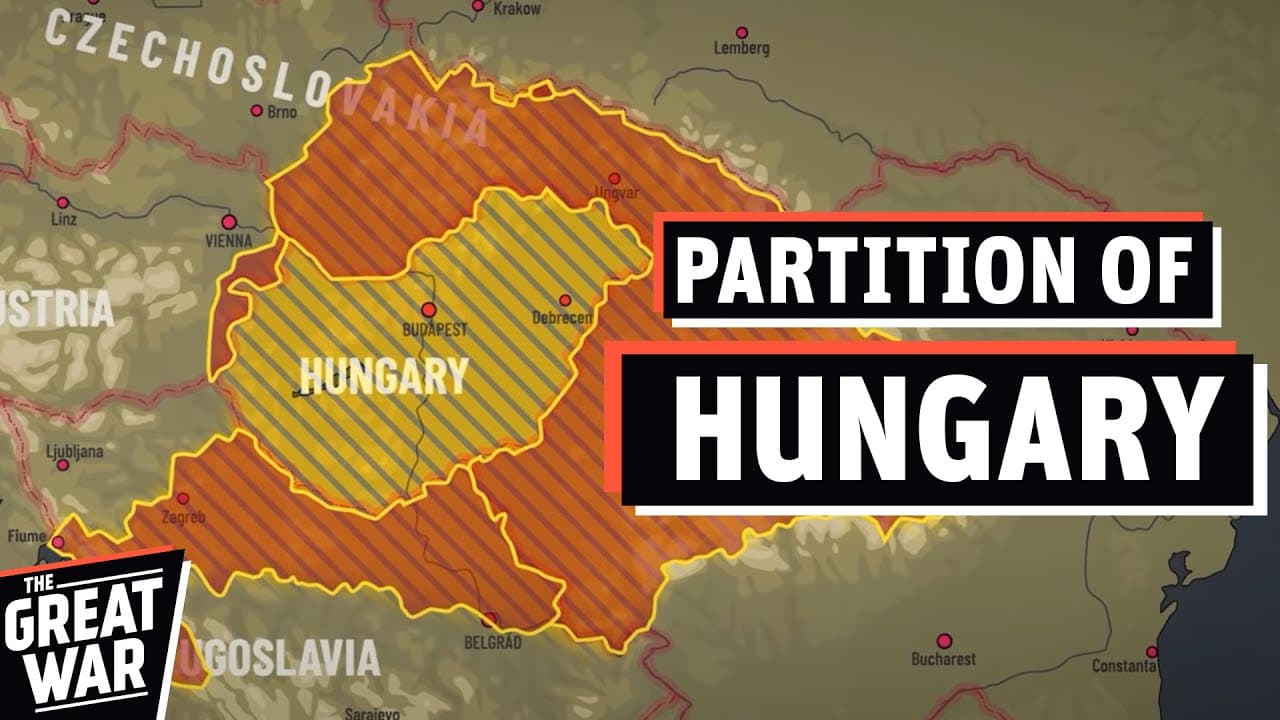
The Treaty of Trianon reshaped Central Europe post-WWI, stirring lasting controversy.
Transcript
hi I'm Jesse Alexander and welcome to the Great War where we are still filming in our emergency lockdown Studio here in my living room now none of the treaties that brought an end to the Great War in 1919 and 1920 are considered uncontroversial but many consider that the most controversial of them all was the Treaty of Trianon which brought peace b... Read More
Key Insights
- The Treaty of Trianon, signed in 1920, controversially redrew Hungary's borders, significantly reducing its size and population.
- Ethnic tensions influenced the treaty, as neighboring states claimed Hungarian territories citing ethnic self-determination and historical oppression.
- Hungary's loss in the treaty led to significant Hungarian minorities residing in Czechoslovakia, Romania, and Yugoslavia, causing long-term regional tensions.
- The treaty imposed military restrictions on Hungary, limiting its army to 35,000 men and banning certain weapons and military assets.
- Hungary's neighbors, including Romania, Czechoslovakia, and Yugoslavia, saw the treaty as a rectification of historical grievances.
- The treaty's terms were largely shaped by the geopolitical interests of the Allied Powers, particularly France, Britain, and Italy.
- Hungarian opposition to the treaty was strong, with calls for plebiscites and revisions largely ignored by the Allies.
- The Treaty of Trianon remains a sensitive and controversial historical issue in Hungary, symbolizing national trauma and loss.
Install to Summarize YouTube Videos and Get Transcripts
Explore YouTube Video Summarizer or Get YouTube Transcript Extractor
Questions & Answers
Q: What was the Treaty of Trianon?
The Treaty of Trianon was a peace agreement signed in 1920 between Hungary and the Allied Powers after World War I. It drastically altered Hungary's borders, reducing its territory to about one-third of its pre-war size and leaving significant Hungarian populations in neighboring states. The treaty remains controversial, particularly in Hungary, where it is seen as a national trauma.
Q: How did the Treaty of Trianon affect Hungary's borders?
The Treaty of Trianon significantly reduced Hungary's borders, transferring large portions of its territory to neighboring countries such as Romania, Czechoslovakia, and Yugoslavia. This redrawing of borders left about 3 million ethnic Hungarians living outside the new Hungary, creating significant minorities in these neighboring states and leading to long-standing regional tensions.
Q: What were the main arguments of Hungary's neighbors at the peace conference?
Hungary's neighbors, including Romania, Czechoslovakia, and Yugoslavia, argued for territorial gains based on ethnic self-determination and historical grievances. They claimed that many regions within Hungary contained large populations of their ethnic groups and accused Hungary of historical oppression, particularly through policies like Magyarization, which they argued suppressed non-Hungarian cultures and languages.
Q: What military restrictions were imposed on Hungary by the Treaty of Trianon?
The Treaty of Trianon imposed strict military limitations on Hungary. It reduced Hungary's army to 35,000 men and prohibited the country from possessing certain military equipment, such as tanks, warships, and aircraft. Additionally, Hungary's Danube fleet was confiscated. These restrictions were meant to weaken Hungary's military capabilities and prevent future conflicts in the region.
Q: How did the Treaty of Trianon impact the ethnic composition of Central Europe?
The Treaty of Trianon significantly altered the ethnic composition of Central Europe by placing large Hungarian-speaking populations under the control of neighboring states like Czechoslovakia, Romania, and Yugoslavia. This led to significant ethnic minorities in these countries, causing tensions and conflicts over minority rights and national identity that persisted for decades.
Q: What was the reaction in Hungary to the Treaty of Trianon?
The reaction in Hungary to the Treaty of Trianon was one of outrage and national trauma. The treaty's terms were seen as unjust and humiliating, leading to widespread opposition and calls for revision. The slogan "No, no, never" became popular as Hungarians protested the loss of territory and population. The treaty's impact on national identity and politics was profound and long-lasting.
Q: Why did the Allied Powers impose the Treaty of Trianon on Hungary?
The Allied Powers imposed the Treaty of Trianon on Hungary to reshape Central Europe after World War I, aiming to weaken Hungary and prevent future conflicts. The treaty was influenced by the geopolitical interests of the Allies, particularly France, which sought to create a buffer of friendly states in Eastern Europe. The Allies also aimed to address historical grievances and ethnic tensions in the region.
Q: What long-term effects did the Treaty of Trianon have on Hungary and its neighbors?
The Treaty of Trianon had significant long-term effects on Hungary and its neighbors. It left Hungary with a diminished territory and population, creating a sense of national trauma and a focus on revising the treaty's terms. The presence of large Hungarian minorities in neighboring countries led to ongoing ethnic tensions and conflicts over minority rights. The treaty's legacy continues to influence Central European politics and relations today.
Summary & Key Takeaways
-
The Treaty of Trianon, signed in 1920, drastically altered Hungary's borders, reducing its territory and population significantly. The treaty was viewed as a historic injustice by Hungarians but celebrated by neighboring states like Romania and Czechoslovakia.
-
The treaty resulted in significant ethnic Hungarian populations residing in newly formed states, causing ongoing regional tensions. Hungary's neighbors justified their territorial gains with arguments of ethnic self-determination and historical oppression.
-
The treaty imposed severe military restrictions on Hungary and was shaped by the geopolitical interests of the Allied Powers. Despite Hungarian opposition and calls for revisions, the treaty's terms largely remained unchanged, leaving a lasting impact on Central Europe.
Read in Other Languages (beta)
Share This Summary 📚
Summarize YouTube Videos and Get Video Transcripts with 1-Click
Try YouTube Summary with ChatGPT & Claude or YouTube Transcript Generator
Explore More Summaries from The Great War 📚
Summarize YouTube Videos and Get Video Transcripts with 1-Click
Try YouTube Summary with ChatGPT & Claude or YouTube Transcript Generator