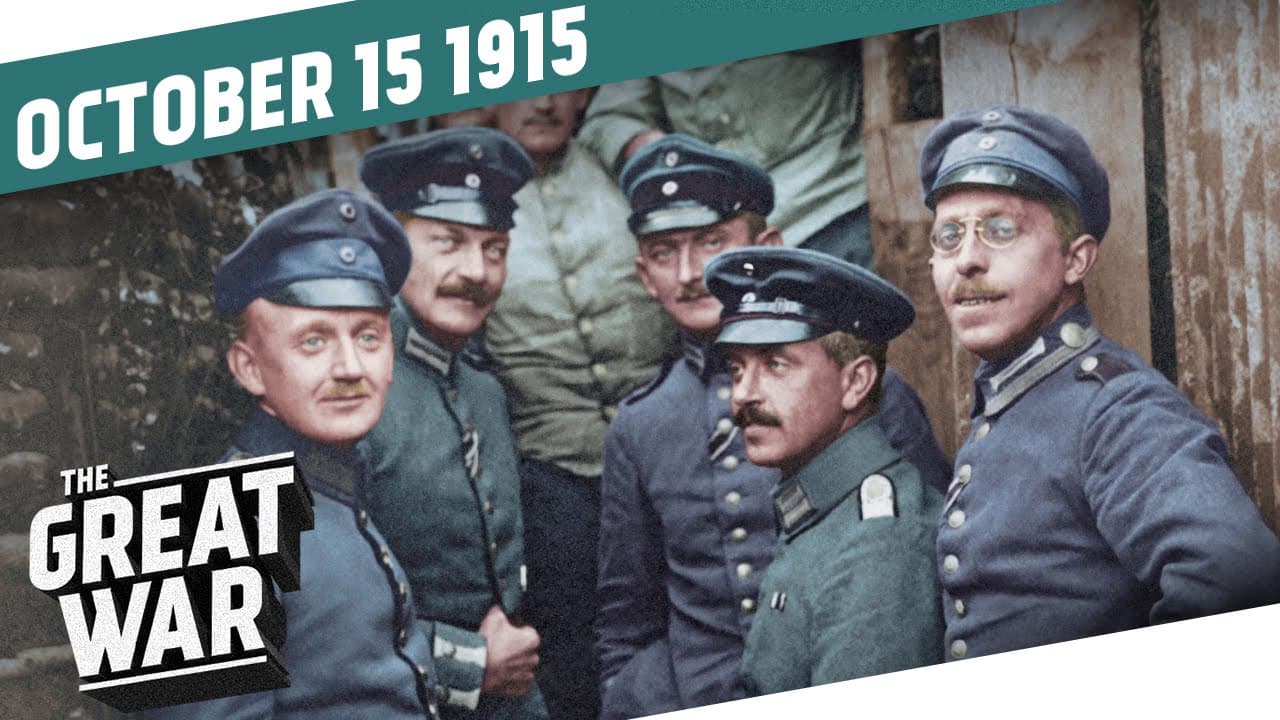
Learning Lessons From Loos - Bulgaria Enters The War I THE GREAT WAR - Week 64
TL;DR
Bulgaria enters WWI; British learn from Battle of Loos.
Transcript
As we’ve seen over the past 15 months, the war has grown ever larger as new countries join the fight. You’d think they may be deterred by the death toll of millions of young men, but you’d be wrong. You’d especially be wrong this week, as this week Bulgaria joins the war. I’m Indy Neidell; welcome to the Great War. Last week, a combined Austro-Germ... Read More
Key Insights
- Bulgaria joined the war after a deal with the Central Powers, committing to attack Serbia following Austro-German advances.
- The Battle of Loos, though a tactical failure for Britain, introduced the successful use of creeping artillery barrages.
- Serbia faced dire circumstances with 400,000 Austro-German troops capturing Belgrade, while Greece refused to honor its treaty to aid Serbia.
- Gallipoli remained a stalemate, with British leadership hesitant to evacuate due to potential political repercussions.
- British High Command learned crucial lessons at Loos, particularly about the inadequacy of their artillery against German defenses.
- The French Foreign Legion, including notable figures, suffered heavy casualties in the ongoing Battle of Champagne.
- The French employed innovative aerial tactics, using squadrons at different altitudes to effectively engage enemy aircraft.
- Bulgaria's massive mobilization for war was unprecedented, with over a quarter of its population eventually engaged in the conflict.
Install to Summarize YouTube Videos and Get Transcripts
Explore YouTube Video Summarizer or Get YouTube Transcript Extractor
Questions & Answers
Q: Why did Bulgaria join the war against Serbia?
Bulgaria joined the war against Serbia due to a prior agreement with the Central Powers. In exchange for territorial gains, Bulgaria committed to attacking Serbia after Austro-German forces initiated their offensive. This strategic alliance aimed to crush Serbia from multiple fronts, significantly altering the Balkan theater of WWI.
Q: What tactical lessons did the British learn from the Battle of Loos?
The British learned the importance of effective artillery support, particularly the use of creeping barrages. This tactic involved a curtain of artillery fire advancing just ahead of infantry, allowing troops to move under its cover. However, they also realized their artillery was inadequate in cutting through German defenses, necessitating tactical revisions.
Q: What was the outcome of Serbia's appeal to Greece for military assistance?
Serbia's appeal to Greece for military assistance was unsuccessful. Despite a treaty obligating Greece to aid Serbia if attacked by multiple powers, Greece refused, citing the conflict as a European war rather than a Balkan one. This left Serbia vulnerable to the combined Austro-German and Bulgarian offensives.
Q: What was the situation at Gallipoli during this period?
The situation at Gallipoli was grim, with a stalemate persisting after months of fighting. British forces, entrenched and suffering heavy casualties, faced logistical nightmares. Leadership was divided, with General Sir Ian Hamilton replaced by Lieutenant General Sir Charles Munro, who recommended evacuation—a politically sensitive decision.
Q: How did the French Foreign Legion fare in the Battle of Champagne?
The French Foreign Legion suffered heavy casualties in the Battle of Champagne. Notable members, including American poet Alan Seeger, participated in fierce combat. The Legion's involvement highlighted the international dimension of the war effort, as volunteers from various countries joined the French military in significant numbers.
Q: What innovative aerial tactics did the French employ?
The French employed innovative aerial tactics by organizing squadrons at different altitudes to engage enemy aircraft effectively. This strategy involved ten planes flying at 6,000 feet and another ten at 9,000 feet, allowing them to attack enemy planes from above and below, enhancing their effectiveness in aerial combat.
Q: What was the scale of Bulgaria's mobilization for the war?
Bulgaria's mobilization for the war was massive, with over 600,000 men initially mobilized, representing nearly a quarter of the male population. Eventually, Bulgaria would mobilize 1.2 million men, over a quarter of its entire population, marking the highest percentage of mobilization by any country in WWI.
Q: What were the political implications of a potential British withdrawal from Gallipoli?
A potential British withdrawal from Gallipoli had significant political implications. British leadership feared that withdrawing would signal a humiliating defeat by the Ottoman Empire, potentially provoking unrest in Muslim regions of the British Empire. This concern contributed to the hesitation and prolonged engagement despite the dire situation.
Summary & Key Takeaways
-
Bulgaria's entry into WWI was anticipated due to prior arrangements with the Central Powers, leading to a new front against Serbia. The Battle of Loos, despite being a defeat for the British, provided valuable tactical lessons, particularly in artillery use.
-
Serbia's situation became increasingly desperate as Bulgaria joined the Austro-German forces in attacking from the north, while Greece refused to assist despite a prior treaty. Meanwhile, the stalemate at Gallipoli continued, with British leadership divided over evacuation.
-
The British learned from the Battle of Loos that their artillery was insufficient against German defenses, prompting a reevaluation of tactics. The French continued their offensive in Champagne, with significant losses, while Bulgaria's massive mobilization highlighted the war's escalating scale.
Read in Other Languages (beta)
Share This Summary 📚
Summarize YouTube Videos and Get Video Transcripts with 1-Click
Try YouTube Summary with ChatGPT & Claude or YouTube Transcript Generator
Explore More Summaries from The Great War 📚
Summarize YouTube Videos and Get Video Transcripts with 1-Click
Try YouTube Summary with ChatGPT & Claude or YouTube Transcript Generator