Who Was Philippe Pétain in WW1?
TL;DR
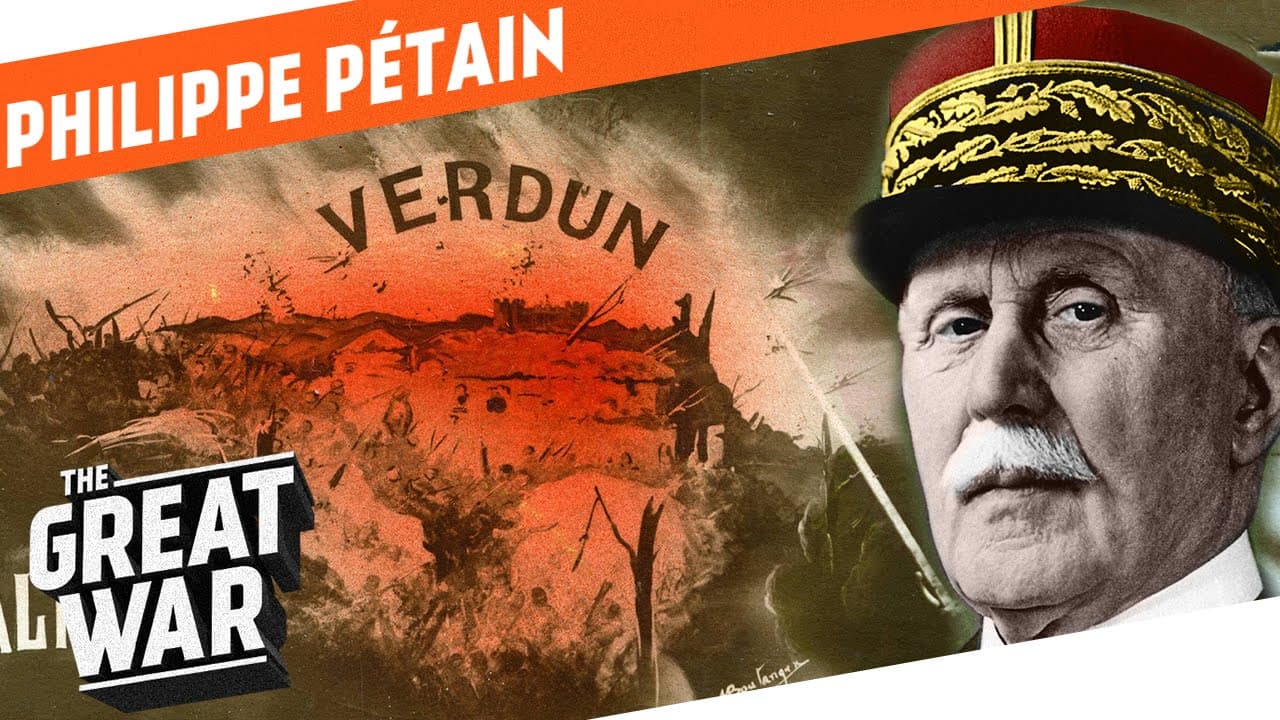
Philippe Pétain, initially a peacetime soldier, rose to prominence during World War I as a strategic commander who emphasized artillery and logistics over traditional tactics. His leadership at Verdun and his efforts to maintain troop morale were pivotal, although his later life was marred by controversy during World War II.
Transcript
He was 58 [years] old and a colonel when the first world war broke out And he had never seen active service yet within months He was a national hero and a commanding general and soon he would command the entire French army. I'm talking about Philippe Petain I'm indy neidell welcome to a great war bio special about Marshal Philippe Petain. He was bo... Read More
Key Insights
- Philippe Pétain was a colonel at the outbreak of WW1 and quickly rose to command the entire French army.
- Pétain's military philosophy focused on superior firepower and logistics rather than traditional mass infantry charges.
- He became a national hero for his leadership during the Battle of Verdun, emphasizing meticulous preparation and effective supply chains.
- Pétain's strategies included an active defense and using artillery to support infantry, contrasting with the French doctrine of morale-based offensives.
- He played a crucial role in preventing the collapse of the French army in 1917 by improving soldier conditions and managing mutinies.
- Despite his successes, Pétain was criticized for being overly cautious and was eventually replaced by Ferdinand Foch.
- His legacy as a military strategist was overshadowed by his controversial role in World War II, leading to his imprisonment.
- Pétain's contributions to modern warfare tactics were significant, but his reputation was tarnished by later political actions.
Install to Summarize YouTube Videos and Get Transcripts
Explore YouTube Video Summarizer or Get YouTube Transcript Extractor
Questions & Answers
Q: How did Philippe Pétain rise to prominence during World War I?
Philippe Pétain rose to prominence during World War I by quickly advancing from colonel to commanding general of the French army. His innovative strategies, which emphasized artillery and logistics over traditional mass infantry tactics, proved effective, especially during the Battle of Verdun. His leadership and focus on soldier welfare earned him the title 'Lion of Verdun' and made him a national hero.
Q: What were Pétain's key military strategies during World War I?
Pétain's key military strategies during World War I included a focus on superior firepower, effective use of artillery, and meticulous logistical planning. He prioritized the welfare of his troops, ensuring good living conditions and efficient supply chains. Pétain's approach contrasted with traditional French tactics, which emphasized morale and mass infantry charges, and he advocated for an active defense and small, precise operations.
Q: How did Pétain handle the French army's mutinies in 1917?
Pétain addressed the French army's mutinies in 1917 by implementing both repression and relief measures. He ordered court-martials and death sentences for mutineers but also improved soldier conditions by increasing leave, enhancing barracks, and providing better food. His balanced approach helped restore discipline and morale, preventing the collapse of the French army and stabilizing the front lines.
Q: Why was Pétain criticized for being overly cautious?
Pétain was criticized for being overly cautious due to his reluctance to launch large-scale offensives without adequate preparation and resources. His strategy focused on preserving his forces and waiting for American reinforcements, which some saw as lacking aggression. Critics favored more optimistic and bold approaches, like those of Ferdinand Foch, who eventually replaced Pétain as commander-in-chief.
Q: What was Pétain's role in the Battle of Verdun?
In the Battle of Verdun, Pétain played a crucial role by organizing the defense and supply operations, including the famous 'Sacred Road' supply line. He implemented an active defense strategy, ensuring that French forces could rotate and recover, which helped sustain morale and combat effectiveness. His leadership was instrumental in holding Verdun against the German offensive, making him a national hero.
Q: How did Pétain's military tactics differ from traditional French doctrine?
Pétain's military tactics differed from traditional French doctrine by emphasizing firepower and logistics over morale-based mass infantry charges. He advocated for the use of artillery and modern technology to support infantry, rather than relying solely on collective maneuvers and high morale. His approach focused on meticulous preparation, effective communication, and adapting to battlefield conditions, which proved successful in several engagements.
Q: What impact did Pétain have on modern warfare tactics?
Pétain significantly impacted modern warfare tactics by advocating for strategies that prioritized firepower, logistics, and the integration of new technologies. He challenged traditional doctrines by emphasizing the importance of artillery support and effective supply chains, which influenced future military operations. His approach to warfare, particularly during World War I, demonstrated the effectiveness of adapting strategies to technological advancements and battlefield realities.
Q: How did Pétain's legacy change after World War II?
Pétain's legacy changed dramatically after World War II due to his controversial role in the Vichy government, which collaborated with Nazi Germany. Despite his earlier reputation as a hero of World War I, his actions during the second war led to his conviction for treason, stripping him of military honors and resulting in a life sentence. This overshadowed his previous achievements and significantly altered public perception of his legacy.
Summary & Key Takeaways
-
Philippe Pétain, initially a peacetime soldier, rose to prominence during World War I due to his innovative military strategies that emphasized artillery and logistics over traditional tactics. His leadership at Verdun was pivotal in halting the German advance, and he played a crucial role in maintaining French troop morale during critical moments of the war.
-
Pétain's approach to warfare was characterized by meticulous preparation and the use of new technology, contrasting with the traditional French emphasis on morale and mass infantry charges. His strategies at Verdun and during the 1917 mutinies demonstrated his focus on preserving his forces and adapting to modern warfare.
-
Despite his successes in World War I, Pétain's later life was marred by controversy due to his actions during World War II, leading to his imprisonment. His legacy as a gifted strategist and popular leader is overshadowed by these later events, but his contributions to military tactics remain significant.
Read in Other Languages (beta)
Share This Summary 📚
Summarize YouTube Videos and Get Video Transcripts with 1-Click
Try YouTube Summary with ChatGPT & Claude or YouTube Transcript Generator
Explore More Summaries from The Great War 📚
Summarize YouTube Videos and Get Video Transcripts with 1-Click
Try YouTube Summary with ChatGPT & Claude or YouTube Transcript Generator