What Were the Key Events of the Mexican Revolution?
TL;DR
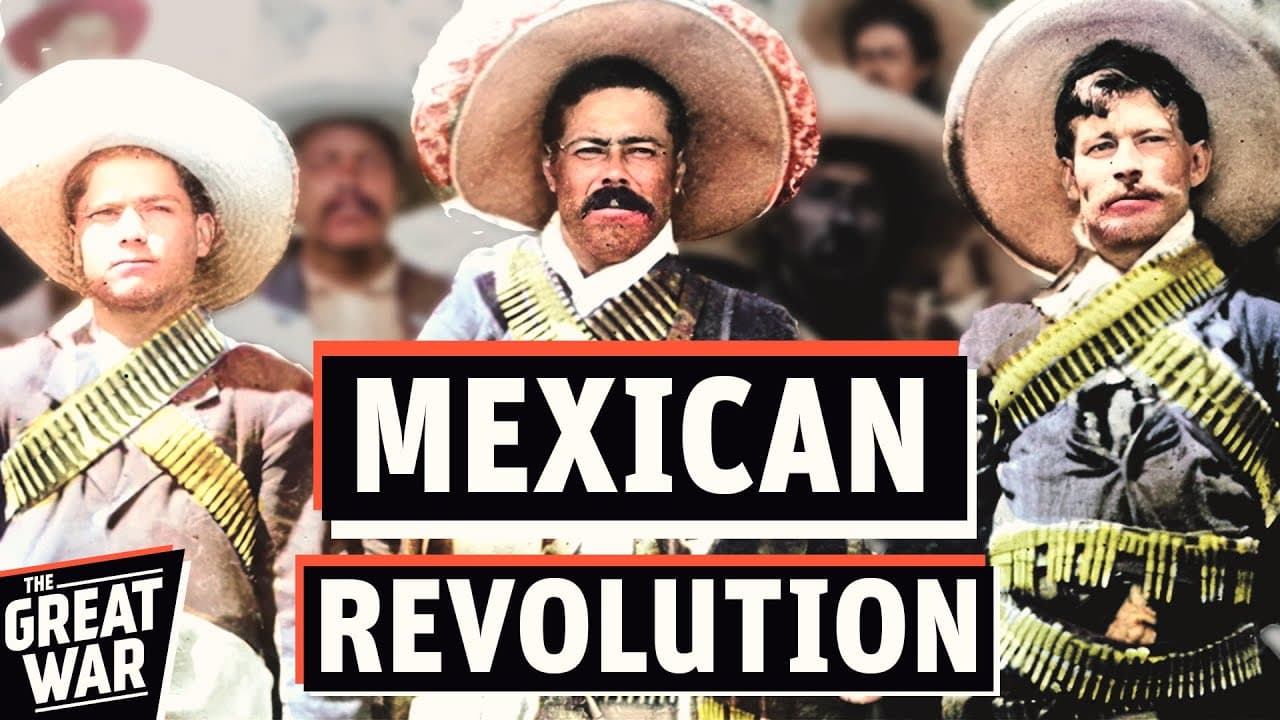
The Mexican Revolution from 1910 to 1920 was marked by shifting alliances, assassinations, and a peasant uprising against the dictatorship of Porfirio Diaz. It resulted in a new constitution and government, with significant figures like Francisco Madero, Emiliano Zapata, and Pancho Villa playing crucial roles. The revolution saw US intervention and highlighted the struggle for land reform and social justice.
Transcript
the Mexican Revolution of 1910 to 1920 was a conflict of Shifting alliances and assassinations peasant revolutionaries an attack on us soil and US intervention in Mexico the decade of struggle cost hundreds of thousands of lives resulted in new constitutions and governments and for some at least turned Bandits into [Applause] Heroes the seeds of th... Read More
Key Insights
- The Mexican Revolution began due to social tensions under Porfirio Diaz's rule, with rural peasants suffering under large estates.
- Francisco Madero initiated the revolution, promising land reforms to gain peasant support, but faced challenges from radical leaders like Emiliano Zapata.
- Zapata's Ayala Plan called for land redistribution and became a rallying point for peasants, leading to a split with Madero.
- The US intervened in the revolution, initially supporting various factions but eventually recognizing Carranza's government.
- Pancho Villa emerged as a key figure, leading guerrilla warfare and becoming a symbol of resistance, despite his complex relations with other leaders.
- The revolution led to significant political changes, including the drafting of the progressive 1917 Constitution, which promised land and labor reforms.
- The revolution's internal conflicts led to a civil war, with factions led by Villa, Zapata, and Carranza vying for control.
- The revolution ended with Alvaro Obregon's presidency, marking a period of relative stability despite ongoing tensions.
Install to Summarize YouTube Videos and Get Transcripts
Explore YouTube Video Summarizer or Get YouTube Transcript Extractor
Questions & Answers
Q: What caused the Mexican Revolution?
The Mexican Revolution was primarily caused by social and economic inequalities under Porfirio Diaz's dictatorship. Rural peasants were oppressed under large estates owned by a few wealthy landowners, leading to widespread dissatisfaction. Francisco Madero's call for political reform and land redistribution further fueled the revolutionary movement, as did the involvement of key figures like Emiliano Zapata and Pancho Villa.
Q: Who were the key figures in the Mexican Revolution?
Key figures in the Mexican Revolution included Francisco Madero, who initiated the uprising against Porfirio Diaz; Emiliano Zapata, a radical leader advocating for land reform; Pancho Villa, a bandit-turned-general who led guerrilla warfare; and Venustiano Carranza, who eventually became president. Each played a significant role in shaping the revolution's course and outcomes.
Q: What was the significance of the 1917 Constitution in Mexico?
The 1917 Constitution was significant as it introduced progressive reforms, including land redistribution, labor rights, and social justice measures. It aimed to address the inequalities that sparked the revolution and laid the foundation for modern Mexican governance. Despite opposition from the upper classes, it marked a turning point in Mexico's political and social landscape.
Q: How did US intervention affect the Mexican Revolution?
US intervention in the Mexican Revolution was complex, as the US initially supported various factions to protect its interests. The recognition of Carranza's government by the US shifted the balance of power, leading to tensions with figures like Pancho Villa. The intervention highlighted the geopolitical implications of the revolution and its impact on US-Mexican relations.
Q: What was the Ayala Plan, and who proposed it?
The Ayala Plan was proposed by Emiliano Zapata as a manifesto for land reform. It called for the redistribution of land taken by large estates back to the peasants, emphasizing social justice and peasant rights. The plan became a rallying point for many peasants during the revolution and highlighted the radical demands for change in Mexican society.
Q: Why did Pancho Villa become a symbol of resistance?
Pancho Villa became a symbol of resistance due to his role as a guerrilla leader who fought against the oppressive regimes of Porfirio Diaz and later, the constitutionalist government. His charismatic leadership, military successes, and advocacy for the peasantry made him an icon of the revolutionary struggle, despite his complex and sometimes controversial actions.
Q: What were the outcomes of the Mexican Revolution?
The Mexican Revolution resulted in significant political and social changes, including the drafting of the 1917 Constitution, which promised land and labor reforms. It ended the long-standing dictatorship of Porfirio Diaz, led to the rise of new political leaders, and set the stage for future governance in Mexico. However, it also left a legacy of ongoing social and economic challenges.
Q: How did the Mexican Revolution impact land reform in Mexico?
The Mexican Revolution had a profound impact on land reform, as it highlighted the need for equitable land distribution. The 1917 Constitution included provisions for land redistribution, aiming to dismantle large estates and return land to the peasants. While progress was slow and met with resistance, the revolution set a precedent for future land reforms and social justice initiatives in Mexico.
Summary & Key Takeaways
-
The Mexican Revolution was sparked by social tensions under Porfirio Diaz, with peasants suffering under large estates. Francisco Madero's call for reform gained support, but internal divisions and US intervention complicated the struggle. Key figures like Emiliano Zapata and Pancho Villa played crucial roles, leading to significant political changes, including the 1917 Constitution.
-
Emiliano Zapata's radical stance on land reform, outlined in the Ayala Plan, became a central issue, leading to a split with Madero. The revolution saw shifting alliances and assassinations, with US intervention further complicating the conflict. Pancho Villa's guerrilla tactics and symbolic resistance added to the revolution's complexity.
-
The revolution concluded with Alvaro Obregon's presidency, marking a period of relative stability. The 1917 Constitution promised progressive reforms, but internal tensions and external pressures, including US interests, continued to shape Mexico's post-revolutionary path. The decade-long struggle highlighted the fight for social justice and land reform.
Read in Other Languages (beta)
Share This Summary 📚
Summarize YouTube Videos and Get Video Transcripts with 1-Click
Try YouTube Summary with ChatGPT & Claude or YouTube Transcript Generator
Explore More Summaries from The Great War 📚
Summarize YouTube Videos and Get Video Transcripts with 1-Click
Try YouTube Summary with ChatGPT & Claude or YouTube Transcript Generator