Can Parents Opt Kids Out of LGBTQ School Books?
TL;DR
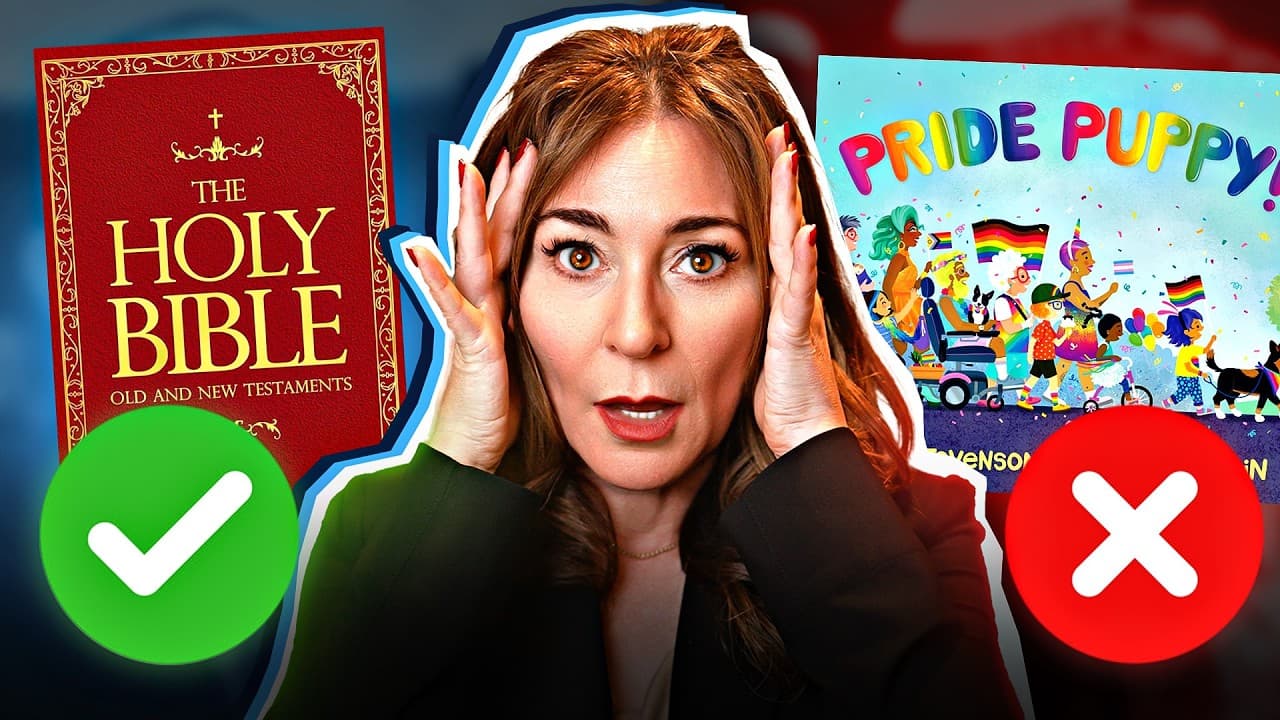
The Supreme Court has ruled that parents can opt their children out of reading books with LGBTQ content in schools, citing religious freedom. This decision overturns previous rulings that mere exposure to ideas doesn't violate the First Amendment. It raises questions about the balance between religious rights and educational inclusivity.
Transcript
On the last day of term, the Supreme Court's six conservatives struck a blow for parental rights. No, they're not going to let parents decide healthcare for their kids. Don't be silly. They're still going to let states ban gender affirming care for minors. Instead, they've allowed parents to ensure that their children are never exposed to dangerous... Read More
Key Insights
- The Supreme Court ruled that parents can opt their children out of LGBTQ-themed books in schools.
- This decision is based on the argument of religious freedom and parental rights.
- The ruling overturns previous court decisions that exposure to ideas alone doesn't infringe on religious rights.
- The case involved Montgomery County, which had introduced inclusive books to foster diversity and acceptance.
- The court's decision applies strict scrutiny to the school's policy, finding it unconstitutional.
- Justice Alito's opinion suggests that teaching certain ideas can infringe on religious beliefs.
- The dissenting opinion argues that the ruling misinterprets previous cases and undermines educational inclusivity.
- The decision could lead to more challenges against school curricula based on religious beliefs.
Install to Summarize YouTube Videos and Get Transcripts
Explore YouTube Video Summarizer or Get YouTube Transcript Extractor
Questions & Answers
Q: How does the Supreme Court ruling affect LGBTQ-themed books in schools?
The Supreme Court ruling allows parents to opt their children out of reading LGBTQ-themed books in schools, citing religious freedom. This decision overturns previous rulings that mere exposure to ideas does not violate the First Amendment. It raises concerns about the balance between religious rights and educational inclusivity, potentially leading to more challenges against school curricula based on religious beliefs.
Q: What was the basis of the parents' lawsuit against Montgomery County?
The parents' lawsuit against Montgomery County was based on the claim that the inclusion of LGBTQ-themed books in the school curriculum violated their religious freedom. They argued that exposing their children to such content without an opt-out option infringed on their First Amendment rights. The lawsuit challenged the school's policy, which aimed to foster diversity and acceptance through inclusive educational materials.
Q: What precedent did the Supreme Court overturn with its decision?
The Supreme Court's decision overturned the precedent that mere exposure to ideas in public school curricula does not violate the First Amendment's free exercise clause. Previous rulings had established that exposure to objectionable material alone does not impose a burden on religious beliefs. The new ruling applies strict scrutiny to educational policies, suggesting that teaching certain ideas can infringe on religious rights.
Q: Why did the court apply strict scrutiny to the school's policy?
The court applied strict scrutiny to the school's policy because it determined that the policy burdened the religious exercise of parents by requiring their children to be exposed to ideas conflicting with their religious beliefs. This level of scrutiny is applied when a law or policy potentially infringes on fundamental constitutional rights, requiring the government to prove a compelling interest and that the policy is narrowly tailored to achieve that interest.
Q: What concerns did the dissenting opinion raise about the ruling?
The dissenting opinion raised concerns that the ruling misinterprets previous cases and undermines educational inclusivity. It argued that the decision equates the mere reading of a book with coercion, which could lead to broader implications for educational policies. The dissent emphasized that LGBTQ individuals are part of society and that eliminating books depicting them will not remove the reality of their existence from students' lives.
Q: How might this ruling impact future educational policies?
This ruling could impact future educational policies by encouraging more challenges to school curricula based on religious beliefs. It sets a precedent that teaching ideas conflicting with parental religious views can be seen as infringing on First Amendment rights, potentially leading to increased demands for opt-outs from various educational materials. This may complicate efforts to create inclusive and diverse educational environments.
Q: What was the role of previous cases like Wisconsin v. Yoder in the decision?
Previous cases like Wisconsin v. Yoder played a role in the decision by providing a historical context for religious freedom in education. In Yoder, the court ruled that Amish parents could withdraw their children from school for religious reasons. However, the new ruling extends this principle, suggesting that exposure to conflicting ideas alone can infringe on religious rights, which was not the original intent of Yoder.
Q: How does the ruling relate to the concept of public benefits in education?
The ruling relates to the concept of public benefits in education by framing public education as a benefit that cannot be conditioned on parents' acceptance of ideas conflicting with their religious beliefs. The court applied logic from previous cases like Trinity Lutheran, which prohibited discrimination against religious institutions in public benefits, to argue that forcing parents to choose between public education and their religious beliefs is an unlawful burden.
Summary & Key Takeaways
-
The Supreme Court decided that parents have the right to opt their children out of reading books with LGBTQ content in schools, citing religious freedom. This decision overturns previous rulings that mere exposure to ideas doesn't violate the First Amendment and raises concerns about balancing religious rights with educational inclusivity.
-
Montgomery County's school system introduced inclusive books to promote diversity and acceptance, but faced lawsuits from parents objecting on religious grounds. The court's ruling applies strict scrutiny to the school's policy, deeming it unconstitutional and suggesting that teaching certain ideas can infringe on religious beliefs.
-
The dissenting opinion argues that the ruling misinterprets previous cases and undermines educational inclusivity. The decision could lead to more challenges against school curricula based on religious beliefs, raising questions about the future of educational policies and the extent of parental rights in public education.
Read in Other Languages (beta)
Share This Summary 📚
Summarize YouTube Videos and Get Video Transcripts with 1-Click
Try YouTube Summary with ChatGPT & Claude or YouTube Transcript Generator
Explore More Summaries from LegalEagle 📚




Summarize YouTube Videos and Get Video Transcripts with 1-Click
Try YouTube Summary with ChatGPT & Claude or YouTube Transcript Generator