The Mesopotamian Front Awakens - Joseph Joffre Gets Sacked I THE GREAT WAR Week 125
TL;DR
General Joffre is replaced as Mesopotamian Front sees renewed action.
Transcript
He had been the rock of calm in 1914 as the Germans approached Paris, but as 1916 and the Battles of the Somme and Verdun had continued on and on with ever more French lives lost, confidence in General Joseph Joffre’s leadership of the French army had flagged, and this week, Joffre is replaced. I’m Indy Neidell; welcome to the Great War. Last week,... Read More
Key Insights
- General Joseph Joffre, once a symbol of calm for the French army, is replaced due to declining confidence in his leadership amidst heavy losses at the Somme and Verdun.
- The Central Powers capture Bucharest, leading to Romanian retreat and political turmoil, while the Allies face challenges in maintaining their positions.
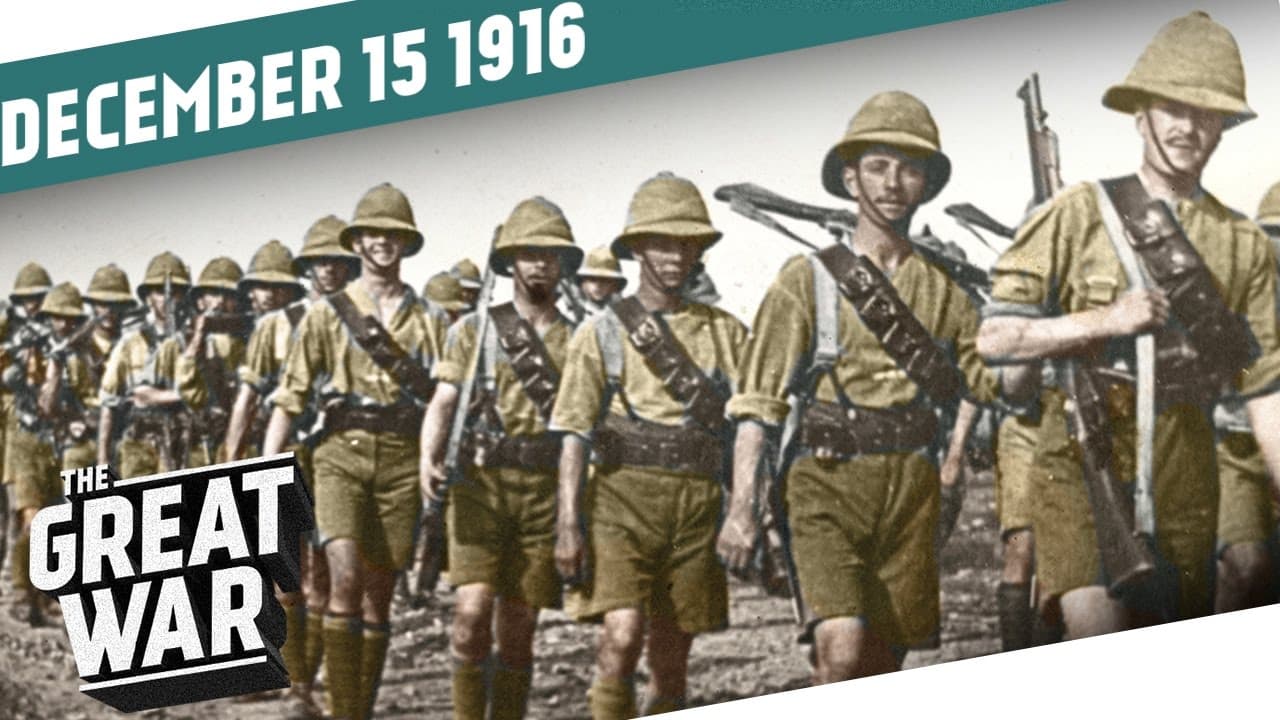
- The Mesopotamian Front, previously quiet, sees renewed British efforts with improved logistics and infrastructure, aiming to secure key areas and possibly Baghdad.
- Lieutenant-General Sir Stanley Maude leads the Mesopotamian Expeditionary Force with clear directives to secure oilfields, pipelines, and the Basra region.
- General Robert Nivelle, credited with organizing successful counter-offensives at Verdun, becomes the new commander of the French army, replacing Joffre.
- Political changes occur across Europe, with new appointments in Britain, Austria, and France, reflecting the shifting dynamics of the war.
- The Romanian army, demoralized by the loss of its capital, faces pressure to collaborate with Russian forces, leading to leadership changes and strained relations.
- The harsh winter and logistical challenges strain both the Central and Allied Powers, affecting military operations and supply lines across various fronts.
Install to Summarize YouTube Videos and Get Transcripts
Explore YouTube Video Summarizer or Get YouTube Transcript Extractor
Questions & Answers
Q: Why was General Joseph Joffre replaced?
General Joseph Joffre was replaced due to declining confidence in his leadership amidst the heavy losses suffered by the French army during the Battles of the Somme and Verdun. His inability to secure decisive victories and mounting casualties led to his replacement by General Robert Nivelle, who was seen as a more dynamic leader capable of reinvigorating French military efforts.
Q: What were the objectives of the British forces in the Mesopotamian Front?
The British forces in the Mesopotamian Front, led by Lieutenant-General Sir Stanley Maude, were tasked with securing the oilfields, pipelines, and the Basra region. These objectives were strategically important for maintaining British influence and ensuring a steady supply of resources. The possibility of capturing Baghdad was also considered, although it was not the primary objective at the time.
Q: What challenges did the Central Powers face in Romania?
The Central Powers, despite their advances in Romania, faced significant logistical challenges. The roads were in poor condition, making them nearly impassable, and the supply lines were stretched thin. Additionally, the harsh winter weather and lack of adequate resources led to discipline issues and looting among the troops, hindering their ability to maintain a hard pursuit of the retreating Romanian forces.
Q: How did the political landscape in Europe change during this period?
During this period, there were significant political changes across Europe. In Britain, Lord Grey resigned as Foreign Secretary, and Lord Derby became the new Secretary of State for War. In Austria, Ernest von Koerber resigned as Premier. In France, General Robert Nivelle replaced General Joseph Joffre as the commander of the French army, reflecting the shifting dynamics and pressures of the ongoing war.
Q: What role did General Robert Nivelle play at Verdun?
General Robert Nivelle played a crucial role at Verdun by organizing a successful French counter-offensive using a creeping barrage tactic, which was instrumental in regaining lost ground. His ability to coordinate artillery and infantry assaults earned him recognition and ultimately led to his appointment as the new commander of the French army, succeeding General Joseph Joffre.
Q: What was the outcome of the Central Powers' advance in Romania?
The Central Powers' advance in Romania resulted in the capture of Bucharest and significant territorial gains. However, the advance was hampered by logistical challenges, including poor road conditions and stretched supply lines. Despite these difficulties, the Central Powers managed to clear Wallachia of Allied troops and continued their push, although their forces were exhausted and faced increasing resistance.
Q: How did the Allies respond to the German peace note?
The Allies, particularly French premier Aristide Briand, were skeptical of the German peace note, viewing it as a disingenuous offer. Briand dismissed the note as a strategic maneuver by Germany, summarizing it as "Heads I win, tails you lose." The Allies were wary of negotiating from a position of weakness and continued to focus on military efforts to gain a more advantageous position.
Q: What impact did the harsh winter have on military operations?
The harsh winter had a significant impact on military operations, affecting both the Central and Allied Powers. The cold weather and poor road conditions hampered troop movements and supply lines, leading to logistical challenges and delays. In some regions, such as the Macedonian front, operations were suspended, while in others, like Romania, the weather exacerbated the difficulties faced by advancing armies.
Summary & Key Takeaways
-
General Joseph Joffre, once revered for his leadership, is replaced amid mounting losses and waning confidence in his command. The Central Powers capture Bucharest, leading to Romanian retreat and political upheaval. The Mesopotamian Front sees renewed British efforts with improved logistics and infrastructure, aiming to secure key strategic areas.
-
Lieutenant-General Sir Stanley Maude leads the Mesopotamian Expeditionary Force with directives to secure oilfields, pipelines, and the Basra region. Meanwhile, General Robert Nivelle, credited with organizing successful counter-offensives at Verdun, becomes the new commander of the French army, replacing Joffre.
-
Political changes ripple across Europe, with new appointments in Britain, Austria, and France, reflecting the shifting dynamics of the war. The harsh winter and logistical challenges strain both the Central and Allied Powers, affecting military operations and supply lines across various fronts.
Read in Other Languages (beta)
Share This Summary 📚
Summarize YouTube Videos and Get Video Transcripts with 1-Click
Try YouTube Summary with ChatGPT & Claude or YouTube Transcript Generator
Explore More Summaries from The Great War 📚

Summarize YouTube Videos and Get Video Transcripts with 1-Click
Try YouTube Summary with ChatGPT & Claude or YouTube Transcript Generator