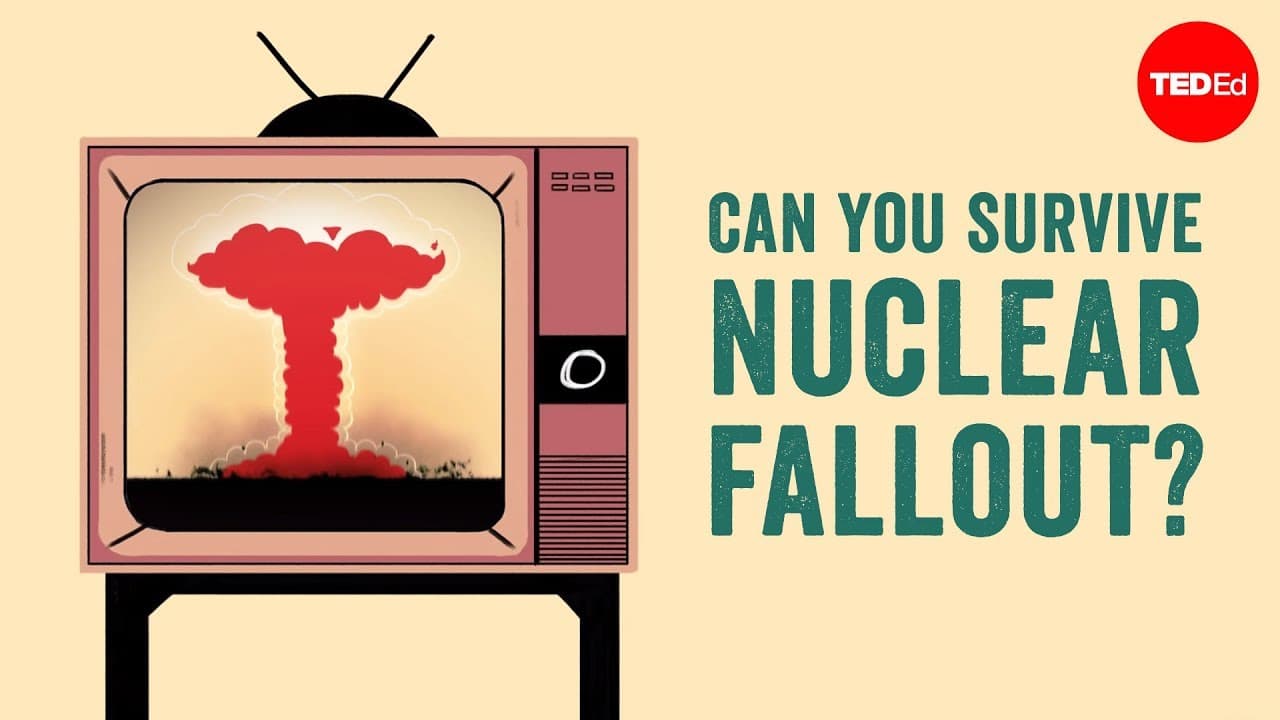
Can you survive nuclear fallout? - Brooke Buddemeier and Jessica S. Wieder
TL;DR
Stay inside sturdy buildings to protect from nuclear blast, shockwave, heat, and radiation fallout.
Transcript
The full scope of a nuclear detonation is almost unimaginable. Hopefully, no one will ever experience another of these catastrophic incidents. But there is a scientifically supported plan of action that could save hundreds of thousands of lives in the area surrounding a nuclear explosion. So what is this plan, and what exactly would it protect... Read More
Key Insights
- ❓ Nuclear detonations unleash destructive energy through fission, producing fireballs, shockwaves, and radiation fallout.
- 🥵 Sturdy buildings offer vital protection from blast shockwaves, heat, and radiation fallout.
- 🥺 Radiation fallout emits ionizing radiation, which can lead to severe health effects if exposure is prolonged.
- 🏣 Finding shelter indoors for 24 hours post-blast significantly reduces the risk of radiation exposure.
- 😮 Fallout particles sink and collect on surfaces, making underground or high-rise shelters ideal.
- ❓ Removing contaminated clothing, washing exposed skin, and staying indoors can mitigate radiation exposure.
- 🥠 Emergency responders advise staying tuned for updates post-blast through radios due to communication disruptions.
Install to Summarize YouTube Videos and Get Transcripts
Explore YouTube Video Summarizer or Get YouTube Transcript Extractor
Questions & Answers
Q: How can sturdy buildings protect individuals from the effects of a nuclear detonation?
Sturdy buildings can shield from blast shockwaves, heat, and radiation fallout by absorbing energy and providing a barrier against external threats, keeping individuals safe inside.
Q: What are the dangers of radiation fallout after a nuclear detonation?
Radiation fallout consists of radioactive particles emitting ionizing radiation, which can result in cell damage, radiation burns, sickness, cancer, and death if exposure is significant, emphasizing the importance of sheltering indoors.
Q: How can individuals protect themselves if caught in radiation fallout?
If caught in radiation fallout, individuals should find shelter, remove contaminated clothing, wash exposed skin, and stay indoors for at least 24 hours to minimize exposure to hazardous radioactive particles.
Q: Why is it crucial to "Stay Inside, Stay Inside, and Stay Tuned" after a nuclear detonation?
Following this protocol helps individuals survive by seeking shelter from immediate blast effects and radiation fallout, staying protected inside sturdy buildings, and listening for important updates from first responders.
Summary & Key Takeaways
-
Nuclear detonations release devastating energy through nuclear fission, causing fireballs, shockwaves, and radiation fallout.
-
Sturdy buildings offer protection from blast shockwaves, heat, and radiation fallout.
-
Fallout particles emit ionizing radiation, which can be hazardous but can be minimized by staying inside for 24 hours after the blast.
Read in Other Languages (beta)
Share This Summary 📚
Summarize YouTube Videos and Get Video Transcripts with 1-Click
Try YouTube Summary with ChatGPT & Claude or YouTube Transcript Generator
Explore More Summaries from TED-Ed 📚





Summarize YouTube Videos and Get Video Transcripts with 1-Click
Try YouTube Summary with ChatGPT & Claude or YouTube Transcript Generator