Products
Features
YouTube Video Summarizer
Summarize YouTube videos
Web & PDF Highlighter
Highlight web pages & PDFs
Chat with PDF
Ask any PDF questions with AI
Ask AI Clone
Chat with your highlights & memories
Audio Transcriber
Transcribe audio files to text
Glasp Reader
Read and highlight articles
Kindle Highlight Export
Export your Kindle highlights
Idea Hatch
Hatch ideas from your highlights
Integrations
Obsidian Plugin
Notion Integration
Pocket Integration
Instapaper Integration
Medium Integration
Readwise Integration
Snipd Integration
Hypothesis Integration
Apps & Extensions
Chrome Extension
Safari Extension
Edge Add-ons
Firefox Add-ons
iOS App
Android App
Discover
Discover
Ideas
Discover new ideas and insights
Articles
Curated articles and insights
Books
Book recommendations by great minds
Posts
Essays and notes from readers
Quotes
Inspiring quotes collection
Videos
Curated videos and summaries
Explore Glasp
Glasp Newsletter
Weekly insights and updates
Glasp Talk
Interview series with great minds
Glasp Blog
Latest news and articles
Glasp Use Cases
Learn how others use Glasp
Build & Support
Glasp API
Access Glasp's API for developers
MCP Connector
Connect Glasp to Claude & ChatGPT
Community
Glasp Reddit Community
Students
Student discount and benefits
FAQs
Frequently Asked Questions
AboutPricing
DashboardLog inSign up

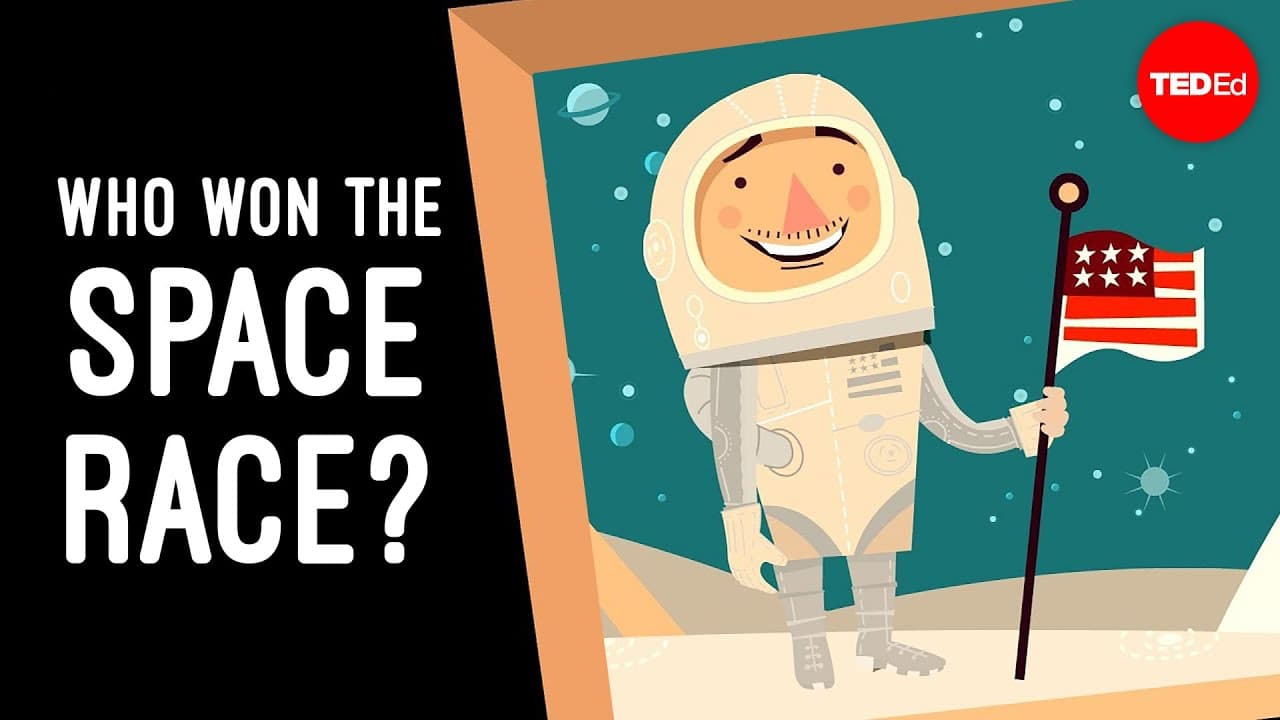
Who won the space race? - Jeff Steers
1.6M views
•
August 14, 2013
by
TED-Ed
YouTube video player
Who won the space race? - Jeff Steers

TL;DR

The Space Race between the U.S. and U.S.S.R. led to groundbreaking achievements in space exploration.

Transcript

On October 4, 1957, the world watched in awe and fear as the Soviet Union launched Sputnik, the world's first man-made satellite, into space. This little metal ball, smaller than two feet in diameter, launched a space race between the U.S. and U.S.S.R. that would last for eighteen years and change the world as we know it. Sputnik was actually not t... Read More

Key Insights

  • 👾 Sputnik's launch in 1957 sparked the intense competition between the U.S. and U.S.S.R. in space exploration.
  • 🥺 The Space Race led to significant technological advancements in various fields like healthcare, communication, and materials science.
  • 👨‍🚀 Milestones like putting a man on the moon under the Apollo program showcased the capabilities of human space exploration.
  • 👾 Cooperation in space missions, like Apollo-Soyuz in 1975, marked the end of the Space Race and ushered in a new era of collaboration.

Install to Summarize YouTube Videos and Get Transcripts

Explore YouTube Video Summarizer or Get YouTube Transcript Extractor

Questions & Answers

Q: What event catalyzed the Space Race between the U.S. and U.S.S.R.?

The launch of Sputnik by the Soviet Union on October 4, 1957, sparked the Space Race and heightened tensions between the two superpowers.

Q: How did the U.S. respond to the successful launch of Sputnik?

President Eisenhower ordered accelerated efforts to launch satellites and catch up in space exploration, leading to projects like Vanguard and eventually successful missions.

Q: What was the significance of the Apollo-Soyuz mission in 1975?

The joint mission between the U.S. and U.S.S.R. marked the end of the Space Race, showcasing a shift towards cooperation in space exploration.

Q: What were some of the technological advancements stemming from the space program?

Technologies like memory foam, freeze-dried food, LEDs, and satellites for GPS and communication were developed through the space program.

Summary & Key Takeaways

  • Sputnik's launch by the Soviet Union sparked the Space Race in 1957.

  • The U.S. rushed to catch up after failed attempts before achieving milestones like putting a man on the moon.

  • Beyond competition, space exploration resulted in technological advancements benefiting everyday life.


Read in Other Languages (beta)

English

Share This Summary 📚

Summarize YouTube Videos and Get Video Transcripts with 1-Click

Download browser extensions on:

Try YouTube Summary with ChatGPT & Claude or YouTube Transcript Generator

Explore More Summaries from TED-Ed 📚
Can you solve the bridge riddle? - Alex Gendler thumbnail
Can you solve the bridge riddle? - Alex Gendler
TED-Ed
The myth of Thor's journey to the land of giants - Scott A. Mellor thumbnail
The myth of Thor's journey to the land of giants - Scott A. Mellor
TED-Ed
Why do cats act so weird? - Tony Buffington thumbnail
Why do cats act so weird? - Tony Buffington
TED-Ed
How blood pressure works - Wilfred Manzano thumbnail
How blood pressure works - Wilfred Manzano
TED-Ed
The unexpected math behind Van Gogh's "Starry Night" - Natalya St. Clair thumbnail
The unexpected math behind Van Gogh's "Starry Night" - Natalya St. Clair
TED-Ed
History vs. Vladimir Lenin - Alex Gendler thumbnail
History vs. Vladimir Lenin - Alex Gendler
TED-Ed

Summarize YouTube Videos and Get Video Transcripts with 1-Click

Download browser extensions on:

Try YouTube Summary with ChatGPT & Claude or YouTube Transcript Generator

Apps & Extensions

  • Chrome Extension
  • Safari Extension
  • Edge Add-ons
  • Firefox Add-ons
  • iOS App
  • Android App

Key Features

  • YouTube Video Summarizer
  • Web & PDF Summarizer
  • Web & PDF Highlighter
  • Chat with PDF
  • Ask AI Clone
  • Audio Transcriber
  • Glasp Reader
  • Kindle Highlight Export
  • Idea Hatch

Integrations

  • Obsidian Plugin
  • Notion Integration
  • Pocket Integration
  • Instapaper Integration
  • Medium Integration
  • Readwise Integration
  • Snipd Integration
  • Hypothesis Integration

More Features

  • APIs
  • MCP Connector
  • Blog & Post
  • Embed Links
  • Image Highlight
  • Personality Test
  • Quote Shots

Company

  • About us
  • Blog
  • Community
  • FAQs
  • Job Board
  • Newsletter
  • Pricing
Terms

•

Privacy

•

Guidelines

© 2026 Glasp Inc. All rights reserved.