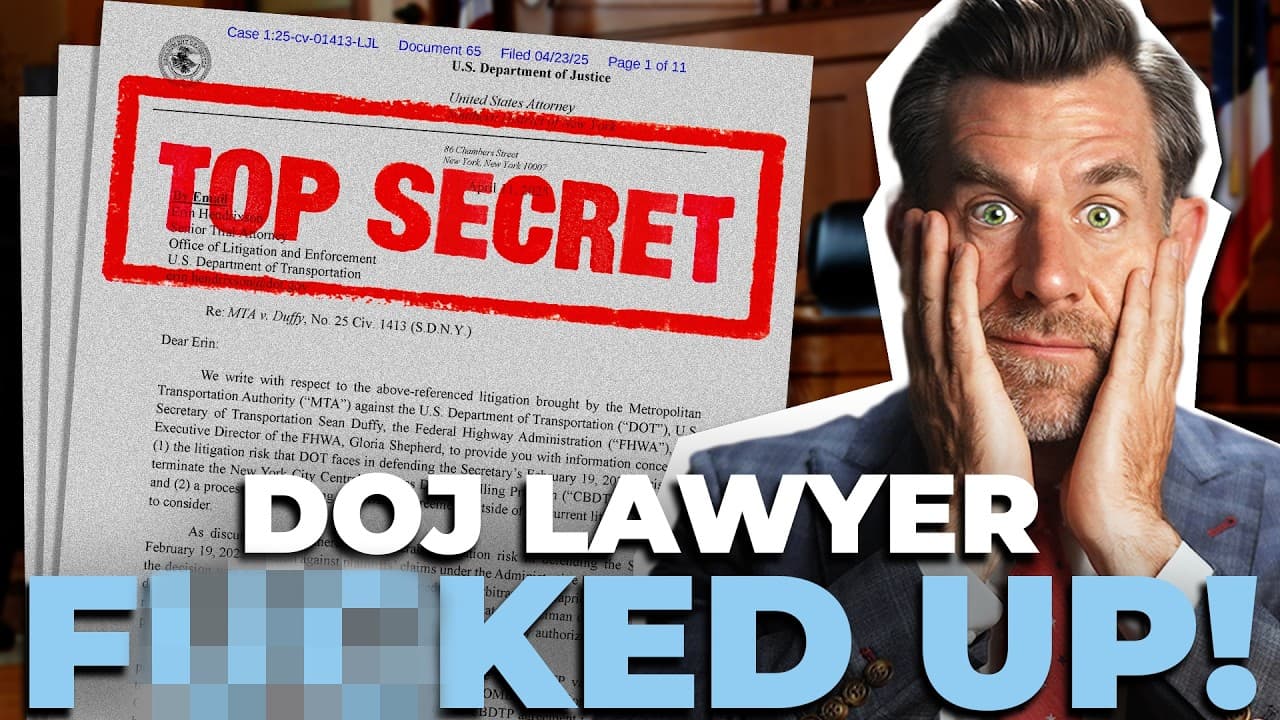
DOJ Inadvertently Files Attorney Client Memo (That Says Their Case Sucks)
TL;DR
DOJ inadvertently files internal memo revealing weak case strategy.
Transcript
Trigger warning. If you are a lawyer, you probably do not want to watch this video. But if you're not, or you just want your daily dose of Shod and Freuda, let's talk about what happened. This is every lawyer's absolute worst nightmare. Yes, a poor lawyer at the DOJ did the unthinkable. Not only did they file the wrong document with the court, that... Read More
Key Insights
- A DOJ lawyer mistakenly filed an internal memo outlining the weaknesses of their case, a significant legal blunder.
- The memo detailed why the DOJ's arguments against New York City's congestion pricing program were unlikely to succeed in court.
- The filing error exposed the DOJ's internal strategy, highlighting the risks of defending the case under the Administrative Procedure Act.
- The memo suggested alternative strategies for terminating the program outside of the current litigation, indicating a lack of confidence in the original approach.
- The mistake was attributed to the outdated and clunky PACER system used for filing documents in federal court.
- Despite the error, the legal analysis and strategy within the memo were standard practice, necessary for client communication.
- Efforts were made to seal the document and pretend the incident never occurred, though the damage was already done.
- The incident underscores the importance of careful document management and the potential repercussions of filing errors in legal practice.
Install to Summarize YouTube Videos and Get Transcripts
Explore YouTube Video Summarizer or Get YouTube Transcript Extractor
Questions & Answers
Q: What was the major error made by the DOJ lawyer?
The DOJ lawyer mistakenly filed an internal memo with the court that outlined the weaknesses of their case against New York City's congestion pricing program. This memo, which was meant to be confidential, detailed the litigation risks and alternative strategies, exposing the DOJ's internal deliberations.
Q: How did the filing error occur?
The error occurred due to the outdated and cumbersome PACER system used for filing documents in federal court. The wrong document was attached to the filing, leading to the inadvertent public disclosure of the internal memo, which was intended for internal DOJ use only.
Q: What were the contents of the internal memo?
The internal memo detailed the litigation risks associated with defending the DOJ's case against the congestion pricing program. It highlighted the weaknesses in their arguments and suggested alternative strategies for terminating the program outside of the current litigation, indicating a lack of confidence in their original approach.
Q: What impact did the filing error have on the case?
While the filing error was a significant professional embarrassment, it is unlikely to affect the litigation's outcome. The memo's revelation of internal strategy is a standard legal practice, and efforts were made to seal the document and mitigate the damage. However, the incident serves as a cautionary tale for document management in legal practice.
Q: What strategies did the DOJ consider for the case?
The memo suggested that the DOJ consider terminating the congestion pricing program through established procedures outside of the current litigation. This alternative strategy was proposed due to the perceived weaknesses in their original legal arguments and the high litigation risk associated with defending the case in court.
Q: What was the reaction to the filing error?
The filing error was met with embarrassment and urgency to rectify the mistake. Efforts were made to seal the document and retract it from the public docket. Despite these efforts, the memo had already circulated, exposing the DOJ's internal strategy and causing significant professional embarrassment for those involved.
Q: How does this incident highlight the challenges of legal practice?
This incident underscores the importance of careful document management and the potential repercussions of filing errors in legal practice. It highlights the risks associated with outdated systems like PACER and the need for vigilance in ensuring that confidential documents remain secure and are not inadvertently disclosed.
Q: What lessons can be learned from this filing error?
The filing error teaches the importance of accurate document handling and the potential consequences of mistakes in legal practice. It emphasizes the need for updated filing systems, thorough checks before submissions, and the understanding that even routine practices, like filing documents, require careful attention to detail to avoid significant professional and legal repercussions.
Summary & Key Takeaways
-
A DOJ lawyer inadvertently filed an internal memo in court, revealing their weak legal strategy against New York City's congestion pricing program. The memo, intended for internal use, outlined the significant litigation risks and suggested alternative strategies, highlighting the challenges faced by the DOJ in defending the case.
-
The error was facilitated by the outdated PACER system, which led to the wrong document being attached. Despite efforts to retract the filing, the memo's contents were already publicly available, exposing the DOJ's internal deliberations and embarrassing the involved parties.
-
While the incident is a severe professional embarrassment, it is unlikely to affect the litigation's outcome. The memo's revelation of internal strategy and analysis is standard legal practice, but its unintentional public disclosure is a cautionary tale for legal document management.
Read in Other Languages (beta)
Share This Summary 📚
Summarize YouTube Videos and Get Video Transcripts with 1-Click
Try YouTube Summary with ChatGPT & Claude or YouTube Transcript Generator
Explore More Summaries from LegalEagle 📚






Summarize YouTube Videos and Get Video Transcripts with 1-Click
Try YouTube Summary with ChatGPT & Claude or YouTube Transcript Generator