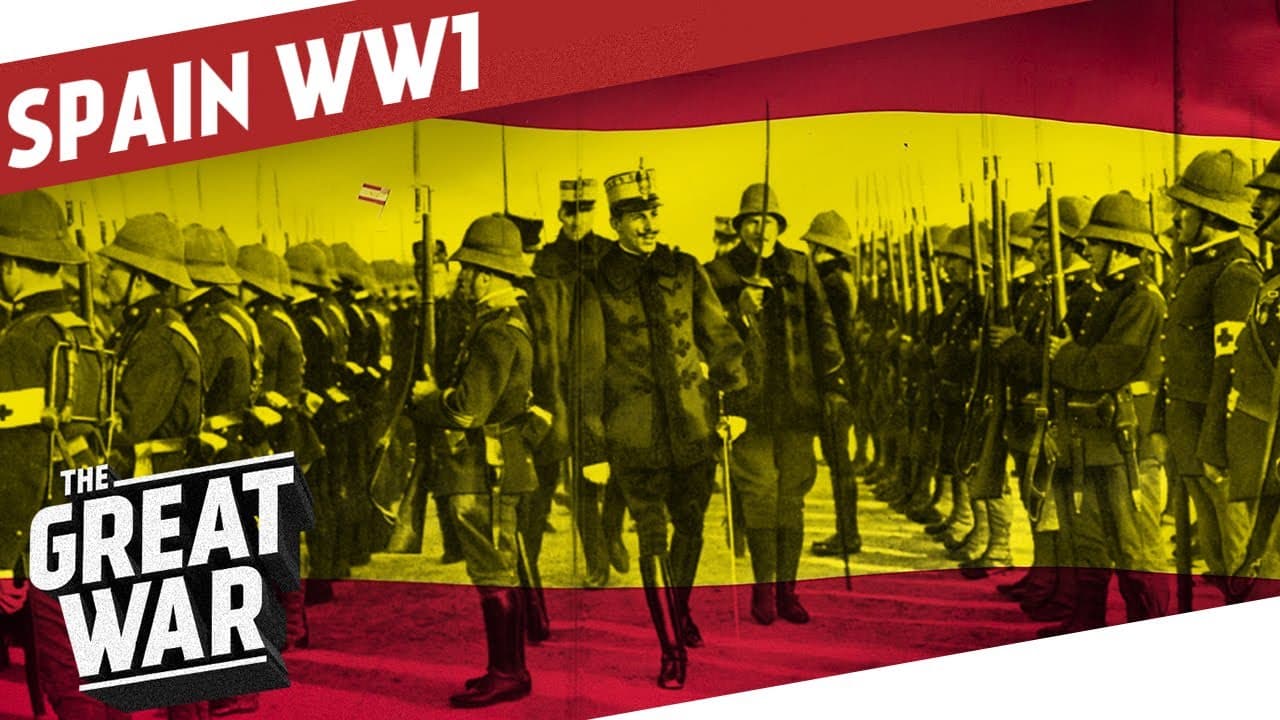
How Did Spain's Neutrality Impact WW1?
TL;DR
Spain remained neutral during World War 1 due to political and social divides, avoiding direct conflict but becoming a significant arms supplier. This neutrality allowed Spain to experience an economic upturn, despite challenges like German submarine attacks on its merchant fleet and internal political unrest.
Transcript
During the First World War, European nations were neutral because of policy - the Netherlands -, by treaty - Belgium -, or political constraints - Switzerland. But one nation's neutrality was a reflexion of a deep divide in its society and its politics, Spain. I'm Indy Neidell; welcome to a Great War special episode about Spain in the First World W... Read More
Key Insights
- Spain declared neutrality in WW1 on August 7, 1914, due to political and social divides.
- Spain's neutrality was influenced by its minor power status and lack of alliances.
- The Spanish arms industry grew, supplying pistols like the Ruby to France.
- Spain's economy improved during the war, achieving a trade surplus for the first time in modern history.
- Internal political unrest grew, with strikes and calls for reform, leading to increased military influence.
- The Spanish monarchy faced challenges, with separatist movements gaining traction.
- Spain's arms industry collapsed post-war due to decreased demand and competition.
- Spain's neutrality led to significant internal political shifts and economic changes.
Install to Summarize YouTube Videos and Get Transcripts
Explore YouTube Video Summarizer or Get YouTube Transcript Extractor
Questions & Answers
Q: How did Spain's neutrality impact its economy during WW1?
Spain's neutrality during World War 1 led to an economic upturn, as it became a significant arms supplier to warring nations like France. This contributed to Spain achieving a trade surplus for the first time in modern history. Additionally, industries such as textiles, coal, steel, and grain production flourished, further boosting the economy despite challenges like inflation and German submarine attacks on Spanish shipping.
Q: What role did the Spanish arms industry play during WW1?
During World War 1, the Spanish arms industry became a crucial supplier of pistols, particularly to France. The Ruby pistol, produced by companies like Gabilondo y Urresti, was a notable example. Spain's unique patent laws allowed rapid growth in arms manufacturing, though this boom was unsustainable post-war, leading to the industry's collapse as demand decreased and competition increased.
Q: Why did Spain remain neutral during World War 1?
Spain remained neutral during World War 1 due to deep political and social divides, as well as its status as a minor European power with no significant alliances. The Spanish government, led by Prime Minister Eduardo Dato, believed that joining the war would ruin the nation economically and ignite civil unrest. Additionally, Spain's monarchy had dynastic ties to both the Central Powers and the Allies, further complicating potential involvement.
Q: What were the internal political consequences of Spain's neutrality in WW1?
Spain's neutrality in World War 1 led to significant internal political consequences, including increased unrest and demands for reform. Strikes and protests became more common as political divisions deepened, with calls for economic and political change. The monarchy's support for the military over civilian government increased military influence in politics, setting the stage for future upheavals, such as the 1923 coup by Miguel Primo de Rivera.
Q: How did Spain's arms industry collapse after WW1?
After World War 1, Spain's arms industry collapsed due to a sharp decline in demand and increased competition. During the war, the industry had rapidly expanded, taking advantage of Spain's patent laws and the need for weapons by warring nations. However, post-war, the reduced need for arms and the inability to compete with more modern manufacturing techniques led to the industry's downfall.
Q: What were the social and political divides in Spain during WW1?
During World War 1, Spain experienced significant social and political divides. The political right, including the aristocracy and clergy, sympathized with the Central Powers, while the left, comprising republicans, socialists, and intellectuals, supported the Allies. These divides were exacerbated by strict laws limiting freedom of speech and assembly, leading to increased unrest and demands for reform, ultimately influencing Spain's internal politics.
Q: How did Spain's neutrality affect its international relations during WW1?
Spain's neutrality during World War 1 affected its international relations by positioning it as a neutral arms supplier, particularly to France. Although Spain avoided direct conflict, its economic ties with warring nations strengthened. However, Spain's neutrality also meant it was not actively pursued by either the Allies or the Central Powers for alliances, maintaining its status as a minor European power with limited influence in the broader conflict.
Q: What impact did WW1 have on Spain's political landscape?
World War 1 significantly impacted Spain's political landscape by highlighting and deepening existing social and political divides. The war period saw increased strikes and demands for reform, with the military gaining a stronger influence in politics. The monarchy's alignment with the military over civilian government further destabilized the political environment, leading to future upheavals, including the 1923 coup by Miguel Primo de Rivera and the eventual Spanish Civil War.
Summary & Key Takeaways
-
Spain maintained neutrality during World War 1, avoiding direct conflict but becoming a significant arms supplier to nations like France. This neutrality allowed Spain to experience economic growth, achieving a trade surplus for the first time in modern history. However, the war also highlighted internal political divides, leading to strikes and increased military influence in politics.
-
The Spanish arms industry flourished during the war, with companies like Gabilondo y Urresti producing pistols such as the Ruby for France. The lack of patent protection in Spain allowed rapid growth, but this boom was unsustainable post-war, leading to the industry's collapse as demand fell and competition increased.
-
Spain's neutrality did not shield it from internal turmoil, as political unrest grew with strikes and demands for reform. The monarchy's support for the military over civilian government led to increased military influence, paving the way for future political upheavals, including the 1923 coup by Miguel Primo de Rivera.
Read in Other Languages (beta)
Share This Summary 📚
Summarize YouTube Videos and Get Video Transcripts with 1-Click
Try YouTube Summary with ChatGPT & Claude or YouTube Transcript Generator
Explore More Summaries from The Great War 📚
Summarize YouTube Videos and Get Video Transcripts with 1-Click
Try YouTube Summary with ChatGPT & Claude or YouTube Transcript Generator