How Did the Greater Poland Uprising Shape Post-WWI Poland?
TL;DR
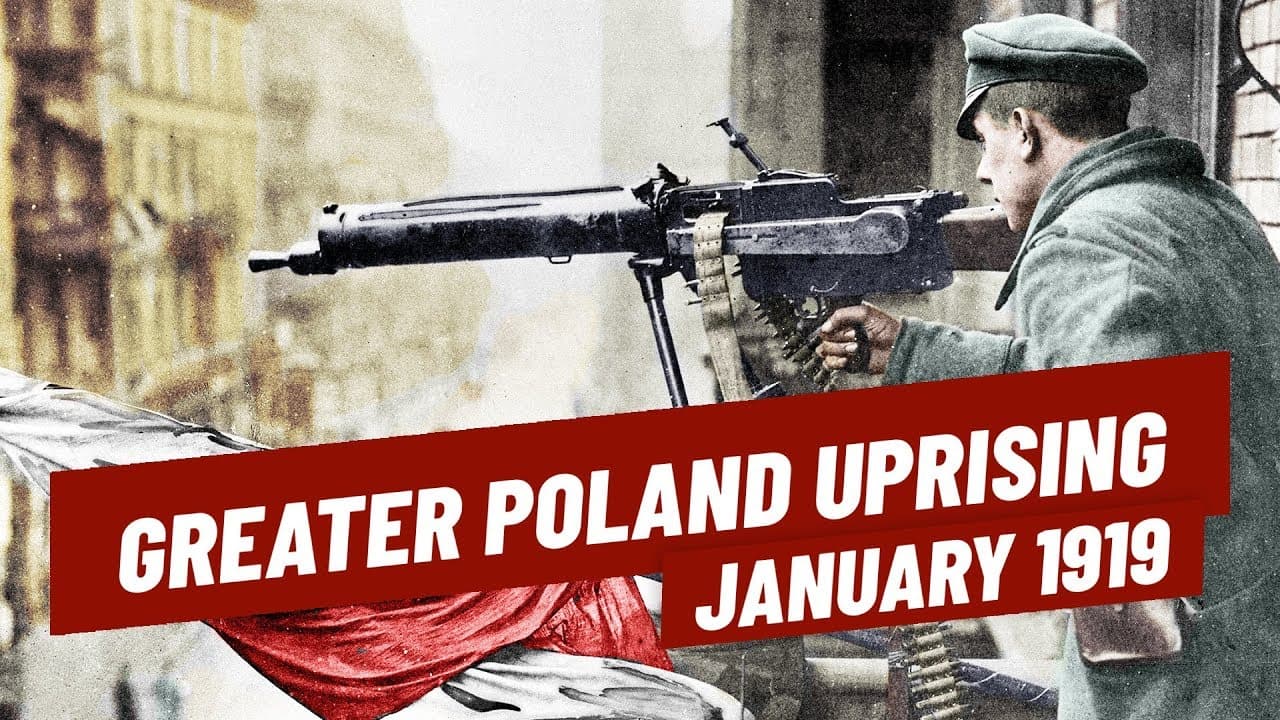
The Greater Poland Uprising of 1918-1919 was a significant event in the re-establishment of an independent Polish state after World War I. Amidst geopolitical chaos, Polish forces in Greater Poland seized control from a weakened Germany, leading to the inclusion of most of the region in Poland under the Treaty of Versailles. This uprising highlighted the complex ethnic and territorial disputes in post-war Europe.
Transcript
hi I'm Jesse Alexander and welcome to Beyond The Great War the monthly episode where we answer questions from viewers like [Applause] you our first question today comes from Alexander schutz who asks could you make a special video about the greater Poland Uprising and the Grands OST well yes Alexander we can so let's get started now the situation i... Read More
Key Insights
- The Greater Poland Uprising occurred in the aftermath of World War I as Polish forces sought to integrate Greater Poland into the newly independent Polish state.
- Poland's borders were uncertain after the war, with competing claims from Germany, Lithuania, and Bolshevik Russia complicating the situation.
- The uprising began in December 1918 when Polish politician Ignacy Jan Paderewski's visit to Poznań sparked street fighting.
- The Polish forces were composed of veterans from various armies, making coordination challenging due to different languages and military training.
- The German government was slow to respond to the uprising, as it was preoccupied with internal conflicts like the Spartacist Uprising.
- The Treaty of Versailles largely favored Poland, granting it most of the disputed Greater Poland region, except for two areas that remained in Germany.
- Post-war, veterans faced difficulties with inadequate support systems, prompting governments to develop new laws and benefits for them.
- Veterans' groups played a significant role in advocating for better treatment and benefits, influencing future policies for war veterans.
Install to Summarize YouTube Videos and Get Transcripts
Explore YouTube Video Summarizer or Get YouTube Transcript Extractor
Questions & Answers
Q: How did the Greater Poland Uprising start?
The Greater Poland Uprising began on December 27, 1918, when Polish politician Ignacy Jan Paderewski arrived in Poznań with a diplomatic delegation. His visit and speech to an enthusiastic Polish crowd ignited street fighting, which quickly spread across the region. The uprising capitalized on Germany's weakened state following its defeat in World War I.
Q: What were the main challenges faced by Polish forces during the uprising?
Polish forces faced several challenges, including coordinating troops composed of veterans from different armies with varied training and languages. Additionally, they lacked artillery, making open fighting difficult. Despite these challenges, they managed to seize control of most of Greater Poland by organizing quickly and avoiding direct confrontations with better-equipped German forces.
Q: How did the Treaty of Versailles affect the Greater Poland region?
The Treaty of Versailles largely favored Poland regarding the Greater Poland region. It granted Poland control over most of the disputed territory, with only two small areas choosing to remain in Germany through a plebiscite in 1921. This settlement was a direct result of the successful Greater Poland Uprising, which established Polish control before the peace negotiations.
Q: What were the geopolitical implications of the Greater Poland Uprising?
The Greater Poland Uprising had significant geopolitical implications, as it helped define Poland's borders post-WWI amidst competing claims from Germany, Lithuania, and Bolshevik Russia. It also contributed to future tensions between Poland and Germany, as many Germans resented the loss of territory and the new border established by the Treaty of Versailles.
Q: How did veterans influence post-war policies in Europe?
Veterans played a crucial role in shaping post-war policies across Europe. Their organized associations lobbied for better treatment and benefits, leading to the development of new laws and compensation systems. These efforts influenced future policies, ensuring more comprehensive support for veterans after subsequent conflicts, such as World War II.
Q: What were the challenges faced by veterans after World War I?
After World War I, veterans faced significant challenges, including inadequate support systems and bureaucratic inefficiencies. Many countries struggled to provide pensions and benefits, leading to economic hardships for veterans. The situation was exacerbated by the economic instability of the post-war years, forcing many veterans to rely on charity or informal work to survive.
Q: How did different countries approach veteran care after World War I?
Countries varied in their approaches to veteran care after World War I. Germany and France offered relatively generous pensions and benefits, while the British and Americans had less comprehensive systems. Austrian veterans faced bureaucratic collapse, and Russian veterans suffered under the chaos of the Civil War. These disparities highlighted the need for more effective veteran support systems.
Q: What impact did the Greater Poland Uprising have on Polish national identity?
The Greater Poland Uprising significantly bolstered Polish national identity by contributing to the re-establishment of an independent Polish state after over a century of partition. It demonstrated the determination of Poles to assert their sovereignty and played a crucial role in defining Poland's post-war borders, fostering a sense of unity and national pride among Poles.
Summary & Key Takeaways
-
The Greater Poland Uprising was a pivotal moment in Poland's post-WWI history. Polish forces, seizing the opportunity presented by Germany's defeat, took control of Greater Poland in late 1918. The uprising's success was crucial in securing Polish claims during the Treaty of Versailles negotiations.
-
The uprising highlighted the complex ethnic and territorial disputes in post-war Europe, with various groups vying for control. The Polish forces' ability to organize quickly, despite challenges, allowed them to establish facts on the ground before the peace conference.
-
Post-war veterans faced significant challenges as governments struggled to provide adequate support. The experiences of these veterans led to the development of new policies and benefits, shaping future approaches to veteran care and compensation.
Read in Other Languages (beta)
Share This Summary 📚
Summarize YouTube Videos and Get Video Transcripts with 1-Click
Try YouTube Summary with ChatGPT & Claude or YouTube Transcript Generator
Explore More Summaries from The Great War 📚
Summarize YouTube Videos and Get Video Transcripts with 1-Click
Try YouTube Summary with ChatGPT & Claude or YouTube Transcript Generator