How Did Finland Gain Independence During WW1?
TL;DR
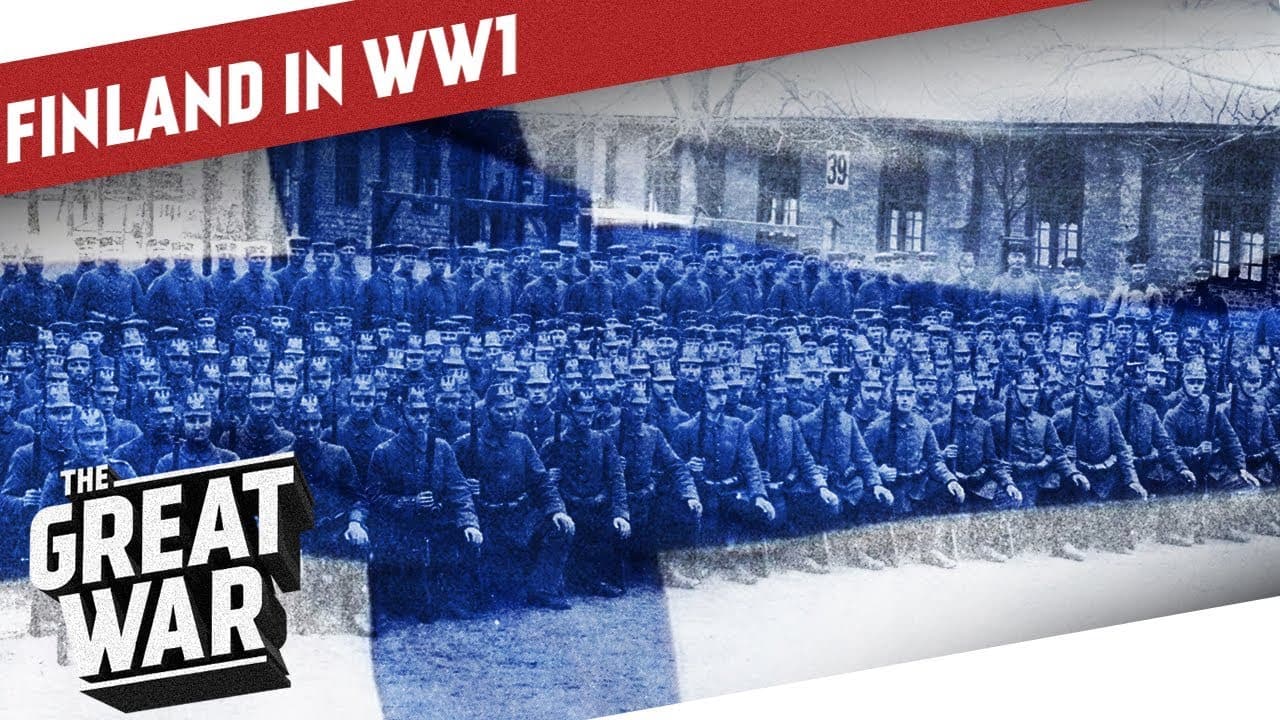
Finland, initially part of the Russian Empire during WW1, declared independence amidst the chaos of Russian political upheaval and rising Finnish nationalism. The February and October Revolutions in Russia weakened Russian control, allowing Finnish political factions to push for autonomy, culminating in the declaration of independence on December 6, 1917.
Transcript
When the First World War broke out, Finland was a small part of a large empire, but by the war’s end had declared independence and was fighting to keep it. Today I’m going to look at the events that led up to that declaration of Finnish independence. I’m Indy Neidell; welcome to a Great War special episode about Finland and the First World War. Whe... Read More
Key Insights
- Finland was part of the Russian Empire but had a degree of autonomy as the Grand Duchy of Finland.
- The rise of nationalism and the oppressive Russian policies led to increased Finnish political activism.
- The February Manifesto of 1899 by Tsar Nicholas II reduced Finland's autonomy, sparking resistance.
- The Social Democratic Party was formed in 1899, advocating for political representation and workers' rights.
- The 1905 general strike in Finland was a response to Russian turmoil and led to political reforms.
- The February and October Russian Revolutions of 1917 created a power vacuum, facilitating Finnish independence efforts.
- The Finnish Parliament declared independence on December 6, 1917, amidst fears of Bolshevik influence.
- The Finnish independence movement was characterized by internal division between socialists and conservatives.
Install to Summarize YouTube Videos and Get Transcripts
Explore YouTube Video Summarizer or Get YouTube Transcript Extractor
Questions & Answers
Q: How did Finland gain independence during World War I?
Finland gained independence during World War I due to the weakening of Russian control following the February and October Revolutions of 1917. The political chaos in Russia allowed Finnish nationalists to push for independence, culminating in the declaration on December 6, 1917. The movement was characterized by internal divisions between socialists and conservatives, but the fear of Bolshevik influence united them in their pursuit of autonomy.
Q: What role did the February Manifesto play in Finnish nationalism?
The February Manifesto of 1899, issued by Tsar Nicholas II, played a significant role in Finnish nationalism by reducing Finland's autonomy and making its legislative body merely advisory. This sparked widespread resistance and political activism among Finns, uniting different factions against Russian oppression and laying the groundwork for the eventual independence movement.
Q: Why was the Social Democratic Party important in Finland's independence movement?
The Social Democratic Party (SDP), formed in 1899, was crucial in Finland's independence movement as it advocated for political representation and workers' rights. It mobilized the working class and played a key role in the 1905 general strike, which led to significant political reforms. The SDP's push for parliamentary reform and class consciousness contributed to the momentum for Finnish independence.
Q: What impact did the Russian Revolutions of 1917 have on Finland?
The Russian Revolutions of 1917 had a profound impact on Finland by creating a power vacuum that weakened Russian control. The February Revolution led to the provisional government, which failed to address Finnish autonomy, while the October Revolution brought the Bolsheviks to power, prompting Finnish political factions to accelerate their push for independence, fearing Bolshevik influence.
Q: How did internal divisions affect Finland's path to independence?
Internal divisions between socialists and conservatives affected Finland's path to independence by complicating the political landscape. While both factions sought autonomy, they differed on governance and social issues. The conservatives' fear of Bolshevik influence and the socialists' alignment with the Bolsheviks created tensions, but the shared goal of independence ultimately united them in declaring independence on December 6, 1917.
Q: What was the significance of the 1905 general strike in Finland?
The 1905 general strike in Finland was significant as it demonstrated the power of collective action and led to political reforms. Triggered by Russia's defeat in the Russo-Japanese War, the strike was nationalistic and aimed at securing political representation and autonomy. It resulted in the repeal of oppressive laws and the introduction of universal suffrage, setting the stage for Finland's eventual independence.
Q: How did World War I influence Finland's independence movement?
World War I influenced Finland's independence movement by creating geopolitical shifts and weakening Russian authority. Finland's strategic importance and the war's demands on Russia diverted attention, allowing Finnish nationalists to organize and push for autonomy. The war also disrupted trade, leading to economic hardship that fueled discontent and support for independence.
Q: What were the key factors leading to Finland's declaration of independence?
Key factors leading to Finland's declaration of independence included the oppressive policies of Tsar Nicholas II, the rise of Finnish nationalism, the impact of the Russian Revolutions of 1917, and internal political dynamics. The decline of Russian authority and fear of Bolshevik influence created an opportunity for Finnish political factions to unite and declare independence on December 6, 1917.
Summary & Key Takeaways
-
Finland, initially under Russian rule, declared independence on December 6, 1917, amid the chaos of the Russian Revolution. The Finnish nationalist movement gained momentum due to oppressive Russian policies and rising nationalism. The February and October Revolutions in Russia weakened the empire's grip, allowing Finnish political factions to push for autonomy and independence.
-
The Finnish independence movement was fueled by the oppressive policies of Tsar Nicholas II, including the February Manifesto of 1899, which reduced Finland's autonomy. The Social Democratic Party emerged in 1899, advocating for political representation and workers' rights, leading to a general strike in 1905 that resulted in political reforms.
-
The Russian Revolutions of 1917 created a power vacuum that the Finnish Parliament exploited to declare independence. Internal divisions between socialists and conservatives marked the independence movement, with the declaration of independence on December 6, 1917, reflecting a compromise between these factions.
Read in Other Languages (beta)
Share This Summary 📚
Summarize YouTube Videos and Get Video Transcripts with 1-Click
Try YouTube Summary with ChatGPT & Claude or YouTube Transcript Generator
Explore More Summaries from The Great War 📚
Summarize YouTube Videos and Get Video Transcripts with 1-Click
Try YouTube Summary with ChatGPT & Claude or YouTube Transcript Generator