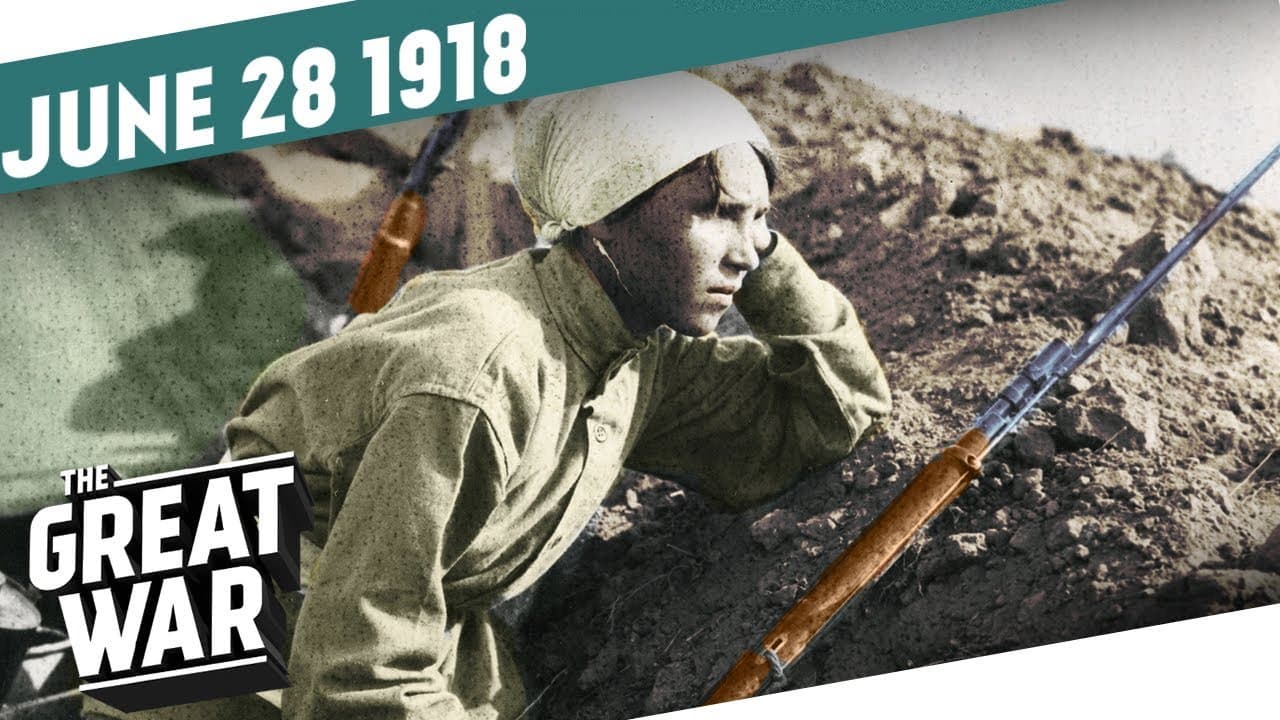
The Run For The Baku Oil Fields I THE GREAT WAR Week 205
TL;DR
Multiple forces vie for control of Baku oil fields.
Transcript
The Americans. They joined the war over a year ago, but didn’t have much of an army and were half the world away from the battlefields of Europe. But over the past 14 months, they’ve built that army and are now sending it en masse to Europe, and over the past few weeks that new army has proven itself in battle. And what does that mean for the war? ... Read More
Key Insights
- The American army, after over a year of preparation, is now actively participating in European battles, signaling a shift in the war dynamics.
- The Ottoman 9th Army, as part of the Army of Islam, is advancing towards the Baku oilfields, circumventing German diplomatic efforts to halt their progress.
- The Germans, lacking a strong military presence in the region, aim to acquire Baku oil through diplomatic means, planning a conference with Caucasian representatives.
- The Soviets, needing Baku oil for their economy, are willing to fight the Ottomans, despite limited Red Army resources, by allying with Armenian militias and Cossacks.
- The Azeri Tartars, having suffered massacres in Baku, align with the Ottomans, despite the Revolutionary Committee of Baku's control over the region.
- The Armenians, fearing for their survival, seek British support to counter the Ottoman advance, despite having little interest in the oil.
- The British have deployed Dunsterforce to aid Baku's defenders, but their forces remain insufficient to significantly impact the region's power dynamics.
- The Battle of Belleau Wood marks a significant moment for American troops, demonstrating their resolve and impressing both Allies and Germans with their resilience.
Install to Summarize YouTube Videos and Get Transcripts
Explore YouTube Video Summarizer or Get YouTube Transcript Extractor
Questions & Answers
Q: What was the significance of the American army's involvement in Europe?
The American army's involvement in Europe marked a turning point in World War I. After over a year of preparation, the U.S. forces were now actively participating in battles, such as the Battle of Belleau Wood, where they demonstrated their resolve and fighting capabilities. This not only boosted Allied morale but also signaled to the Germans that the U.S. was a formidable force, potentially altering the course of the war.
Q: Why were the Baku oilfields significant during World War I?
The Baku oilfields were significant due to their vast oil reserves, which were crucial for fueling military operations and economies. Control over these resources meant power and strategic advantage. The Ottomans, Germans, Soviets, and other regional powers were keen to control Baku to secure energy supplies, influence regional politics, and strengthen their war efforts, making it a contested and strategic target.
Q: How did the Ottoman 9th Army plan to take Baku?
The Ottoman 9th Army, part of the newly formed Army of Islam, planned to take Baku by reinforcing its divisions and increasing local militia support. Enver Pasha aimed to raise Azerbaijani militia numbers significantly and recruit irregulars from Dagestan. The Ottomans anticipated opposition from British forces coming from Persia and prepared to counter them with multiple divisions, highlighting their strategic military planning.
Q: What challenges did the Soviets face in retaining control of Baku?
The Soviets faced significant challenges in retaining control of Baku due to limited military presence in the region and the need to ally with various local forces, like Armenian militias and Cossacks. Despite these constraints, they viewed Baku's oil as essential for their economy and were determined to fight the Ottomans. However, their reliance on potentially unreliable allies and the strategic interest of other powers complicated their position.
Q: What role did the British play in the contest for Baku?
The British played a supportive role in the contest for Baku by deploying the Dunsterforce, which included British and Gurkha infantry, armored cars, and trucks, to aid Baku's defenders. While they worked with local forces like Bicherakov’s Cossacks, their presence was not yet substantial enough to decisively impact the power struggle. The British aimed to bolster regional defenses and counter Ottoman advances, reflecting their strategic interests in the region.
Q: How did the Battle of Belleau Wood impact perceptions of American troops?
The Battle of Belleau Wood significantly impacted perceptions of American troops, showcasing their resilience and combat effectiveness. Despite facing heavy casualties, the Americans demonstrated their willingness to fight, impressing both Allies and Germans. This battle marked the U.S. Army's emergence as a formidable force in Europe, altering military perceptions and boosting Allied morale, while signaling to the Germans the seriousness of American involvement.
Q: What diplomatic efforts were the Germans pursuing regarding Baku?
The Germans were pursuing diplomatic efforts to gain control of Baku's oilfields, recognizing their limited military presence in the region. They planned to convene a conference in Constantinople with representatives from the Caucasian peoples, aiming to secure Baku through negotiations and alliances. This approach highlighted the Germans’ strategic shift towards diplomacy to achieve their objectives in the face of military constraints.
Q: What were the implications of the American Commander John Pershing's expectations for the U.S. army?
American Commander John Pershing's expectations for the U.S. army reflected a strategic vision to significantly bolster Allied forces. He anticipated increasing the American army to 3 million men, with over 2.5 million in France by mid-1919. This expansion aimed to ensure the Allies' continued participation in the war, counterbalance Central Powers' strength, and ultimately influence the war's outcome through overwhelming manpower and resources.
Summary & Key Takeaways
-
The contest for the Baku oilfields involves multiple powers, including the Ottomans, Germans, Soviets, Azeri Tartars, Armenians, and the British, each with varying motivations and strategies.
-
American military involvement in Europe is increasing, with significant impacts on the war's trajectory, as evidenced by their role in the Battle of Belleau Wood.
-
Diplomatic efforts and military maneuvers are shaping the geopolitical landscape, with the Central Powers and Allies both seeking strategic advantages in the Caucasus and beyond.
Read in Other Languages (beta)
Share This Summary 📚
Summarize YouTube Videos and Get Video Transcripts with 1-Click
Try YouTube Summary with ChatGPT & Claude or YouTube Transcript Generator
Explore More Summaries from The Great War 📚


Summarize YouTube Videos and Get Video Transcripts with 1-Click
Try YouTube Summary with ChatGPT & Claude or YouTube Transcript Generator