Why Did the Allies Gain Ground in July 1918?
TL;DR
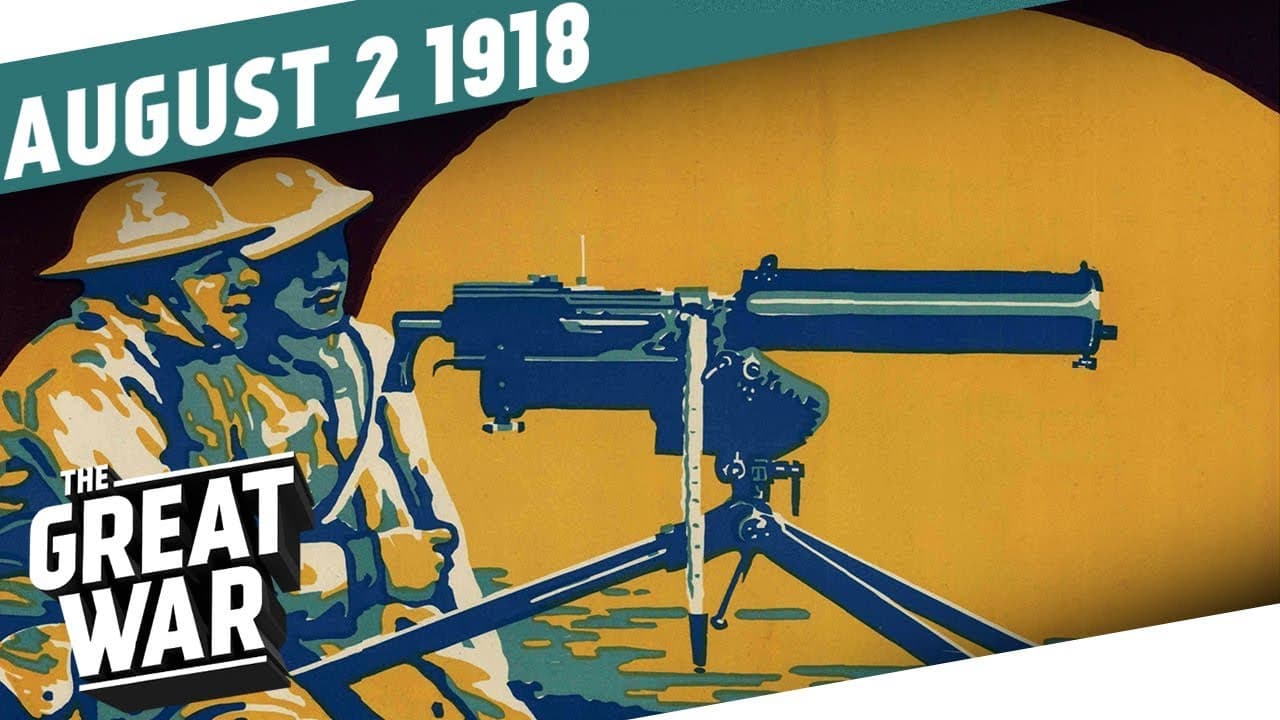
In July 1918, the Allies gained the initiative on the Western Front, reversing German advances. Key factors included the American forces' arrival, effective Allied counterattacks, and the Germans' strategic missteps. Despite the Allies' progress, their leaders remained cautious about achieving a decisive victory soon.
Transcript
On July 28th, 1914, Austria-Hungary declared war on Serbia. This local war spiraled within days into a World War, but few if any could have guessed that war’s future. Well, that future is in fact still in the future, for this week, the Great War is four years old. I’m Indy Neidell; welcome to the Great War. Last week the Germans were pushed back at... Read More
Key Insights
- The Great War began on July 28, 1914, when Austria-Hungary declared war on Serbia, escalating into a global conflict.
- By July 1918, the initiative on the Western Front shifted to the Allies, aided by American troop arrivals and effective counterattacks.
- The Germans had advanced significantly, nearing Paris, but the Allies' Second Battle of the Marne turned the tide.
- American forces played a crucial role in the Champagne region, engaging in intense battles and strategic maneuvers.
- German High Command faced challenges due to inflexible tactics and lack of alternative firepower, hindering their offensive capabilities.
- Despite Allied advances, leaders like Lloyd George doubted immediate victory, planning for extended campaigns into 1920.
- On other fronts, such as Palestine, British forces under Allenby prepared strategic offensives to counter German and Ottoman advances.
- Political changes in regions like Baku and Ukraine further complicated the war landscape, with coups and assassinations affecting power dynamics.
Install to Summarize YouTube Videos and Get Transcripts
Explore YouTube Video Summarizer or Get YouTube Transcript Extractor
Questions & Answers
Q: How did the Allies gain the initiative on the Western Front in July 1918?
The Allies gained the initiative on the Western Front in July 1918 through a combination of factors. The arrival of American forces bolstered Allied numbers, allowing for effective counterattacks, particularly at the Second Battle of the Marne. The implementation of defense in depth tactics countered German shock troops, and strategic errors by German High Command, such as inflexible artillery tactics, further weakened their position.
Q: What role did American forces play in the battles of July 1918?
American forces played a crucial role in the battles of July 1918, particularly in the Champagne region. They engaged in intense combat, notably against the Prussian Guard, and their strategic maneuvers helped encircle enemy positions. The Americans' presence significantly bolstered the Allied forces, contributing to the shift in momentum on the Western Front and enabling successful counterattacks against German advances.
Q: Why did the German 1918 offensive ultimately fail?
The German 1918 offensive failed due to several factors. The Germans relied heavily on artillery tactics that became predictable and were countered by Allied defense in depth. The lack of tanks and alternative firepower limited their ability to disrupt enemy defenses effectively. Additionally, the high centralization of command hindered tactical flexibility, and Allied forces, bolstered by American troops, launched successful counterattacks that reversed German gains.
Q: What were the strategic discussions among Allied leaders in July 1918?
In July 1918, Allied leaders, including British Prime Minister David Lloyd George, discussed the strategic outlook of the war. Despite recent successes on the Western Front, there was skepticism about achieving a decisive victory in 1919. Leaders like Lord Milner and Jan Smuts believed a victorious campaign might not be feasible until 1920, prompting considerations for extended military efforts and planning on multiple fronts, including the Middle East.
Q: What were the key developments on the Palestine Front in July 1918?
On the Palestine Front in July 1918, British General Edmund Allenby prepared for strategic offensives despite political pressure and troop reallocations. Allenby planned to deceive the Ottomans with maneuvers involving T.E. Lawrence's forces, aiming to force Ottoman withdrawals and secure strategic locations like Nablus. These plans were part of broader efforts to counter German influence and gain territory in the Middle East, setting the stage for future offensives.
Q: How did political changes in regions like Baku affect the war in 1918?
Political changes in regions like Baku significantly affected the war in 1918. A coup in Baku led to the establishment of the Centro-Caspian Dictatorship, a unique governance structure with multiple leaders. This instability complicated the regional power dynamics, as the new regime sought British assistance against Ottoman advances. Such political upheavals added layers of complexity to the war, influencing military strategies and alliances in the Caucasus.
Q: What challenges did the German High Command face in July 1918?
In July 1918, the German High Command faced significant challenges, including inflexible tactics and a lack of alternative firepower. Their reliance on artillery without tanks limited their offensive capabilities. Additionally, the centralized command structure hindered adaptability, making it difficult to respond effectively to Allied strategies. As the Allies gained momentum, German forces struggled to maintain their positions, leading to strategic withdrawals and attempts to learn from recent defeats.
Q: What insights did historians provide about the German military strategy in 1918?
Historians provided insights into the German military strategy in 1918, highlighting its tactical strengths but strategic weaknesses. While German forces demonstrated tactical prowess, their operational planning was flawed, and strategic vision was lacking. The repeated use of the same artillery tactics became predictable, and the centralized command structure limited flexibility. These factors, combined with the Allies' effective countermeasures, contributed to the German offensive's failure, as noted by historians like David Zabecki.
Summary & Key Takeaways
-
The fourth year of World War I saw a significant shift in momentum on the Western Front, with the Allies gaining the upper hand. Key factors included the arrival of American forces, effective counterattacks at the Second Battle of the Marne, and German strategic errors. Despite these successes, Allied leaders remained cautious about the prospects of a swift victory, planning for continued conflict into 1920.
-
In July 1918, the Allies launched new offensives, reversing German advances and regaining territory. American troops played a pivotal role in Champagne, engaging in fierce battles against the Prussian Guard. The Germans, facing challenges with inflexible tactics and lacking tanks, struggled to maintain their positions, leading to strategic withdrawals across the Vesle River.
-
Beyond the Western Front, the British planned offensives in Palestine, and political upheavals in regions like Baku and Ukraine added complexity to the war. Despite Allied gains, leaders remained wary of immediate victory, with discussions about prolonged campaigns into 1920. The war's fourth anniversary highlighted both tactical successes and ongoing strategic challenges.
Read in Other Languages (beta)
Share This Summary 📚
Summarize YouTube Videos and Get Video Transcripts with 1-Click
Try YouTube Summary with ChatGPT & Claude or YouTube Transcript Generator
Explore More Summaries from The Great War 📚

Summarize YouTube Videos and Get Video Transcripts with 1-Click
Try YouTube Summary with ChatGPT & Claude or YouTube Transcript Generator