How Did the Red Army Turn the Tide in 1919?
TL;DR
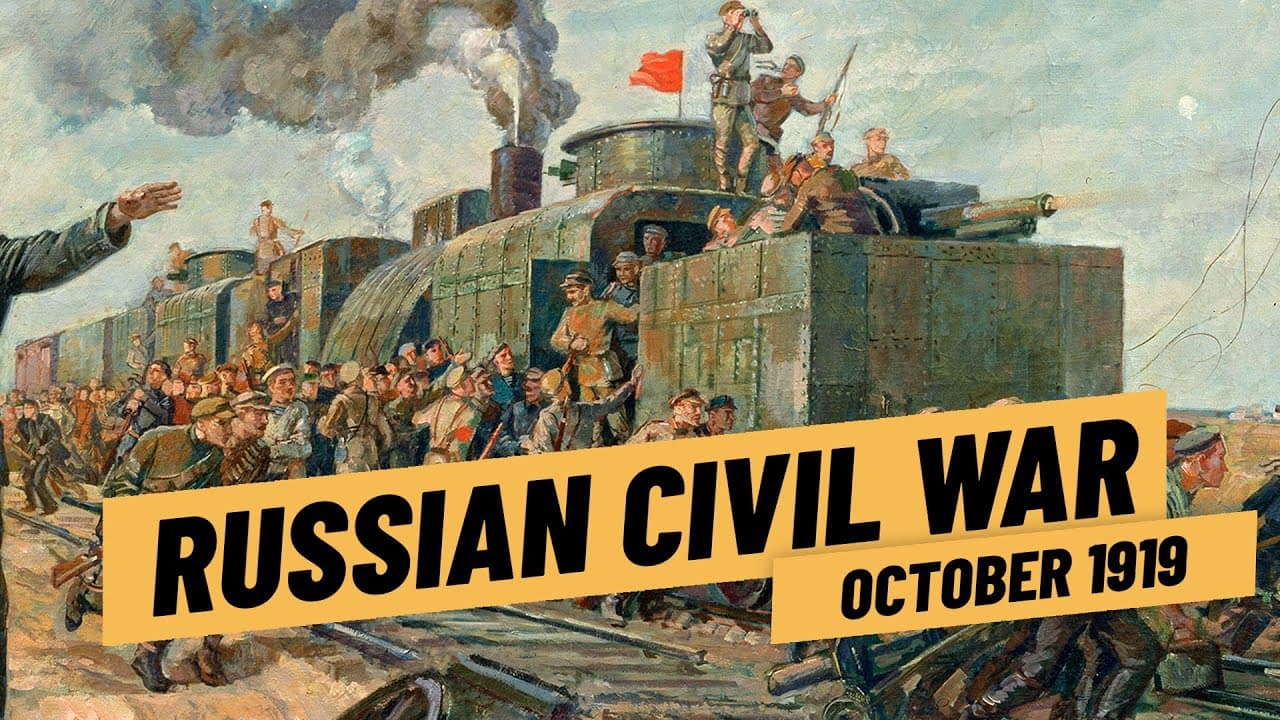
In the fall of 1919, the Russian Civil War saw a significant shift as the Red Army gained the upper hand over the White forces. The Whites, plagued by poor morale, desertion, and logistical issues, faced defeats in key regions, leading to a retreat and eventual collapse. The Red Army's strategic counterattacks and growing strength were pivotal in this turning point.
Transcript
Now before i start todays episode, i just want to tell you that the GreatWar - Team is producing the ultimate documentary about the Battle of Berlin in World War 2. You can find out more on indiegogo.com or check the first comment in the comment section below. And now, on to the show. It’s October 1919, and in Russia, the civil war ravaging the cou... Read More
Key Insights
- The Russian Civil War reached a critical point in October 1919 as the Red Army gained momentum against the White forces.
- Admiral Kolchak's White forces suffered significant defeats in the east, leading to a decisive Red Army advance on Omsk.
- The White forces faced severe issues of morale, desertion, and poor logistics, contributing to their downfall.
- The Red Army's strategic counterattacks, particularly in the south, were crucial in shifting the war's momentum.
- The Czechoslovak Legion played a complex role, eventually facilitating Kolchak's capture in exchange for safe passage.
- The Northwest Army's attack on Petrograd failed due to poor discipline and lack of trust among allied forces.
- The White forces' overstretched lines and inability to win peasant support were key factors in their defeat.
- The Red Army's growing strength and strategic improvisations were decisive in their victories across multiple fronts.
Install to Summarize YouTube Videos and Get Transcripts
Explore YouTube Video Summarizer or Get YouTube Transcript Extractor
Questions & Answers
Q: How did the Red Army gain the upper hand in the Russian Civil War in 1919?
The Red Army gained the upper hand in 1919 by exploiting the weaknesses of the White forces, which included poor morale, desertion, and logistical challenges. Strategic counterattacks, particularly in the south, allowed the Reds to push back the Whites. The Red Army's growing strength and ability to improvise strategically were decisive in their victories across multiple fronts.
Q: What challenges did the White forces face during the Russian Civil War in 1919?
The White forces faced significant challenges including poor morale, desertion, and logistical issues. They were unable to maintain control over their territory and failed to win the support of the peasantry. The overstretched lines and internal disagreements further weakened their position, ultimately leading to their defeat by the Red Army.
Q: What role did the Czechoslovak Legion play in the Russian Civil War?
The Czechoslovak Legion played a complex role in the Russian Civil War. Initially, they were involved in fighting against the Bolsheviks but later sought to leave war-torn Russia. They facilitated Admiral Kolchak's capture by trading him and the gold on his train to local authorities in exchange for safe passage, significantly impacting the White forces' position.
Q: Why did the Northwest Army's attack on Petrograd fail?
The Northwest Army's attack on Petrograd failed due to poor discipline among its troops, lack of trust from allied forces, and insufficient support. The offensive, although initially successful, was undermined by desertions and failure to cut critical supply lines. The Bolsheviks were able to rally reinforcements and push the White forces back across the border into Estonia.
Q: What were the key factors in the Red Army's success in 1919?
Key factors in the Red Army's success included strategic counterattacks, growing troop strength, and the ability to improvise on the battlefield. The Red Army effectively exploited the weaknesses of the White forces, such as poor morale and internal divisions. Their ability to maintain peasant support and control territory also contributed to their victories.
Q: How did internal divisions affect the White forces during the Russian Civil War?
Internal divisions severely affected the White forces, leading to disorganization and ineffective coordination. Disagreements among generals and political leaders weakened their ability to present a united front. Infighting and lack of a coherent strategy hindered their efforts to gain support and maintain control over territory, contributing to their eventual defeat.
Q: What impact did the Red Army's counterattacks have on the White forces?
The Red Army's counterattacks had a significant impact on the White forces, forcing them into retreat and eventual collapse. The strategic offensives, particularly in the south, disrupted White supply lines and communication. The Red Army's ability to outmaneuver and outnumber the Whites led to decisive victories, effectively turning the tide of the war in favor of the Bolsheviks.
Q: Why were the White forces unable to win peasant support during the Russian Civil War?
The White forces were unable to win peasant support due to their association with the old regime and failure to address peasant concerns. Many peasants feared the return of landowners and preferred the Bolsheviks' promises of land redistribution. The Whites' inability to communicate a clear political agenda and their harsh military tactics further alienated the peasantry.
Summary & Key Takeaways
-
In the fall of 1919, the Russian Civil War saw the Red Army gaining a decisive upper hand over the White forces. Admiral Kolchak's White forces in the east suffered critical defeats, leading to a Red Army advance on Omsk and a subsequent retreat of White forces. The Czechoslovak Legion played a pivotal role in Kolchak's capture, further weakening the White's position.
-
The Northwest Army's attempt to capture Petrograd failed due to poor coordination and lack of trust among allied forces. Meanwhile, in the south, the Red Army launched successful counterattacks that pushed the White forces back, leading to their eventual collapse. The Whites' overstretched lines and inability to garner peasant support were significant factors in their defeat.
-
The Red Army's strategic improvisations and growing strength were decisive in their victories across multiple fronts. Despite internal challenges, the Bolsheviks managed to turn the tide of the war, leaving the Whites with no real hope of overthrowing the revolution. The Red Army's success marked a turning point in the Russian Civil War.
Read in Other Languages (beta)
Share This Summary 📚
Summarize YouTube Videos and Get Video Transcripts with 1-Click
Try YouTube Summary with ChatGPT & Claude or YouTube Transcript Generator
Explore More Summaries from The Great War 📚

Summarize YouTube Videos and Get Video Transcripts with 1-Click
Try YouTube Summary with ChatGPT & Claude or YouTube Transcript Generator