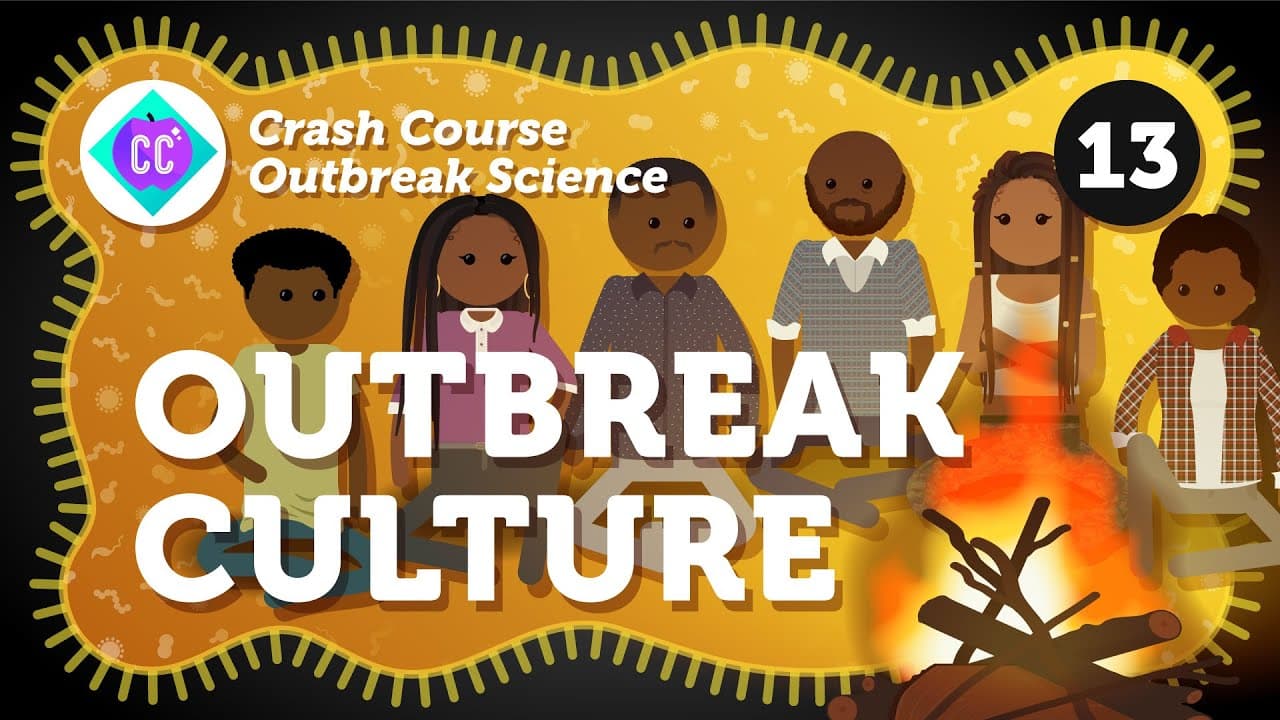
What Is Outbreak Culture? Crash Course Outbreak Science #13
TL;DR
Cultures and social behaviors greatly influence the way we respond to outbreaks and can either aid or hinder efforts to control and prevent the spread of diseases.
Transcript
in this series we've studied outbreaks not just because they're fascinating but because we want to know how they could affect us how we can stop them and how our lives could change because of them these motivations are linked to what matters to us how we participate in wider society and how we learn like say by watching crash course in other words ... Read More
Key Insights
- 🧑⚕️ Cultures influence how we respond to outbreaks, including our adherence to public health measures like social distancing.
- 🎮 Stigma and shame surrounding illnesses can hinder outbreak control efforts.
- 🪡 Cultural funeral practices may need to be adapted during outbreaks to minimize the risk of transmission.
Install to Summarize YouTube Videos and Get Transcripts
Explore YouTube Video Summarizer or Get YouTube Transcript Extractor
Questions & Answers
Q: How does culture impact the effectiveness of social distancing measures during outbreaks?
Culture shapes individual behaviors and influences how people respond to public health interventions, such as social distancing. Beliefs, values, and trust in authorities all play a role in whether individuals comply with social distancing measures.
Q: What are the consequences of stigma and shame associated with getting sick during an outbreak?
Stigma and shame can prevent individuals from seeking proper medical attention and reporting cases of disease, increasing the risk of transmission. This is particularly true in communities where there is a history of mistreatment by medical authorities.
Q: How do cultural practices surrounding death and funerals pose challenges during outbreaks?
Cultural rituals such as physically touching the body of the deceased or gathering for wakes and funerals can increase the risk of disease transmission. However, abruptly halting these practices can lead to psychological and emotional distress.
Q: How can communities heal and rebuild after an outbreak or war?
Practices like truth and reconciliation forms, as seen in Sierra Leone, can help communities come together to forgive, understand each other's intentions, and rebuild trust. Respecting traditional cultural practices and involving community members in the recovery process are vital.
Summary & Key Takeaways
-
Cultures play a significant role in how we respond to outbreaks, including how we care for the sick and define being sick.
-
Social distancing measures can be influenced by cultural beliefs and values, as well as trust in authorities.
-
Traditional funeral practices and rituals can pose challenges during outbreaks, but sudden changes can also have negative psychological and emotional impacts.
Read in Other Languages (beta)
Share This Summary 📚
Summarize YouTube Videos and Get Video Transcripts with 1-Click
Try YouTube Summary with ChatGPT & Claude or YouTube Transcript Generator
Explore More Summaries from CrashCourse 📚


Summarize YouTube Videos and Get Video Transcripts with 1-Click
Try YouTube Summary with ChatGPT & Claude or YouTube Transcript Generator