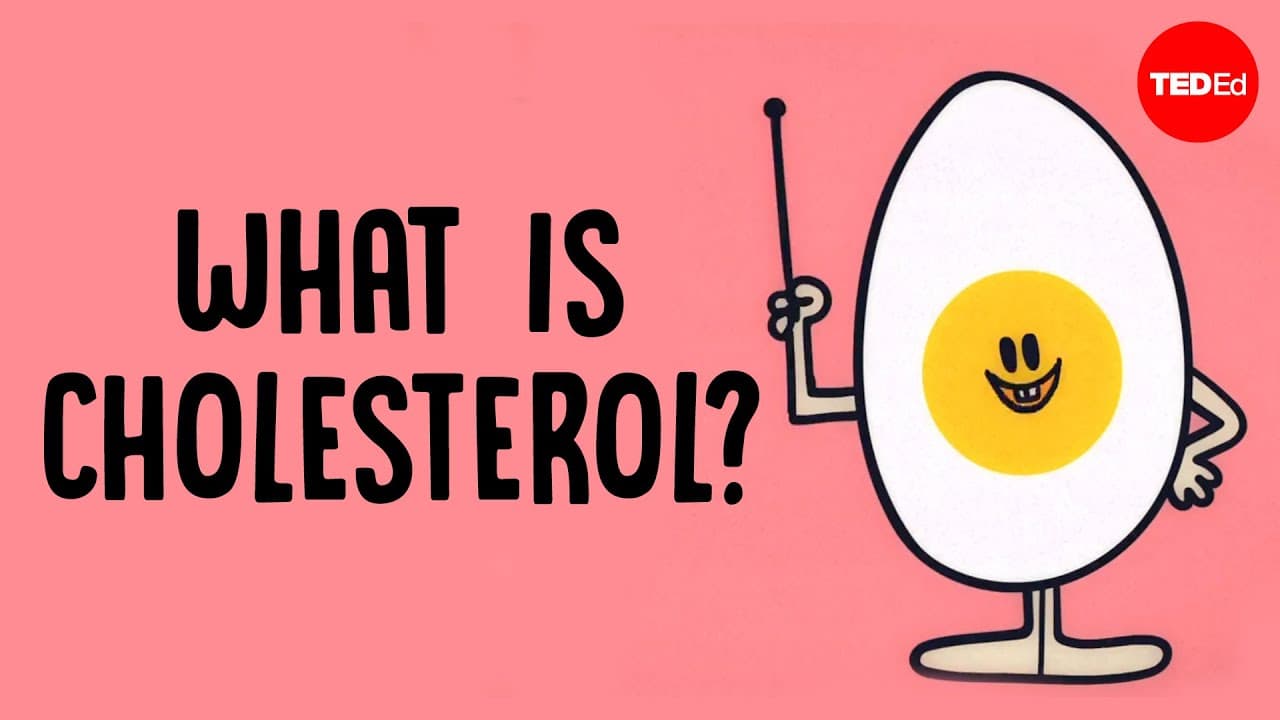
What actually causes high cholesterol? - Hei Man Chan
TL;DR
Understanding the complex relationship between egg consumption, cholesterol, and heart health.
Transcript
In 1968, the American Heart Association made an announcement that would influence people’s diets for decades: they recommended that people avoid eating more than three eggs a week. Their reasoning was that the cholesterol packed into egg yolks could increase cardiovascular disease risk. But it turns out that the reality is more complicated. Let's d... Read More
Key Insights
- 💀 The American Heart Association's recommendations in 1968 were primarily based on the perceived dangers of dietary cholesterol, which have since been reassessed.
- 🤔 Cholesterol is produced internally by the body, with dietary intake having a lesser impact than previously thought.
- 👨 The composition of fats in the diet, particularly the balance of saturated and unsaturated fats, plays a critical role in determining cholesterol levels.
- 🧑⚕️ The body's lipoproteins, each serving different functions, are essential for transporting lipids, thus influencing cardiovascular health.
- 🎚️ Regular physical activity can improve cholesterol levels by enhancing the metabolism of lipids and increasing HDL production.
- 😋 High fiber foods help control cholesterol absorption in the digestive tract, working in conjunction with healthy fats for optimal lipid balance.
- 🧑⚕️ Genetic factors contribute significantly to individual cholesterol variations, underscoring the importance of personalized health strategies in managing cholesterol levels.
Install to Summarize YouTube Videos and Get Transcripts
Explore YouTube Video Summarizer or Get YouTube Transcript Extractor
Questions & Answers
Q: Why did the American Heart Association initially recommend limiting egg consumption?
The American Heart Association's recommendation in 1968 to limit egg consumption was based on the belief that high dietary cholesterol from eggs could contribute to increased cardiovascular disease risk, particularly because egg yolks were rich in cholesterol. This view stemmed from early studies linking dietary cholesterol to blood cholesterol levels. Over time, however, a more detailed understanding of how our bodies process fats has emerged.
Q: How does the body process dietary cholesterol and fats?
Upon consuming a meal, the body emulsifies dietary fats into lipid droplets, which are absorbed in the small intestine and transported to the liver. Here, specialized cells convert these fats into lipoproteins, which carry cholesterol and triglycerides through the bloodstream. The balance between different types of lipoproteins, such as LDL and HDL, is crucial for cardiovascular health, influencing the risk of blockages and inflammation.
Q: What are the differences between LDL and HDL cholesterol?
LDL, known as “bad cholesterol,” is linked to plaque buildup in arteries, increasing the risk of cardiovascular issues. HDL, or “good cholesterol,” helps remove excess cholesterol from the bloodstream and transports it back to the liver for excretion. While a high level of LDL can lead to health complications, HDL serves a protective role, combating inflammation and maintaining cardiovascular balance.
Q: Can lifestyle choices affect cholesterol levels?
Yes, lifestyle choices significantly influence cholesterol levels. Factors such as diet, physical activity, smoking, and weight management can all impact the production and breakdown of cholesterol in the body. For example, consuming unsaturated fats promotes HDL function, while exercising can decrease LDL levels and boost HDL production, showcasing the importance of a healthy lifestyle for optimal cholesterol management.
Q: Why do some people experience higher cholesterol levels than others?
Individual cholesterol levels can vary significantly due to genetic predispositions, where certain gene variants affect the function of LDL receptors in the liver. These genetic factors can lead to higher circulating LDL in the bloodstream. Beyond genetics, dietary choices, physical activity, and overall lifestyle also play crucial roles in determining cholesterol levels.
Q: What dietary changes can help manage cholesterol effectively?
To manage cholesterol effectively, it is essential to focus on a balanced diet rich in unsaturated fats found in fish, nuts, and seeds, while minimizing saturated and trans fats from animal and processed foods. Additionally, incorporating plenty of fiber from fruits, vegetables, and whole grains aids in lowering LDL levels, showing that the composition of the diet can significantly influence cholesterol health.
Q: Are there medications available for cholesterol management?
Yes, medications such as statins are commonly prescribed to manage high cholesterol levels. Statins work by inhibiting an enzyme in the liver that produces LDL cholesterol. Additionally, other types of medications can enhance the breakdown of triglycerides and improve the activity of LDL receptors, promoting the efficient clearance of LDL from the bloodstream, especially when lifestyle changes are insufficient on their own.
Summary & Key Takeaways
-
In 1968, the American Heart Association recommended limiting egg consumption due to cholesterol concerns, linking it to cardiovascular disease risk.
-
The body’s cholesterol levels are more influenced by the types of fats consumed rather than dietary cholesterol alone, revealing a more nuanced perspective on egg yolks.
-
Regular consumption of fruits, vegetables, and whole grains, along with exercise, plays a crucial role in maintaining healthy cholesterol levels.
Read in Other Languages (beta)
Share This Summary 📚
Summarize YouTube Videos and Get Video Transcripts with 1-Click
Try YouTube Summary with ChatGPT & Claude or YouTube Transcript Generator
Explore More Summaries from TED-Ed 📚




Summarize YouTube Videos and Get Video Transcripts with 1-Click
Try YouTube Summary with ChatGPT & Claude or YouTube Transcript Generator