What Was Ludendorff's 1918 Offensive Plan?
TL;DR
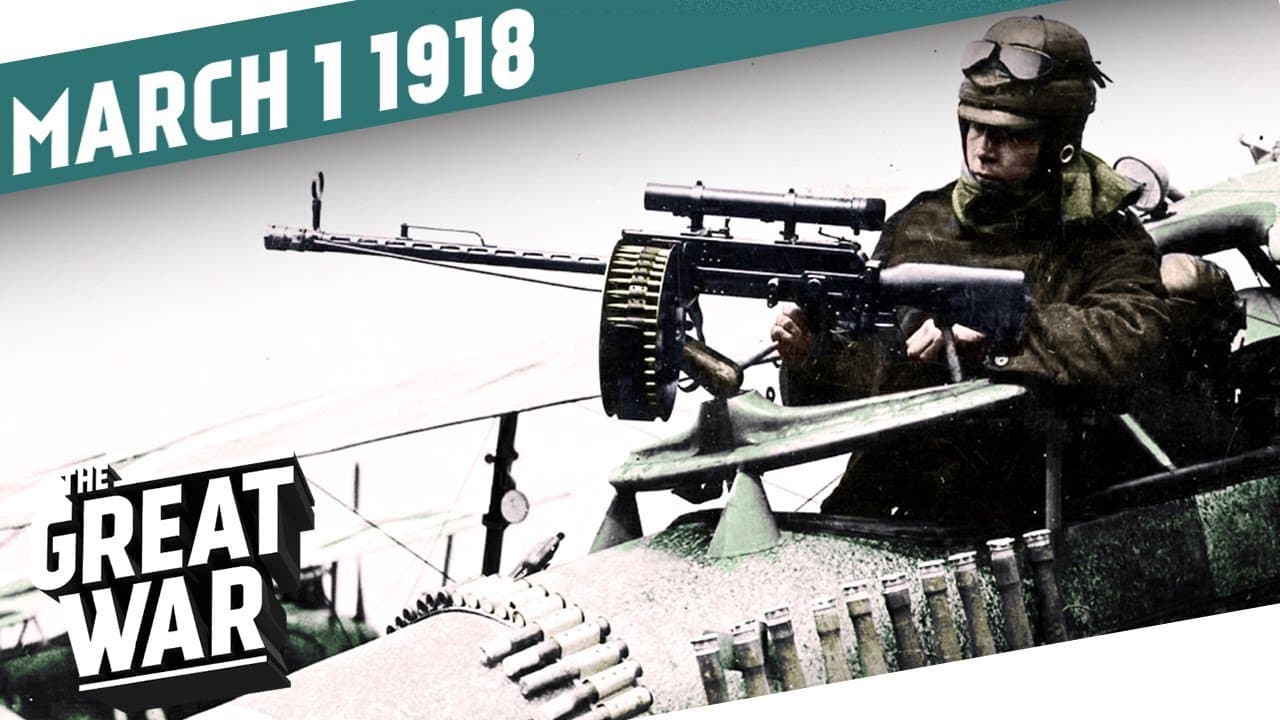
Erich Ludendorff planned a major German offensive in 1918, capitalizing on numerical superiority on the Western Front. Despite logistical challenges, he aimed to break Allied defenses using fresh, well-trained troops and innovative tactics. The offensive was a critical moment in WW1, with potential to decisively alter the war's outcome.
Transcript
For two months, Russia and the Central Powers had negotiated peace terms, but territorial demands had been too much for the Russians to accept, and they had left the conference. And now? Well, now they were reaping the whirlwind, as the German juggernaut advanced all through the east. I’m Indy Neidell; welcome to the Great War. Last week the Easter... Read More
Key Insights
- Ludendorff planned to transfer troops from the Eastern to the Western Front, achieving numerical superiority for the first time since 1914.
- The German strategy relied on qualitative superiority, with well-trained storm troops using Hutier assault tactics and Bruchmuller artillery doctrine.
- Germany's logistical shortcomings included a lack of rubber for vehicle tires, limiting mobility compared to the Allies' superior mechanization.
- The offensive aimed to 'eat through' Allied defenses, maintaining pressure and reinforcing successes to regain a war of movement.
- Specialized German units, including flamethrowers and heavy weapons teams, were integral to the assault strategy.
- Despite planning advancements, Germany's mobile warfare capabilities remained similar to 1914, with limited tanks and armored vehicles.
- The offensive's success hinged on surprise and the ability to exploit weaknesses in Allied lines, leveraging fresh troops for sustained pressure.
- The geopolitical context included Russian desperation for peace and uncertainty in British and Italian commands, creating a strategic window for Germany.
Install to Summarize YouTube Videos and Get Transcripts
Explore YouTube Video Summarizer or Get YouTube Transcript Extractor
Questions & Answers
Q: What was Ludendorff's plan for the 1918 offensive?
Ludendorff's plan for the 1918 offensive involved transferring troops from the Eastern Front to achieve numerical superiority on the Western Front. He aimed to break through Allied defenses using fresh, well-trained troops employing innovative tactics. The strategy focused on maintaining pressure, reinforcing successes, and regaining a war of movement to decisively impact the war.
Q: How did Germany plan to achieve surprise in their 1918 offensive?
Germany planned to achieve surprise in the 1918 offensive by employing Hutier assault tactics and Bruchmuller artillery doctrine, which emphasized sudden, concentrated attacks. The strategy involved using specialized units and fresh troops to exploit weaknesses in Allied defenses, maintaining continuous pressure and reinforcing successful breakthroughs to keep the enemy off balance.
Q: What logistical challenges did Germany face during the 1918 offensive?
Germany faced significant logistical challenges during the 1918 offensive, including a lack of rubber for vehicle tires, which limited mobility and damaged roads. The German army also lagged in mechanization, with few tanks and armored vehicles compared to the Allies. These issues hindered their ability to sustain a mobile warfare strategy despite planning advancements.
Q: How did the geopolitical context influence Germany's 1918 offensive?
The geopolitical context favored Germany's 1918 offensive, with Russia desperate for peace and instability in British and Italian commands. This created a strategic window for Germany to launch a decisive offensive. The offensive aimed to capitalize on these conditions, potentially altering the war's outcome by exploiting Allied weaknesses and maintaining pressure on the Western Front.
Q: What role did specialized units play in the 1918 German offensive?
Specialized units played a crucial role in the 1918 German offensive, with teams equipped with flamethrowers and heavy weapons integral to the assault strategy. These units were designed to penetrate and destabilize Allied defenses, working alongside fresh troops to maintain pressure and exploit breakthroughs, reinforcing the overall strategy of surprise and sustained attack.
Q: How did Germany's troop movements impact the 1918 offensive?
Germany's troop movements significantly impacted the 1918 offensive by transferring forces from the Eastern to the Western Front, achieving numerical superiority. This strategic repositioning allowed Germany to concentrate fresh, well-trained troops on the Western Front, crucial for implementing innovative tactics and maintaining pressure on Allied defenses to achieve a breakthrough.
Q: What were the key tactical innovations in the 1918 German offensive?
Key tactical innovations in the 1918 German offensive included the use of Hutier assault tactics and Bruchmuller artillery doctrine, emphasizing rapid, concentrated attacks. These tactics involved specialized units and fresh troops to penetrate and destabilize Allied defenses, maintaining continuous pressure and reinforcing successful breakthroughs to regain a war of movement.
Q: What was the expected outcome of Ludendorff's 1918 offensive?
The expected outcome of Ludendorff's 1918 offensive was to decisively alter the course of World War I by breaking through Allied defenses and regaining a war of movement. By achieving surprise and exploiting weaknesses in Allied lines, Ludendorff aimed to capitalize on Germany's temporary numerical superiority and geopolitical advantages for a potential victory.
Summary & Key Takeaways
-
Ludendorff's 1918 offensive sought to capitalize on Germany's temporary numerical advantage on the Western Front. The plan involved transferring troops from the East, using innovative tactics and fresh troops to break Allied defenses. Despite logistical issues, the offensive aimed to regain a war of movement, exploiting weaknesses in Allied lines for a decisive impact.
-
Logistical challenges hindered German mobility, with steel-tired trucks damaging roads compared to the Allies' rubber-tired vehicles. The Germans lagged in mechanization, possessing few tanks and armored cars. Despite these drawbacks, Ludendorff's strategy focused on qualitative superiority and innovative tactics to achieve breakthrough.
-
The geopolitical landscape favored Germany, with Russia desperate for peace and instability in British and Italian commands. Ludendorff's offensive represented a critical moment in WW1, with the potential to decisively alter the war's outcome. Success depended on surprise, sustained pressure, and exploiting Allied weaknesses.
Read in Other Languages (beta)
Share This Summary 📚
Summarize YouTube Videos and Get Video Transcripts with 1-Click
Try YouTube Summary with ChatGPT & Claude or YouTube Transcript Generator
Explore More Summaries from The Great War 📚

Summarize YouTube Videos and Get Video Transcripts with 1-Click
Try YouTube Summary with ChatGPT & Claude or YouTube Transcript Generator