The End of Austria-Hungary: Treaty of Saint-Germain 1919
TL;DR
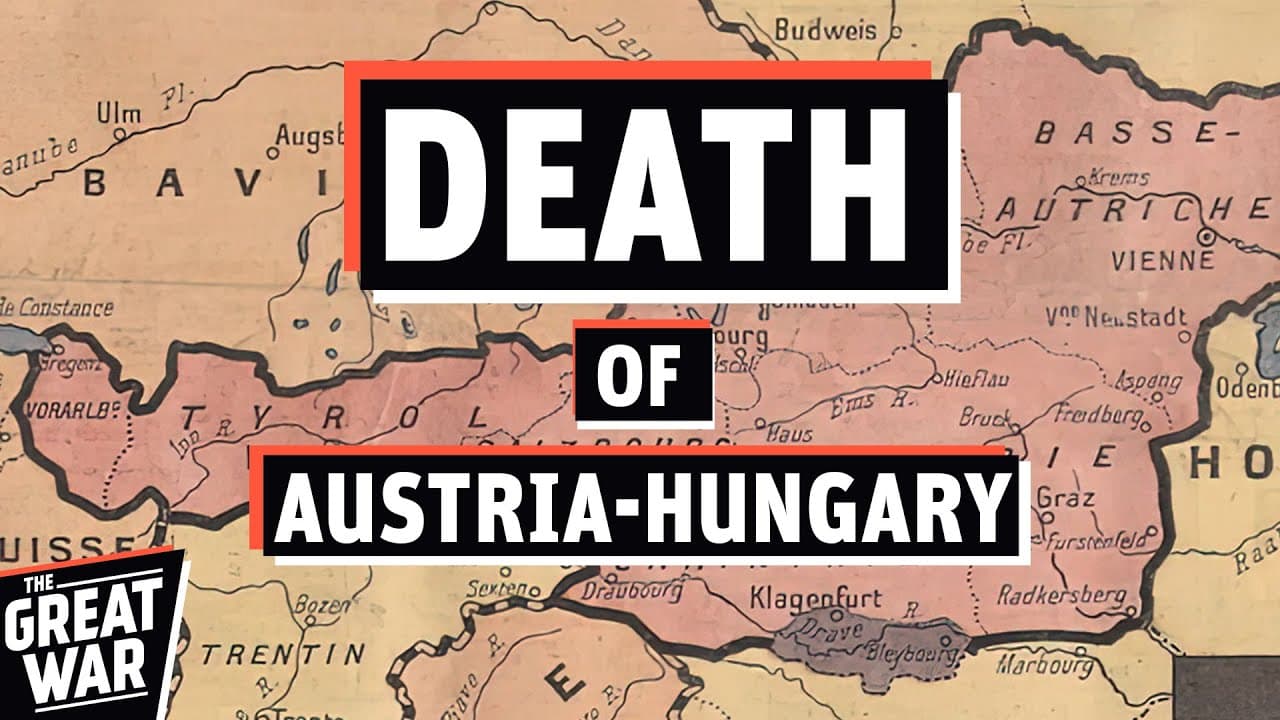
The Treaty of Saint-Germain redrew Austria's borders post-WWI.
Transcript
back to the summer of 1919 when the treaty of versailles between the allies and germany was on everyone's lips but even while versailles was being drawn up and eventually signed in june allied diplomats and peace delegates were preparing another treaty this time for austria-hungary actually to be specific they were preparing a treaty for the austri... Read More
Key Insights
- The Treaty of Saint-Germain was crafted as the Treaty of Versailles was being finalized, focusing on the Austrian half of the Austro-Hungarian Empire.
- Austria-Hungary began to disintegrate before WWI ended, with national independence movements and allied policies favoring its dissolution.
- The Austrian Empire's dissolution left German Austria in a difficult position, lacking resources and facing economic and social challenges.
- Austrian leaders hoped for a union with Germany, known as Anschluss, and sought to avoid being designated as the successor state to Austria-Hungary.
- The Allies aimed to create strong new states in Central Europe to contain Germany and Bolshevik Russia, influencing border decisions.
- The Treaty imposed harsh terms on Austria, including territorial losses and military restrictions, leading to widespread discontent.
- Austrian public reaction to the Treaty was largely negative, with many feeling betrayed by the principle of self-determination.
- The Treaty left Austria economically weakened, with a large population of German speakers left outside its borders, leading to future instability.
Install to Summarize YouTube Videos and Get Transcripts
Explore YouTube Video Summarizer or Get YouTube Transcript Extractor
Questions & Answers
Q: What was the main focus of the Treaty of Saint-Germain?
The Treaty of Saint-Germain primarily focused on the Austrian half of the Austro-Hungarian Empire following World War I. It aimed to address the political and territorial reorganization of Austria, establishing new borders and defining Austria's status as a separate entity from Hungary. The treaty imposed significant territorial losses on Austria, restricted its military capabilities, and prevented any potential union with Germany.
Q: How did the Treaty of Saint-Germain affect Austria's territorial integrity?
The Treaty of Saint-Germain significantly altered Austria's territorial integrity by ceding large portions of its land to neighboring countries. Territories such as Bohemia, Moravia, and parts of Silesia were given to Czechoslovakia, while South Tyrol was awarded to Italy. These territorial losses left Austria as a much smaller, landlocked state with limited resources, contributing to its post-war economic struggles.
Q: What were the economic implications of the Treaty for Austria?
The economic implications of the Treaty of Saint-Germain for Austria were severe. The loss of industrial regions and agricultural resources that were part of the Austro-Hungarian Empire left Austria economically weakened. The country faced significant challenges, including high unemployment, resource shortages, and a struggling economy unable to support its large capital, Vienna. The treaty's terms exacerbated these economic difficulties, contributing to social unrest and instability.
Q: Why was the principle of self-determination controversial in the Treaty?
The principle of self-determination was controversial in the Treaty of Saint-Germain because it was inconsistently applied. While the treaty aimed to respect the rights of national groups to self-governance, many German-speaking populations found themselves outside Austria's new borders without a plebiscite. This perceived injustice led to widespread dissatisfaction and feelings of betrayal among Austrians, who had hoped for a more inclusive application of self-determination.
Q: What was Austria's reaction to the Treaty terms?
Austria's reaction to the Treaty of Saint-Germain was one of disappointment and discontent. The harsh terms, including territorial losses and the prohibition of union with Germany, were seen as unjust and punitive. Many Austrians felt the treaty failed to honor the principle of self-determination, leaving significant German-speaking populations outside Austria's borders. The economic and political constraints imposed by the treaty further fueled public dissatisfaction and a sense of betrayal.
Q: How did the Treaty impact Austria's military capabilities?
The Treaty of Saint-Germain severely restricted Austria's military capabilities. It limited the Austrian army to 30,000 men and prohibited conscription, effectively reducing Austria's ability to defend itself. Additionally, the treaty mandated the destruction of weapon stocks and arms factories, further weakening Austria's military strength. These restrictions were part of the broader Allied strategy to ensure Austria could not pose a future threat.
Q: What role did the Allies play in shaping the Treaty?
The Allies played a significant role in shaping the Treaty of Saint-Germain, with their primary goals being the containment of Germany and the prevention of Bolshevik influence in Central Europe. The Allies sought to create strong, viable new states from the remnants of the Austro-Hungarian Empire, influencing the territorial decisions and border delineations. However, there were disagreements among the Allies regarding Austria's future, with some advocating for more lenient terms.
Q: What were the long-term implications of the Treaty for Austria?
The long-term implications of the Treaty of Saint-Germain for Austria were profound. The treaty left Austria as a small, economically weakened state with limited resources and a large German-speaking population outside its borders. These conditions contributed to political instability and economic hardship, setting the stage for future challenges. The treaty's terms also fueled nationalist sentiments and discontent, which later played a role in Austria's political developments, including its eventual annexation by Nazi Germany in 1938.
Summary & Key Takeaways
-
In 1919, the Treaty of Saint-Germain was signed, marking the end of the Austro-Hungarian Empire and redrawing Austria's borders. The treaty imposed harsh terms, including territorial losses and military restrictions, leaving Austria economically weakened and politically unstable.
-
Austria-Hungary's dissolution began before the armistice, with internal pressures and Allied policies favoring its breakup. The new Austrian republic faced significant challenges, including resource shortages and economic difficulties, as it sought to negotiate favorable terms with the Allies.
-
The Treaty of Saint-Germain prohibited Austria from uniting with Germany and designated it as a successor state to Austria-Hungary, responsible for war debts and reparations. The treaty's terms were met with widespread discontent in Austria, exacerbating the country's post-war struggles.
Read in Other Languages (beta)
Share This Summary 📚
Summarize YouTube Videos and Get Video Transcripts with 1-Click
Try YouTube Summary with ChatGPT & Claude or YouTube Transcript Generator
Explore More Summaries from The Great War 📚


Summarize YouTube Videos and Get Video Transcripts with 1-Click
Try YouTube Summary with ChatGPT & Claude or YouTube Transcript Generator