How Does Permeable Pavement Work?
TL;DR
Permeable pavement aids stormwater management by allowing water infiltration.
Transcript
As much as I love infrastructure and the urban environment, it definitely has its downsides. Cities represent a remarkable transformation of the landscape from natural to human made. We change almost everything: cut down trees, level the ground, and slice and dice the land into individual plots. But one of the most significant changes to the landsc... Read More
Key Insights
- Urbanization introduces impervious surfaces such as roads and parking lots, which disrupt natural water absorption and contribute to flooding and pollution.
- Traditional stormwater management focused on quickly diverting water to waterways, leading to increased runoff and pollution.
- Low Impact Design (LID) integrates stormwater management into land development to mimic natural hydrologic processes, reducing urban flooding and pollution.
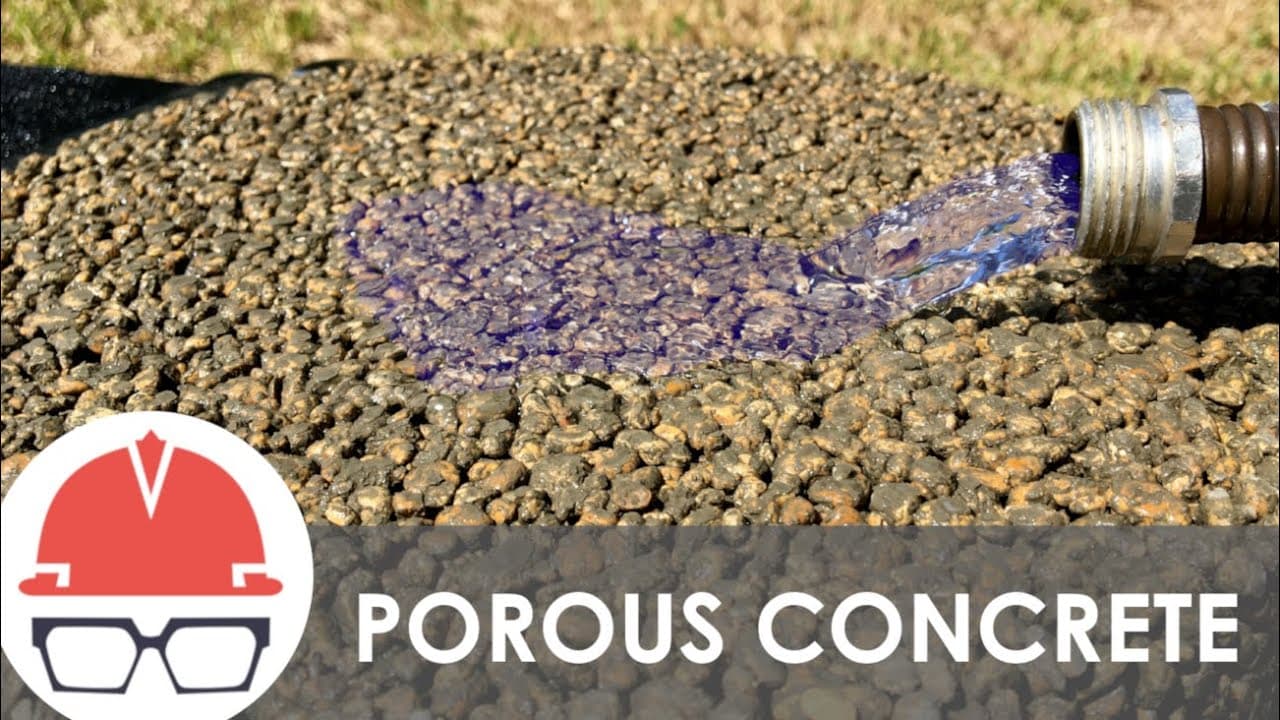
- Permeable pavement allows water infiltration while maintaining accessibility, offering a solution to impervious surfaces in urban areas.
- Concrete and asphalt can be made porous by omitting sand, allowing water to pass through while maintaining structural integrity.
- Permeable pavement systems require a reservoir layer beneath to store and gradually release water, ensuring effective stormwater management.
- Challenges with permeable pavement include reduced strength, clogging, and limitations in heavy traffic areas, near buildings, and on slopes.
- Despite challenges, permeable pavement is an innovative approach to harmonizing constructed and natural environments in urban stormwater management.
Install to Summarize YouTube Videos and Get Transcripts
Explore YouTube Video Summarizer or Get YouTube Transcript Extractor
Questions & Answers
Q: What are the main challenges of using permeable pavement?
Permeable pavement faces several challenges, including reduced structural strength due to its porous nature, which limits its use in areas with heavy traffic. It can also become clogged with dirt and debris, requiring regular maintenance. Additionally, it is unsuitable for use near buildings or on slopes, as water infiltration can affect foundations or cause water to flow out of the reservoir layer.
Q: How does permeable pavement contribute to stormwater management?
Permeable pavement contributes to stormwater management by allowing rainwater to infiltrate through the surface into a reservoir layer below. This process mimics the natural hydrologic cycle, reducing runoff volume, minimizing pollution, and decreasing the risk of flooding. The stored water can either gradually infiltrate into the ground or be slowly released into waterways, depending on soil conditions and design specifications.
Q: What is Low Impact Design (LID) in the context of urban development?
Low Impact Design (LID) in urban development refers to practices aimed at minimizing the environmental impact of construction by integrating stormwater management into land development. LID strategies mimic natural hydrologic processes to manage urban stormwater, reduce erosion, and minimize pollution. Examples include permeable pavements, rain gardens, green roofs, and vegetated filter strips, all designed to reduce runoff and enhance water infiltration.
Q: Why is traditional stormwater management considered inadequate?
Traditional stormwater management is considered inadequate because it primarily focuses on quickly diverting water from urban areas to waterways, which increases runoff volume and leads to more frequent and severe flooding, stream erosion, and waterway pollution. This approach fails to address the natural processes of water filtration and groundwater recharge, which are disrupted by impervious surfaces in urban environments.
Q: What materials are used to create permeable pavement?
Permeable pavement can be created using traditional materials like concrete and asphalt by omitting sand from the mix. This omission results in a porous structure with voids that allow water to pass through. Additionally, various types of pavers can be designed to be permeable, offering flexibility in material choice while maintaining the essential function of water infiltration.
Q: How does the reservoir layer in permeable pavement systems function?
The reservoir layer in permeable pavement systems functions as a temporary storage area for water that infiltrates through the pavement surface. Typically made from uniformly sized stones, this layer creates voids that hold water, allowing it to gradually infiltrate into the ground or be slowly released into drainage systems. The design of the reservoir layer is crucial, as it determines the system's capacity and the rate at which water is managed.
Q: In what areas is permeable pavement most effectively used?
Permeable pavement is most effectively used in areas with low traffic volumes, such as parking lots, road shoulders, and pedestrian pathways. It is also suitable for urban environments where stormwater management is a priority, but care must be taken to avoid its use near building foundations or on slopes, where water infiltration could cause structural issues or ineffective water retention.
Q: What maintenance is required for permeable pavement systems?
Permeable pavement systems require regular maintenance to ensure continued functionality. This includes sweeping or washing to remove dirt, leaves, and debris that can clog the surface and reduce permeability. In colder climates, special considerations are needed to prevent damage from freezing water and deicing salts. Regular inspections and maintenance help maintain the pavement's ability to manage stormwater effectively.
Summary & Key Takeaways
-
Urban areas suffer from impervious surfaces that prevent water infiltration, leading to increased flooding and pollution. Traditional stormwater management methods have proven inadequate, prompting the adoption of Low Impact Design strategies like permeable pavement to address these issues.
-
Permeable pavement, made by omitting sand from concrete or asphalt, allows water infiltration while maintaining surface stability. This innovative solution helps manage stormwater by storing and gradually releasing water through a reservoir layer beneath the pavement.
-
Despite its benefits, permeable pavement faces challenges such as reduced strength, clogging, and limitations in certain areas. Nevertheless, it represents a significant advancement in urban stormwater management by promoting harmony between built and natural environments.
Read in Other Languages (beta)
Share This Summary 📚
Summarize YouTube Videos and Get Video Transcripts with 1-Click
Try YouTube Summary with ChatGPT & Claude or YouTube Transcript Generator
Explore More Summaries from Practical Engineering 📚






Summarize YouTube Videos and Get Video Transcripts with 1-Click
Try YouTube Summary with ChatGPT & Claude or YouTube Transcript Generator