How Did Tanks Change WWI at Cambrai?
TL;DR
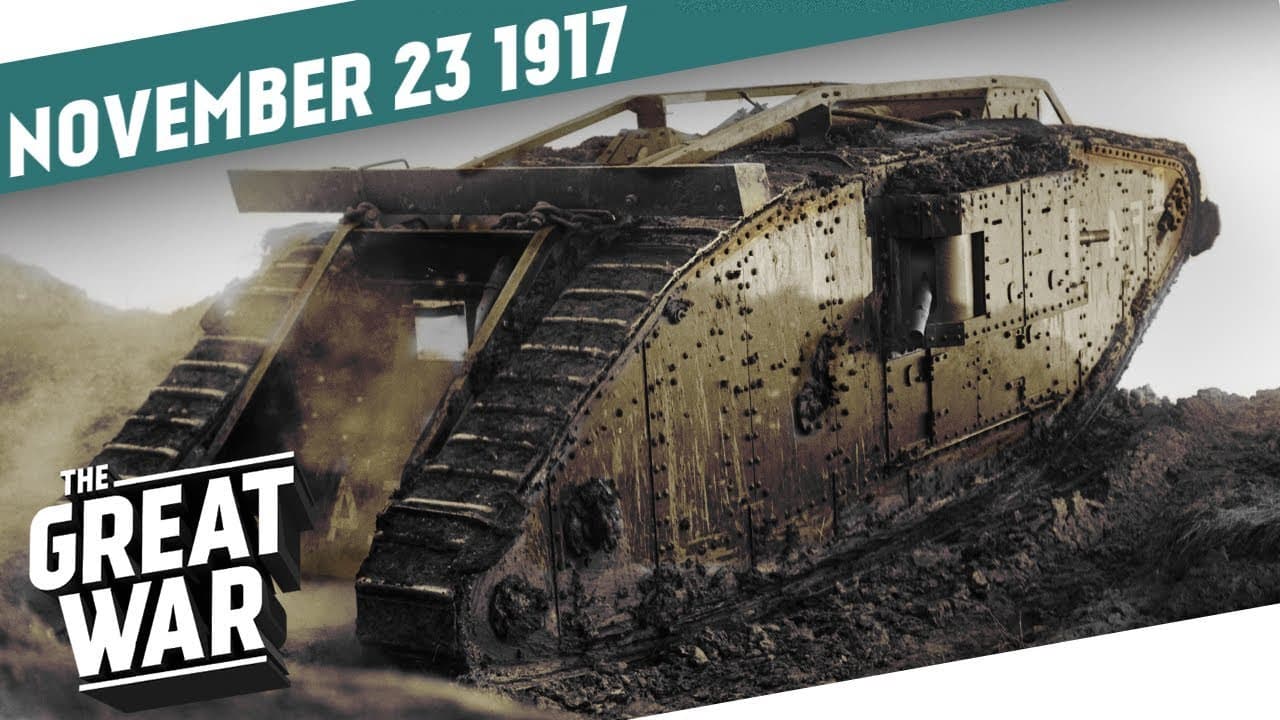
The Battle of Cambrai marked the first large-scale use of tanks in warfare, showcasing their potential to break through enemy lines. Despite initial successes, the British faced setbacks as German forces, trained in anti-tank tactics, counterattacked effectively. This battle highlighted the importance of combined arms tactics and foreshadowed modern warfare strategies.
Transcript
We’ve seen them on battlefields, alone, in groups, or even by the dozen, but we’ve never seen them fight by the hundreds - tanks, tanks, and more tanks. I’m Indy Neidell; welcome to the Great War. Last week, the British army continued its advance in Palestine, though its three and a half month offensive of the Western Front, the Battle of Passchend... Read More
Key Insights
- The Battle of Cambrai was the first major deployment of tanks in warfare, with 476 tanks used.
- Tanks proved effective in breaking through the Hindenburg Line, achieving significant initial success.
- British forces faced a strong German counterattack, with 180 tanks out of action by the end of the first day.
- The German 54th Division had specific anti-tank training, which they utilized effectively against the British tanks.
- The battle demonstrated the potential of combined arms tactics, involving tanks, infantry, artillery, and aircraft.
- The British public celebrated the initial breakthrough as a major victory, ringing church bells for the first time during the war.
- The battle underscored the limitations of tanks at the time, including mechanical failures and vulnerability to artillery.
- The use of tanks at Cambrai influenced future military strategies, highlighting their potential impact on warfare.
Install to Summarize YouTube Videos and Get Transcripts
Explore YouTube Video Summarizer or Get YouTube Transcript Extractor
Questions & Answers
Q: How did tanks impact the Battle of Cambrai?
Tanks had a significant impact on the Battle of Cambrai by enabling the British to achieve initial breakthroughs in the German defenses, specifically the Hindenburg Line. The deployment of 476 tanks marked the first large-scale use of this technology, demonstrating their potential to change the dynamics of warfare. However, the effectiveness of tanks was limited by mechanical failures and effective German anti-tank tactics, leading to significant British losses.
Q: What challenges did the British face at Cambrai?
The British faced several challenges at Cambrai, including mechanical failures of the tanks and effective German anti-tank tactics. Despite initial successes, 180 tanks were out of action by the end of the first day due to breakdowns, artillery hits, and other issues. The Germans, having undergone specific anti-tank training, were able to mount effective counterattacks, which ultimately limited the British advance and highlighted the need for improved tactics and coordination.
Q: What was the significance of the Battle of Cambrai in WWI?
The Battle of Cambrai was significant in WWI as it marked the first large-scale use of tanks, showcasing their potential to break through entrenched defenses. It demonstrated the importance of combined arms tactics, integrating infantry, artillery, and aircraft with tanks. The battle also highlighted the limitations of early tank technology, influencing future military strategies and developments in armored warfare.
Q: How did the Germans respond to the British tank offensive?
The Germans responded to the British tank offensive at Cambrai with effective anti-tank tactics, leveraging specific training they had undergone. German forces, particularly the 54th Division, were able to mount successful counterattacks, using artillery and other means to disable many British tanks. Their ability to adapt quickly to the new threat posed by tanks was a key factor in limiting the British advance and demonstrated the evolving nature of warfare.
Q: What role did combined arms tactics play in the Battle of Cambrai?
Combined arms tactics played a crucial role in the Battle of Cambrai, as the British utilized a coordinated approach involving tanks, infantry, artillery, and aircraft. This strategy aimed to maximize the effectiveness of each component, with tanks breaking through defenses, artillery providing support, and aircraft offering reconnaissance and additional firepower. The battle highlighted the potential of such tactics to achieve breakthroughs but also underscored the need for effective coordination and execution.
Q: What were the outcomes of the Battle of Cambrai?
The outcomes of the Battle of Cambrai included initial British successes in breaking through the German Hindenburg Line using tanks, but ultimately, the battle ended with a German counterattack that regained lost ground. The battle demonstrated the potential and limitations of tanks, influenced future military tactics, and highlighted the importance of combined arms operations. It also underscored the need for improvements in tank design and coordination in future engagements.
Q: How did the British public react to the Battle of Cambrai?
The British public initially reacted to the Battle of Cambrai with great enthusiasm, celebrating the initial breakthroughs as a significant victory. The success was reported as the greatest British victory of the war, and church bells were rung across the country for the first time during the conflict. However, the subsequent German counterattacks and the eventual stalemate tempered the initial euphoria, highlighting the complexities and challenges of warfare.
Q: What lessons were learned from the Battle of Cambrai?
Lessons learned from the Battle of Cambrai included the realization of the potential impact of tanks in warfare when used effectively in conjunction with other arms. The battle highlighted the need for improved tank reliability, better coordination among different military branches, and the development of tactics to counter enemy defenses. It also demonstrated the importance of adaptability in warfare, as both sides learned from the experience to refine their strategies and technologies.
Summary & Key Takeaways
-
The Battle of Cambrai saw the first large-scale use of tanks, with 476 deployed by the British, achieving initial breakthroughs against German defenses. However, anti-tank tactics by the Germans and mechanical failures led to significant British losses, demonstrating both the potential and limitations of tanks in warfare.
-
Despite the initial success of tanks in breaking through the Hindenburg Line, the British faced challenges from German counterattacks and mechanical issues. The battle highlighted the need for effective combined arms strategies, involving infantry, artillery, and aircraft, alongside tanks.
-
The Battle of Cambrai marked a turning point in military tactics, showcasing the potential of tanks to change the dynamics of warfare. However, it also revealed the need for improved coordination and tactics to fully leverage the capabilities of tanks in future conflicts.
Read in Other Languages (beta)
Share This Summary 📚
Summarize YouTube Videos and Get Video Transcripts with 1-Click
Try YouTube Summary with ChatGPT & Claude or YouTube Transcript Generator
Explore More Summaries from The Great War 📚



Summarize YouTube Videos and Get Video Transcripts with 1-Click
Try YouTube Summary with ChatGPT & Claude or YouTube Transcript Generator