The Complete Jeb Bush Interview
TL;DR
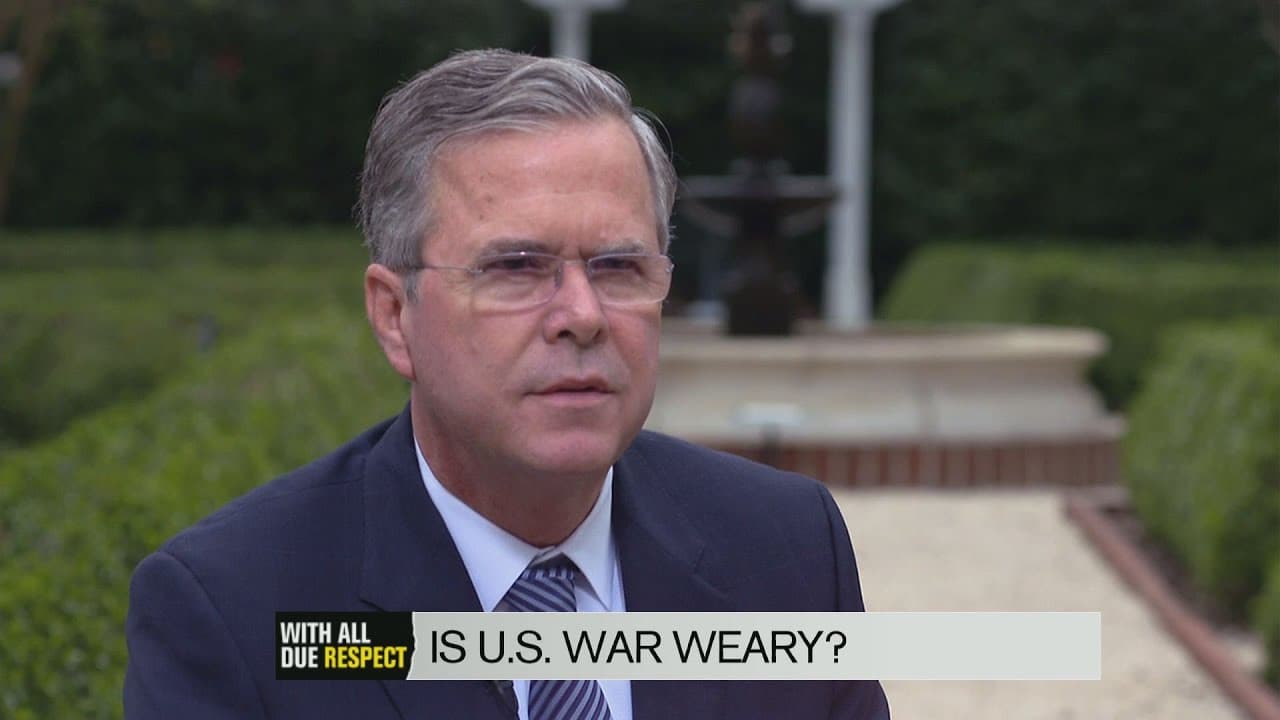
Jeb Bush discusses U.S. foreign policy and military strategy.
Transcript
going to talk about a bunch of stuff I want to start though with one of the most basic questions for any commander-in-chief cases where the United States is not directly hit but where American interests are implicated what is the Jeb Bush Doctrine for when and how you commit American troops on the ground overseas I think I think you have to have a ... Read More
Key Insights
- Jeb Bush emphasizes the need for a compelling national security interest before committing American troops overseas, particularly regarding the threat posed by Islamic terrorism.
- Bush advocates for a coalition approach to defeating ISIS, involving support from European and Middle Eastern countries, rather than relying solely on substantial American ground troops.
- He acknowledges America's war weariness and stresses the importance of a clear, decisive strategy to garner public support for military action against ISIS.
- Bush believes in prioritizing the protection of religious minorities in conflict zones like Syria, while also addressing the broader refugee crisis through strategic leadership.
- He criticizes the current administration's lack of a coherent strategy in conflict zones like Iraq and Syria, emphasizing the need for decisive action and leadership.
- Bush supports the reimplementation of the metadata program for national security, arguing that it can protect civil liberties while identifying terrorist threats.
- He suggests that American leadership and military superiority can create a more secure world, but stresses the need for consistent and humble presidential leadership.
- Bush differentiates his foreign policy experience and leadership skills from other candidates, highlighting his life experiences, governance, and international exposure.
Install to Summarize YouTube Videos and Get Transcripts
Explore YouTube Video Summarizer or Get YouTube Transcript Extractor
Questions & Answers
Q: What is Jeb Bush's doctrine for committing American troops overseas?
Jeb Bush believes that American troops should only be committed overseas when there is a compelling national security interest. He identifies the threat of Islamic terrorism, particularly from groups like ISIS, as a unique circumstance that warrants military intervention. Bush emphasizes the importance of a coalition approach, involving support from European and Middle Eastern countries, rather than relying solely on substantial American ground troops.
Q: How does Bush propose to overcome America's war weariness?
Bush acknowledges that America is war weary, especially after conflicts in Afghanistan and Iraq. To overcome this weariness, he stresses the importance of a clear, decisive strategy that avoids prolonged engagements and quagmires. By presenting a well-defined plan that involves international support and decisive action, Bush believes public support can be garnered for military actions, particularly against threats like ISIS.
Q: What is Bush's stance on the Syrian refugee crisis?
Bush advocates for prioritizing the protection of religious minorities in conflict zones like Syria, arguing that they are particularly vulnerable to extermination. While he supports helping these minorities, he also emphasizes the need for a strategic approach to address the broader refugee crisis. This involves creating a strategy to destroy ISIS and bring about change in the Assad regime, rather than merely reacting to the overflow of refugees.
Q: How does Bush view the current administration's strategy in conflict zones?
Bush criticizes the current administration for lacking a coherent strategy in conflict zones like Iraq and Syria. He argues that the administration's incremental approach and lack of clear objectives have resulted in ineffective military actions. Bush believes that decisive leadership and a well-defined strategy are necessary to address these conflicts and protect national security interests.
Q: What is Bush's position on the metadata program for national security?
Bush supports the reimplementation of the metadata program, which was part of the Patriot Act, arguing that it is crucial for national security. He believes that the program can protect civil liberties while effectively identifying terrorist threats. Bush contends that there is no evidence of civil liberties violations under the program and that it should be reinstated as part of a comprehensive strategy to keep the homeland safe.
Q: How does Bush differentiate his foreign policy experience from other candidates?
Bush highlights his extensive life experiences, governance, and international exposure as key factors that differentiate him from other candidates. He emphasizes his experience as governor, where he dealt with national guard deployments and international trade missions. Bush also points to his intellectual curiosity and ability to convert ideas into practical plans as strengths that make him a suitable candidate for commander-in-chief.
Q: What does Bush believe is necessary for American leadership to create a secure world?
Bush believes that American leadership and military superiority are essential for creating a secure world. He stresses the need for consistent and humble presidential leadership to regain international trust and support. Bush argues that when America leads decisively, it gives confidence to allies and deters adversaries, ultimately contributing to global stability and security.
Q: What are Bush's views on the use of language in addressing Islamic terrorism?
Bush criticizes the avoidance of terms like 'Islamic terrorism' by the current administration, arguing that it leads to ineffective policies. He believes that acknowledging the ideological nature of the threat is crucial for developing a successful strategy. Bush emphasizes that while the terrorists have co-opted a religion, it is important to recognize and address the political ideology driving their actions.
Summary & Key Takeaways
-
Jeb Bush discusses the criteria for deploying American troops overseas, emphasizing national security interests and the unique threat of Islamic terrorism. He advocates for a coalition approach to defeating ISIS, involving support from Europe and Middle Eastern countries, and stresses the importance of a clear, decisive strategy to overcome America's war weariness.
-
Bush addresses the Syrian refugee crisis, advocating for the protection of religious minorities and criticizing the current administration's lack of strategy. He supports the reimplementation of the metadata program for national security, arguing that it can protect civil liberties while identifying terrorist threats, and emphasizes the need for decisive American leadership.
-
Bush differentiates his foreign policy experience and leadership skills from other candidates, highlighting his life experiences, governance, and international exposure. He believes that American leadership and military superiority can create a more secure world, but stresses the need for consistent and humble presidential leadership to regain international trust.
Read in Other Languages (beta)
Share This Summary 📚
Summarize YouTube Videos and Get Video Transcripts with 1-Click
Try YouTube Summary with ChatGPT & Claude or YouTube Transcript Generator
Explore More Summaries from Bloomberg Originals 📚






Summarize YouTube Videos and Get Video Transcripts with 1-Click
Try YouTube Summary with ChatGPT & Claude or YouTube Transcript Generator