How to spot a misleading graph - Lea Gaslowitz
TL;DR
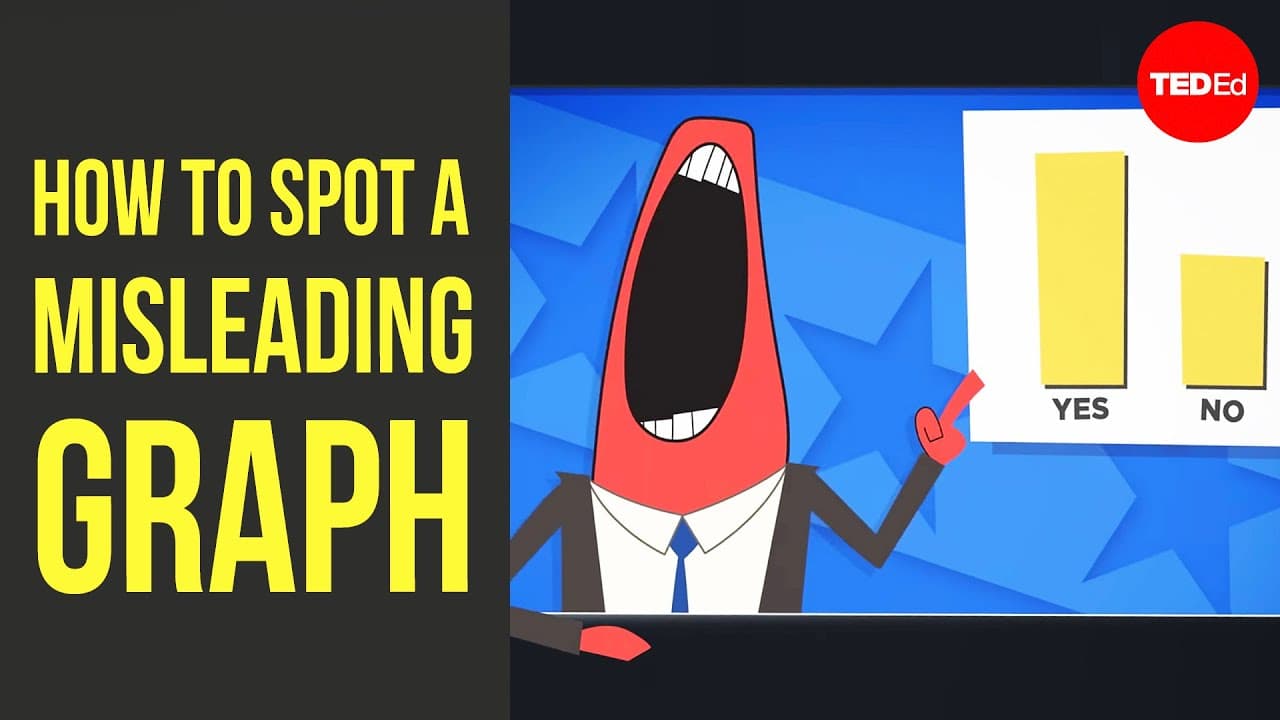
Graphs can be manipulated to misrepresent data, either by distorting the scale, cherry-picking data points, or leaving out relevant information, emphasizing the need to critically analyze and interpret graphs.
Transcript
A toothpaste brand claims their product will destroy more plaque than any product ever made. A politician tells you their plan will create the most jobs. We're so used to hearing these kinds of exaggerations in advertising and politics that we might not even bat an eye. But what about when the claim is accompanied by a graph? Afterall, a graph isn'... Read More
Key Insights
- 💨 Distorting the scale of a graph is a common way to misrepresent data, exaggerating differences and manipulating perceptions.
- 🥺 Cherry-picking specific time periods or data points can lead to skewed representations and hide important changes in between.
- 🍃 Leaving out relevant data, such as population growth or historical events, can give a false impression of trends and patterns.
- 🎁 Understanding the full significance of the data being presented is crucial to interpreting graphs accurately and avoiding misinterpretations.
- 📈 Graphs can be powerful tools for conveying complex data, but advancements in visual software have made them easier to manipulate carelessly or dishonestly.
Install to Summarize YouTube Videos and Get Transcripts
Explore YouTube Video Summarizer or Get YouTube Transcript Extractor
Questions & Answers
Q: How can graphs misrepresent data by distorting the scale?
Graphs can mislead by zooming in on a small portion of the y-axis, exaggerating a barely detectable difference between variables. Distorting the scale of a bar graph can also mislead viewers to assume the difference in the size of bars is proportional to the values.
Q: What manipulation techniques involve the x-axis in line graphs?
In line graphs showing changes over time, the x-axis can be manipulated in two ways. Firstly, the scale can be inconsistent, compressing specific time periods to look shorter. Secondly, cherry-picking data points can hide important changes in between, providing a skewed representation of the data.
Q: How can leaving out relevant data contribute to a misleading impression?
Omitting relevant data points can give a misleading impression by not providing the full context. For example, a chart showing the popularity of the Super Bowl may suggest a significant increase in viewership when, in reality, it does not account for population growth and therefore maintains a steady rating.
Q: Why is understanding the significance of the data crucial when interpreting graphs?
While graphs visually represent data, they cannot fully convey the significance without proper interpretation. For instance, a graph showing a seemingly insignificant change in average annual ocean temperature may not reflect the fact that even a small rise can cause substantial ecological disruption.
Summary & Key Takeaways
-
Graphs can mislead and manipulate data by distorting the scale, exaggerating differences between compared variables, and compressing or cherry-picking time periods.
-
Leaving out relevant data points or not accounting for population growth can give a misleading impression.
-
Understanding the full significance of the data being presented is crucial to interpreting graphs accurately.
Read in Other Languages (beta)
Share This Summary 📚
Summarize YouTube Videos and Get Video Transcripts with 1-Click
Try YouTube Summary with ChatGPT & Claude or YouTube Transcript Generator
Explore More Summaries from TED-Ed 📚






Summarize YouTube Videos and Get Video Transcripts with 1-Click
Try YouTube Summary with ChatGPT & Claude or YouTube Transcript Generator