Will Space Tourism Become Reality Soon?
TL;DR
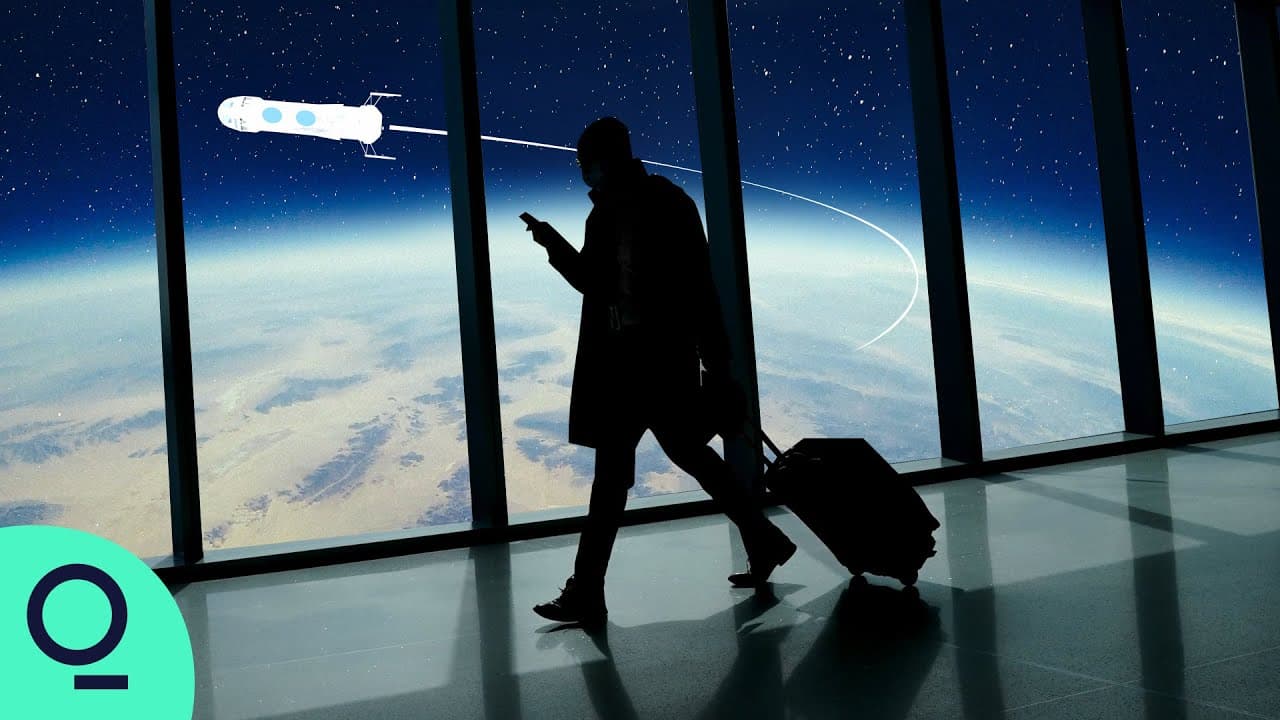
Space tourism is on the verge of becoming a reality, driven by private companies like Blue Origin, Virgin Galactic, and SpaceX. These companies aim to make space travel accessible to non-astronauts, offering suborbital and orbital flights. However, significant challenges remain, including high costs, safety risks, and legal complexities, which need to be addressed before space tourism becomes mainstream.
Transcript
The great sci-fi art of the mid-20th century teased a vision of the future with one distinct element in common: a life for humans in outer space. Whether vacationing on an exotic new planet, or commuting to the moon for business, space travel seemed like it was just around the corner. Yet here we are, a half century later, and only about 500 human ... Read More
Key Insights
- Space tourism is being pioneered by private companies such as Blue Origin, Virgin Galactic, and SpaceX.
- Blue Origin plans to launch six passengers at a time using its New Shephard rocket.
- Virgin Galactic aims for suborbital tourism with ticket prices around $250,000.
- SpaceX's Inspiration4 is the first all-civilian orbital mission, highlighting diversity and accessibility.
- Legal challenges include complex liability issues under international space law.
- Safety remains a major concern, with space tourists required to sign extensive waivers.
- Space hotels are being developed but face significant legal and logistical challenges.
- The long-term goal is to make space travel as affordable as first-class airline tickets.
Install to Summarize YouTube Videos and Get Transcripts
Explore YouTube Video Summarizer or Get YouTube Transcript Extractor
Questions & Answers
Q: How is space tourism becoming a reality?
Space tourism is becoming a reality through the efforts of private companies like Blue Origin, Virgin Galactic, and SpaceX. These companies are developing technologies and business models to offer suborbital and orbital flights to private citizens. While the concept is exciting, the industry faces challenges such as high costs, safety concerns, and legal complexities that need to be addressed for widespread adoption.
Q: What are the main companies involved in space tourism?
The main companies involved in space tourism are Blue Origin, Virgin Galactic, and SpaceX. Blue Origin, founded by Jeff Bezos, focuses on suborbital flights with its New Shephard rocket. Virgin Galactic, led by Richard Branson, also aims for suborbital tourism. SpaceX, founded by Elon Musk, is targeting more ambitious orbital missions, including the Inspiration4 mission, which is the first all-civilian orbital mission.
Q: What are the safety concerns associated with space tourism?
Safety concerns in space tourism are significant due to the inherent risks of space travel. Tourists must sign extensive waivers acknowledging these risks. The FAA requires operators to inform participants of known hazards. Spacecraft must withstand extreme conditions, and there are no obligations to rescue non-astronauts in emergencies. These factors make safety a critical issue that companies must address before space tourism becomes mainstream.
Q: What legal challenges does space tourism face?
Space tourism faces legal challenges primarily related to liability and international space law. The Outer Space Treaty governs state activities but lacks provisions for private entities and individuals. Incidents in space could lead to complex legal disputes involving multiple parties, including companies and governments. Legal frameworks need to evolve to address these issues, ensuring clear guidelines for liability and safety in space tourism.
Q: How much does a space tourism ticket cost?
Space tourism tickets are currently very expensive, with Virgin Galactic projecting costs of at least $250,000 per ticket for a suborbital flight. This price reflects the high costs associated with developing and operating spacecraft. Over time, companies aim to reduce these costs, making space travel more accessible. The goal is to eventually offer prices comparable to first-class airline tickets, but achieving this will require significant advancements and efficiencies.
Q: What is the role of SpaceX in space tourism?
SpaceX plays a crucial role in space tourism by pushing the boundaries of what's possible with orbital flights. Its Inspiration4 mission is the first all-civilian mission into orbit, demonstrating the company's commitment to making space accessible to non-professional astronauts. SpaceX's focus on orbital flights represents a higher level of complexity and risk compared to suborbital tourism, positioning the company as a leader in the space tourism industry.
Q: What are space hotels, and how do they fit into space tourism?
Space hotels are conceptualized as private space stations where tourists can stay during their space journey. Companies like Axiom Space are working on projects like Ax Station, which aims to be the first commercial space station. These hotels face significant legal and logistical challenges, including safety, liability, and the high costs of construction and operation. While space hotels garner attention, they are not expected to be at the forefront of space commerce initially.
Q: How will space tourism evolve to become more accessible?
Space tourism is expected to evolve by reducing costs and improving safety, making it more accessible to the general public. Initially, space travel will be limited to wealthy individuals due to high ticket prices. However, as technology advances and economies of scale are achieved, costs are expected to decrease. The long-term goal is to make space travel comparable in price to first-class airline tickets, allowing more people to experience space tourism.
Summary & Key Takeaways
-
Private companies are pushing the boundaries of space tourism, aiming to make it accessible to non-astronauts. Blue Origin and Virgin Galactic are focusing on suborbital flights, while SpaceX targets orbital missions. However, high costs, safety risks, and legal challenges must be addressed before space tourism can become mainstream.
-
Space tourism could become a reality soon, with companies like Blue Origin, Virgin Galactic, and SpaceX leading the charge. These companies aim to offer suborbital and orbital flights to private citizens. Despite the excitement, significant hurdles such as safety, cost, and legal issues remain.
-
The future of space tourism looks promising, with private companies taking the lead. Blue Origin, Virgin Galactic, and SpaceX are working on making space travel accessible to the public. However, high costs, safety risks, and complex legal issues need to be resolved for space tourism to truly take off.
Read in Other Languages (beta)
Share This Summary 📚
Summarize YouTube Videos and Get Video Transcripts with 1-Click
Try YouTube Summary with ChatGPT & Claude or YouTube Transcript Generator
Explore More Summaries from Bloomberg Originals 📚






Summarize YouTube Videos and Get Video Transcripts with 1-Click
Try YouTube Summary with ChatGPT & Claude or YouTube Transcript Generator