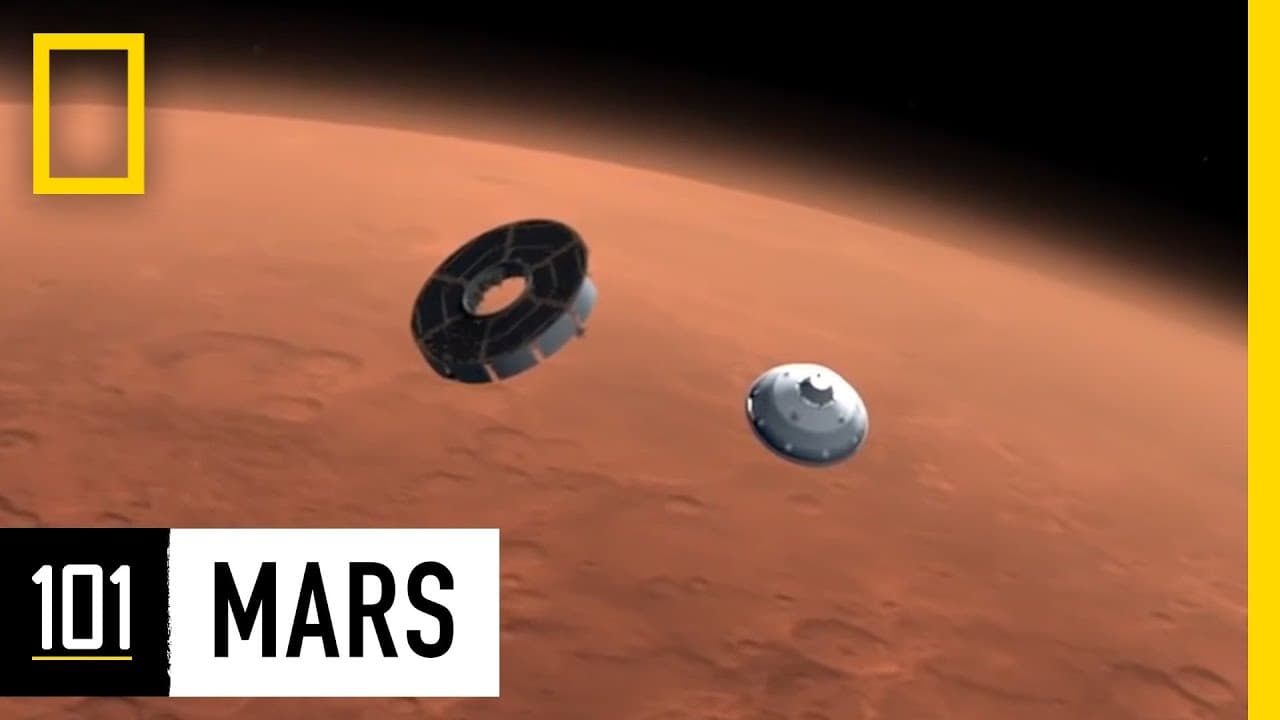
Mars 101 | National Geographic
TL;DR
Mars is the fourth planet from the Sun, with a unique orbit and extreme temperatures. It lacks water and oxygen, making it inhospitable for human life, but there is evidence of intermittent liquid water. NASA's plan aims to put humans on Mars by 2030.
Transcript
the Babylonians called that Nergal the Hindus called it Mangala the Egyptians called it hard occur or the red one and today we know it as the red planet for centuries Mars has aroused our imaginations the world's best scientists and people everywhere have asked themselves did life exist on Mars and could Mars support life in the future but what is ... Read More
Key Insights
- 😀 Mars is the fourth planet from the Sun, located 49 million miles further away than Earth.
- 🛰️ Mars has seasons, but they last longer due to its elliptical orbit.
- ❎ The average temperature on Mars is a chilly negative 81 degrees Fahrenheit.
- 🇲🇭 The gravitational pull on Mars is about 62% weaker than on Earth.
- 🖤 Mars lacks water and oxygen, two essential ingredients for supporting life.
- 💦 There is evidence of intermittent liquid water on Mars.
- 🤘 Mars has a population of zero inhabitants and no signs of life on the surface.
Install to Summarize YouTube Videos and Get Transcripts
Explore YouTube Video Summarizer or Get YouTube Transcript Extractor
Questions & Answers
Q: Is there any evidence of water on Mars?
Yes, NASA's reconnaissance mission has shown evidence that liquid water likely flows intermittently on the red planet.
Q: What are the key differences between Earth and Mars?
Mars has a weaker gravitational pull, lower temperatures, and lacks water and oxygen. Additionally, Mars is about half the size of Earth.
Q: Can humans survive on Mars without spacesuits?
No, without proper spacesuits, humans would die within minutes or even seconds on Mars. The low atmospheric pressure, cold surface temperatures, lack of oxygen, and intense radiation would be fatal.
Q: What is NASA's plan for Mars?
NASA has announced a plan to put humans on Mars by 2030, but it requires proper spacesuits and extensive preparation due to the inhospitable conditions.
Summary & Key Takeaways
-
Mars is the fourth planet from the Sun, and it is located 49 million miles further away from the Sun compared to Earth.
-
The planet experiences seasons, but they last longer due to its elliptical orbit.
-
Mars has a weaker gravitational pull, lower temperatures, and lacks water and oxygen, making it inhospitable for human life.
Read in Other Languages (beta)
Share This Summary 📚
Summarize YouTube Videos and Get Video Transcripts with 1-Click
Try YouTube Summary with ChatGPT & Claude or YouTube Transcript Generator
Explore More Summaries from National Geographic 📚




Summarize YouTube Videos and Get Video Transcripts with 1-Click
Try YouTube Summary with ChatGPT & Claude or YouTube Transcript Generator