How Does an Electric Field Deter Sharks from Attacking?
TL;DR
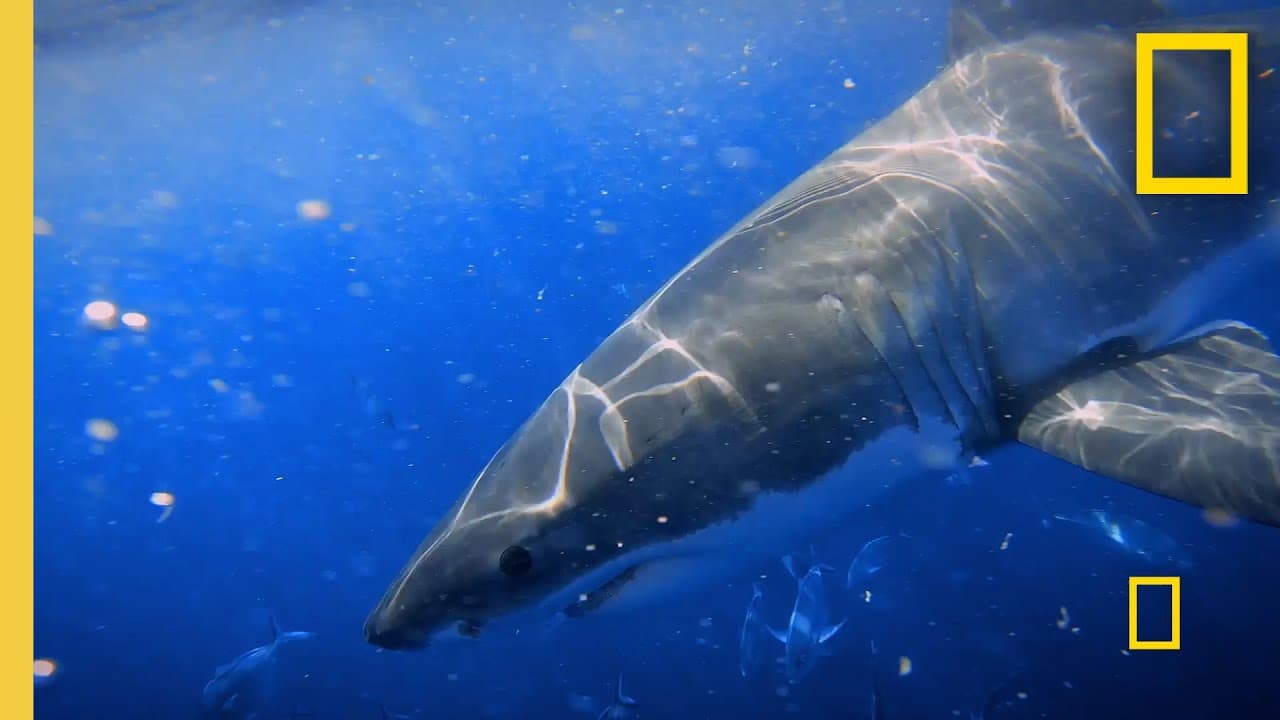
An electric field deters sharks by overwhelming their ampulae of Lorenzini, which detect minute electric signals. Early tests show that this approach effectively causes sharks to exhibit muscle spasms when approaching, indicating the deterrent works. The goal is to protect larger ocean areas without harming swimmers, but further trials are necessary to confirm its long-term effectiveness.
Transcript
NARRATOR: 40 miles off the coast of South Australia, shark scientist Doctor Charlie Huveneers and PhD student Madeline Riley investigate the best way to fend off a shark attack. The answer may be to prevent it in the first place. And then we just need a few base ready. And you're good to go. All right, sounds good. Let's hope the sharks stick aroun... Read More
Key Insights
- 🕵️ Sharks are capable of detecting minute electric fields using their ampulae of Lorenzini.
- 🦈 The new shark deterrent theory is to transmit a strong electric field that overwhelms the shark's senses and deters it.
- 🏊 The deterrent is designed to protect a larger area of the ocean without harming swimmers.
- 💪 The early testing of the deterrent shows promising results with the shark exhibiting a subtle muscle spasm indicating the deterrent's effectiveness.
- ❓ Further trials and testing are required to fully understand the effectiveness of the deterrent.
- 👊 This new deterrent could potentially help prevent shark attacks and protect swimmers in specific areas.
- 👨🔬 The research is still in its early stages, and more studies are needed to determine the long-term effects and efficiency of the deterrent.
Install to Summarize YouTube Videos and Get Transcripts
Explore YouTube Video Summarizer or Get YouTube Transcript Extractor
Questions & Answers
Q: How does the new shark deterrent work?
The new shark deterrent works by transmitting a strong electric field, overwhelming a shark's sensitive ampulae of Lorenzini and deterring it from approaching.
Q: What is the size of the area the deterrent is designed to protect?
The new deterrent is designed to protect an area of the ocean that is 25 feet in diameter by 50 feet deep, which is larger than most swimming pools.
Q: How long has the shark deterrent been tested?
The shark deterrent has been tested for two years to ensure its effectiveness.
Q: What is the initial reaction of the shark to the deterrent?
The shark shows curiosity and circles the deterrent, but it does not bite or try to break through the electric current.
Summary & Key Takeaways
-
Shark scientist Doctor Charlie Huveneers and PhD student Madeline Riley are testing a new shark deterrent that utilizes the sharks' ampulae of Lorenzini, which are capable of detecting electric fields.
-
The electric deterrent transmits a strong electric field to overwhelm the shark's senses, deterring it from approaching.
-
The goal is to develop a powerful deterrent that can protect a larger area of the ocean without harming swimmers.
Read in Other Languages (beta)
Share This Summary 📚
Summarize YouTube Videos and Get Video Transcripts with 1-Click
Try YouTube Summary with ChatGPT & Claude or YouTube Transcript Generator
Explore More Summaries from National Geographic 📚



Summarize YouTube Videos and Get Video Transcripts with 1-Click
Try YouTube Summary with ChatGPT & Claude or YouTube Transcript Generator