PRODUCTIVELY Learning New Things Using Obsidian
TL;DR
This video explains the ALP Method (Acquiring, Learning, Practicing) and the use of space repetition in learning new things using Obsidian.
Transcript
today we're going to talk about using obsidian to actually learn new things although there are no prerequisites for this video I'll be assuming you're not just starting out with obsidian but if you are then it might be best to go over some of my obsidian playlists before watching this one alright so the way I learned is primarily through space repe... Read More
Key Insights
- 🧠 Learning new things: The video discusses the importance of having a system for learning new things and the value of putting newly acquired knowledge into practice.
- 📚 Acquiring knowledge: The Alp method (acquiring, learning, practicing) is introduced as a way to consume and acquire knowledge, whether through teachers, professors, or self-taught methods like watching videos, reading blogs, or taking courses.
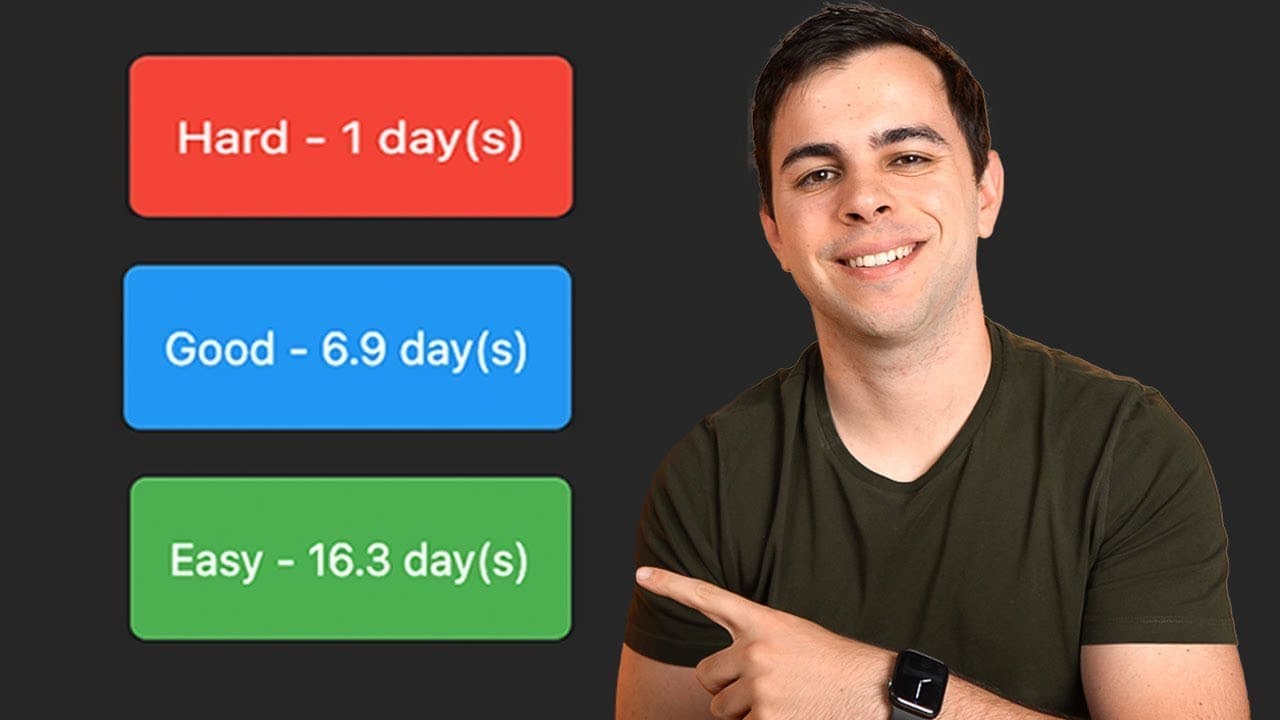
- 🔁 Space repetition: Space repetition is explained as an evidence-based learning technique using flashcards. Flashcards are shown at varying intervals based on the user's rating of how easy it was to remember the information, helping to reinforce learning.
- 💻 Practice and application: The importance of practicing and applying what is learned is emphasized, especially for practical subjects like programming or language learning. Taking on simple projects and gradually increasing complexity is recommended.
- 🔒 Obsidian's Space Repetition plugin: The video demonstrates how to install and use the Space Repetition plugin in Obsidian, a note-taking software. The plugin allows users to create flashcards, review them, and customize settings for spaced repetition.
- 💻 Learning STEM with Brilliant: The video mentions that Brilliant, an online learning platform focused on STEM subjects, is a great way to learn topics like computer science and math through interactive lessons and hands-on practice.
- 🧩 Flashcard organization: The video shows two ways of organizing flashcards using tags. Flashcards can either be created within a single note or across multiple notes with related content, allowing for easier context and clarification when reviewing.
- 🔎 Flashcard techniques: Different types of flashcards are introduced, including inline, reversed, multi-line, and multi-line reversed. These variations can be used to reinforce learning and prevent memorization based on partial cues.
- ♂️ Personalized learning: The importance of focusing on one's own learning journey and adding flashcards that are personally relevant and useful, rather than relying solely on pre-made flashcards from others, is discussed as a potentially more effective approach.
Install to Summarize YouTube Videos and Get Transcripts
Explore YouTube Video Summarizer or Get YouTube Transcript Extractor
Questions & Answers
Q: What is the ALP Method and how does it help with learning new things?
The ALP Method, which stands for Acquiring, Learning, Practicing, is a systematic way of learning that involves acquiring knowledge, using space repetition to reinforce learning, and practicing what is being learned.
Q: What is space repetition and how does it work?
Space repetition is an evidence-based learning technique that uses flashcards and spaced intervals to review and reinforce knowledge. The software determines the frequency of reviewing based on the user's response to each flashcard.
Q: How can Obsidian be used in the ALP Method and space repetition?
Obsidian, a knowledge management tool, can be used to organize and review flashcards created for space repetition. The video shows how to install and use the space repetition plugin in Obsidian.
Q: Why is practicing important in the learning process?
Practicing what is being learned helps to solidify knowledge and apply it in real-world scenarios. It is especially crucial for practical subjects like programming or languages.
Q: How can the ALP Method be applied to learning Python?
In learning Python, the ALP Method can be applied by starting with acquiring knowledge through courses or tutorials, using space repetition to reinforce new concepts, and practicing by working on small projects and gradually moving on to more complex ones.
Q: Is it necessary to use other people's flashcards or is it better to create your own?
It is up to personal preference. While some find success in using other people's flashcards, the video suggests that focusing on one's own learning journey and incorporating concepts relevant to one's own projects is more effective.
Q: Can space repetition be applied to any subject or topic?
Yes, space repetition can be applied to any subject or topic that can be broken down into flashcards or bite-sized units of information. It is a versatile learning technique that can be customized to individual needs.
Q: How can space repetition and the ALP Method be optimized for efficient learning?
The video suggests adjusting the settings of the space repetition plugin in Obsidian to better suit individual learning preferences. The algorithm can be modified to determine the frequency of reviewing flashcards.
Summary & Key Takeaways
-
The ALP Method consists of acquiring knowledge, learning through space repetition, and practicing what is being learned.
-
Acquiring knowledge involves finding sources of information such as teachers, courses, videos, or blogs.
-
Space repetition is a learning technique that uses flashcards to review and reinforce knowledge over time, with spaced intervals between reviews.
Read in Other Languages (beta)
Share This Summary 📚
Summarize YouTube Videos and Get Video Transcripts with 1-Click
Try YouTube Summary with ChatGPT & Claude or YouTube Transcript Generator
Explore More Summaries from FromSergio 📚
Summarize YouTube Videos and Get Video Transcripts with 1-Click
Try YouTube Summary with ChatGPT & Claude or YouTube Transcript Generator