Why Are Billions Invested in Fusion Energy?
TL;DR
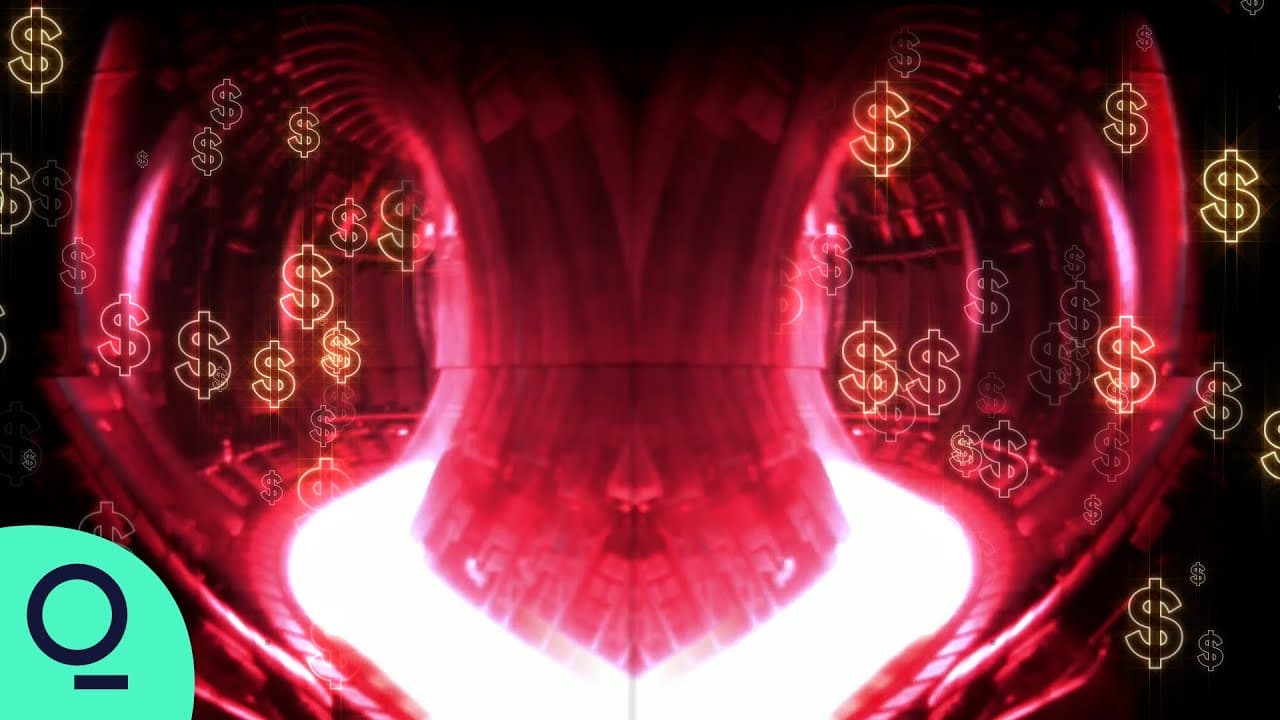
Fusion energy is attracting billions in private investment as it promises a clean, unlimited power source crucial for achieving net-zero targets. Despite challenges, private companies are accelerating progress with innovative approaches, aiming to achieve commercial fusion power sooner than traditional government projects.
Transcript
Fusion power has a certain reputation, something in the realm of a holy grail, but not in a good way. There is a famous joke about nuclear fusion about how it never becomes a reality. You can Google it if you like. But really the moment we are in with nuclear fusion today is probably more exciting than it's ever been. There's more activity in the f... Read More
Key Insights
- Fusion energy is seen as a potential solution to replace fossil fuels and achieve net-zero emissions.
- Private investment in fusion is surpassing government funding, driving rapid innovation in the sector.
- JET in Oxford set a record by sustaining fusion power for five seconds, a significant milestone.
- ITER, an international project, aims to achieve net gain, producing more energy than consumed, by 2035.
- Private companies like General Fusion and Helion Energy are exploring alternative fusion methods to expedite commercialization.
- Helion Energy's approach bypasses traditional steam turbines, aiming for direct energy conversion to electricity.
- The fusion industry is characterized by diverse approaches, with startups exploring novel technologies like projectile fusion.
- The total addressable market for fusion energy is estimated at $1 trillion annually, highlighting its potential impact.
Install to Summarize YouTube Videos and Get Transcripts
Explore YouTube Video Summarizer or Get YouTube Transcript Extractor
Questions & Answers
Q: How does fusion energy work?
Fusion energy works by fusing hydrogen atoms at high temperatures to form helium, releasing significant energy in the process. This reaction mimics the sun's core processes. On Earth, achieving fusion requires creating plasma at temperatures over 100 million degrees, using devices like tokamaks to contain and sustain the reaction long enough to produce net energy gain.
Q: Why is fusion energy important for the future?
Fusion energy is crucial for the future as it promises a nearly limitless, clean power source, essential for replacing fossil fuels and meeting global net-zero carbon emissions targets. Its successful development could provide abundant, emissions-free electricity, significantly reducing reliance on polluting energy sources and helping mitigate climate change impacts.
Q: What are the main challenges in achieving fusion energy?
The main challenges in achieving fusion energy include reaching and maintaining the extremely high temperatures and pressures needed for fusion, sustaining the reaction long enough to achieve net energy gain, and developing materials and technologies that can withstand the harsh conditions inside fusion reactors. Additionally, the high costs and complex engineering required pose significant hurdles.
Q: What is the role of private companies in fusion energy development?
Private companies play a crucial role in fusion energy development by bringing innovative approaches and significant investment to the field. Unlike traditional government projects, these companies are exploring diverse technologies and accelerating progress toward commercial fusion power. Their involvement is vital for overcoming technical challenges and achieving faster commercialization of fusion energy.
Q: How does Helion Energy's approach differ from traditional fusion methods?
Helion Energy's approach differs by using direct energy conversion instead of traditional steam turbines. This method involves extracting electricity directly from the magnetic and charged particle energy of the fusion reaction, increasing efficiency and reducing complexity. This innovative approach aims to achieve commercial fusion faster by bypassing the conventional heat-to-steam-to-electricity process.
Q: What is ITER, and what are its goals?
ITER is a large international collaboration involving 35 countries, aiming to build the world's largest tokamak reactor in France. Its primary goal is to achieve net energy gain, producing more energy from fusion than consumed, thus demonstrating the feasibility of fusion as a practical power source. ITER is expected to produce its first plasma by 2025 and full fusion reactions by 2035.
Q: Why is private investment in fusion energy increasing?
Private investment in fusion energy is increasing due to the urgent need for clean, sustainable energy sources to combat climate change. Fusion's potential to provide limitless, emissions-free power attracts investors seeking to accelerate technological breakthroughs and commercialization. The promise of significant returns in the trillion-dollar energy market further fuels this investment surge.
Q: What is the potential impact of fusion energy on the global energy market?
Fusion energy could revolutionize the global energy market by providing a virtually unlimited, clean power source. Its successful commercialization would reduce dependence on fossil fuels, significantly lower carbon emissions, and support global efforts to combat climate change. With an estimated market potential of $1 trillion annually, fusion energy could transform energy production and consumption worldwide.
Summary & Key Takeaways
-
Fusion energy is increasingly viewed as a vital solution to the global energy crisis, with private companies driving innovation and investment. Unlike traditional government-led projects, these startups are exploring diverse technologies with the goal of achieving commercial fusion power sooner.
-
JET's recent success in sustaining fusion power for five seconds marks a significant step forward, while ITER aims to achieve net gain by 2035. Meanwhile, private companies like Helion Energy and General Fusion are developing innovative approaches to accelerate the path to commercial fusion.
-
The fusion industry is attracting significant private investment, surpassing government funding, as it promises a clean, unlimited power source. With an estimated market potential of $1 trillion annually, fusion energy could transform the global energy landscape and help achieve net-zero emissions.
Read in Other Languages (beta)
Share This Summary 📚
Summarize YouTube Videos and Get Video Transcripts with 1-Click
Try YouTube Summary with ChatGPT & Claude or YouTube Transcript Generator
Explore More Summaries from Bloomberg Originals 📚






Summarize YouTube Videos and Get Video Transcripts with 1-Click
Try YouTube Summary with ChatGPT & Claude or YouTube Transcript Generator