What Was the Polish-Lithuanian War 1919-1920?
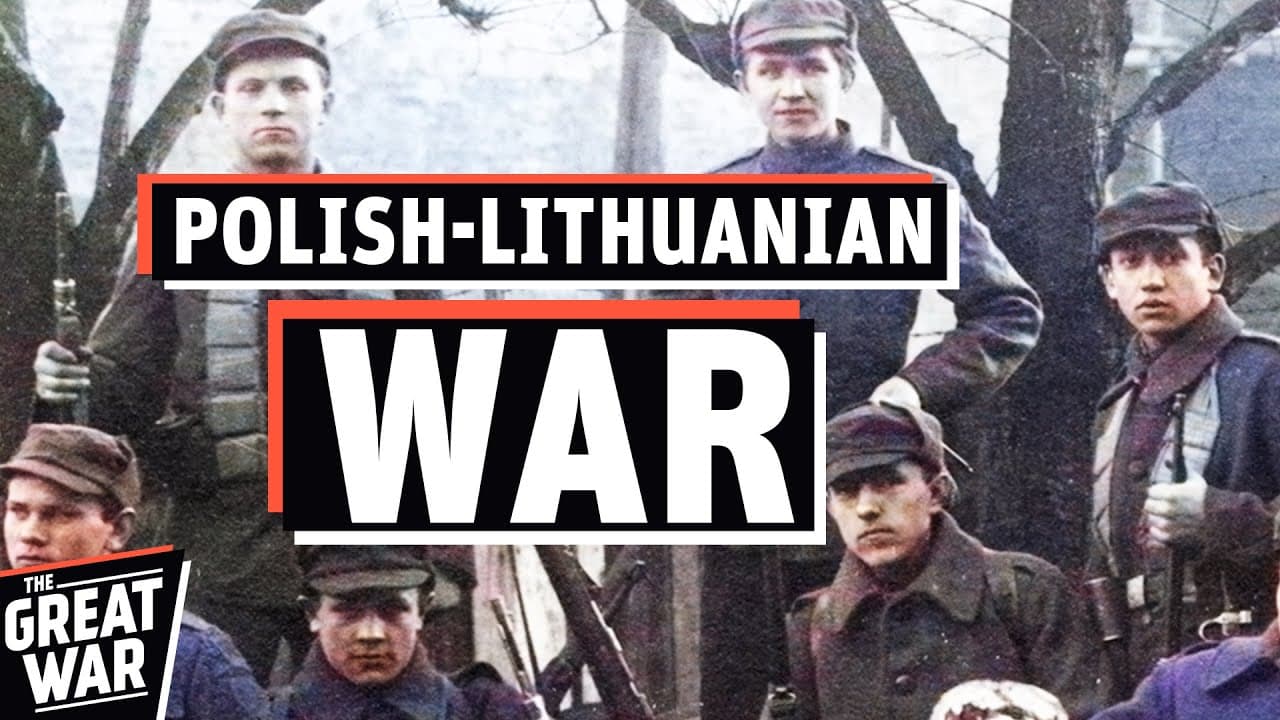
TL;DR
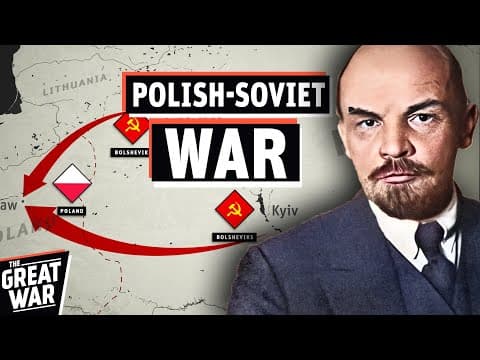
The Polish-Lithuanian War of 1919-1920 was a conflict over territorial disputes in Eastern Europe, particularly the city of Vilnius, amidst the larger Polish-Soviet War. Lithuania sought to reclaim its capital while navigating complex alliances and military challenges, ultimately losing Vilnius to Poland as geopolitical dynamics shifted.
Transcript
hi I'm Jesse Alexander and welcome to the Great War where we're once again filming in our emergency pandemic lockdown Studio here in my living room now by the summer of 1920 Eastern Europe was still in a state of flux the Border questions were open and Poland and Bolshevik Russia were locked in a war but this wasn't the only conflict in the region ... Read More
Key Insights
- Lithuania declared independence in 1918 amidst German occupation and the collapse of the Russian Empire.
- Vilnius, a city with a mixed ethnic population, was claimed by both Poland and Lithuania, leading to tensions.
- The Polish-Lithuanian War was intertwined with the Polish-Soviet War, complicating territorial claims.
- Poland's head of state, Józef Piłsudski, envisioned a federation including Lithuania, which was rejected.
- Lithuania's deal with Bolshevik Russia allowed Soviet troops to pass, complicating its neutrality claim.
- The Polish Army's victories in 1920 shifted the balance, leading to the occupation of Vilnius.
- The League of Nations intervened, but the region remained contested, with Vilnius under Polish control.
- The Treaty of Riga in 1921 defined Eastern European borders, impacting Lithuania's territorial ambitions.
Install to Summarize YouTube Videos and Get Transcripts
Explore YouTube Video Summarizer or Get YouTube Transcript Extractor
Questions & Answers
Q: How did Lithuania declare its independence in 1918?
Lithuania declared its independence in 1918 while still under German occupation, following the collapse of the Russian Empire. The Council of Lithuania proclaimed the restoration of an independent nation based on democratic foundations, emphasizing self-determination and separation from previous unions, particularly with Poland, despite ongoing geopolitical challenges.
Q: Why was Vilnius a contentious city between Poland and Lithuania?
Vilnius was contentious due to its mixed ethnic population and historical ties to both Poland and Lithuania. Despite being seen as Lithuania's capital, it had a significant Polish-speaking population and deep historical connections to Polish states, leading to competing nationalist claims and tensions between the two countries.
Q: What was Józef Piłsudski's proposal for a Polish-Lithuanian federation?
Józef Piłsudski proposed renewing the Polish-Lithuanian Commonwealth as a federation led by Poland, including Ukraine and Belarus. This idea was opposed by some Polish political factions and rejected by Lithuania, which prioritized historical arguments over contemporary nationality concepts, leading to further tensions.
Q: How did Lithuania's agreement with Bolshevik Russia affect its neutrality?
Lithuania's agreement with Bolshevik Russia, which allowed Soviet troops to pass through its territory to attack Poland, complicated its claim of neutrality in the Polish-Soviet War. This deal was seen by Poland as an anti-Polish alliance, though Lithuania viewed it as a desperate move to recover Vilnius as its capital.
Q: What were the outcomes of the Polish Army's victories in 1920?
The Polish Army's victories in 1920, particularly at Warsaw and the Neiman River, shifted the balance of power, leading to the occupation of Vilnius. Despite Lithuania's claims, Polish forces established control over the city, and the League of Nations' interventions failed to resolve the territorial dispute effectively.
Q: How did the Treaty of Riga affect Lithuania's territorial ambitions?
The Treaty of Riga, signed in 1921 between Poland and Bolshevik Russia, defined Eastern European borders, leaving Vilnius and Eastern Galicia under Polish control. This treaty impacted Lithuania's territorial ambitions, as it solidified Polish claims over disputed areas, complicating Lithuania's efforts to reclaim its perceived capital.
Q: What role did the League of Nations play in the Polish-Lithuanian conflict?
The League of Nations intervened in the Polish-Lithuanian conflict to prevent further hostilities and establish a neutral zone, keeping Vilnius under Polish control. However, the League's efforts to organize a plebiscite were largely ineffective, as both sides were reluctant to accept this solution, resulting in ongoing tensions.
Q: Why is the Polish-Soviet War considered significant in European history?
The Polish-Soviet War is considered significant because it prevented the spread of Bolshevism into Europe, though historians debate whether this threat was realistic. The war's outcome, solidified by the Treaty of Riga, shaped Eastern European borders and influenced geopolitical dynamics, affecting the region's stability and ethnic compositions.
Summary & Key Takeaways
-
Lithuania declared independence in 1918, facing territorial disputes with Poland over Vilnius, a city with mixed ethnic claims. The conflict was part of the broader Polish-Soviet War, complicating alliances and military strategies.
-
Poland's Józef Piłsudski proposed a federation with Lithuania, which was rejected, leading to military tensions. Despite Lithuania's neutrality claims, it made a deal with Bolshevik Russia, affecting its political stance.
-
The Polish Army's victories in 1920 led to the occupation of Vilnius, with the League of Nations intervening but unable to resolve the dispute. The Treaty of Riga in 1921 further impacted regional borders and Lithuania's ambitions.
Read in Other Languages (beta)
Share This Summary 📚
Summarize YouTube Videos and Get Video Transcripts with 1-Click
Try YouTube Summary with ChatGPT & Claude or YouTube Transcript Generator
Explore More Summaries from The Great War 📚

Summarize YouTube Videos and Get Video Transcripts with 1-Click
Try YouTube Summary with ChatGPT & Claude or YouTube Transcript Generator