Poland's Struggle for Independence During WW1 I THE GREAT WAR
TL;DR
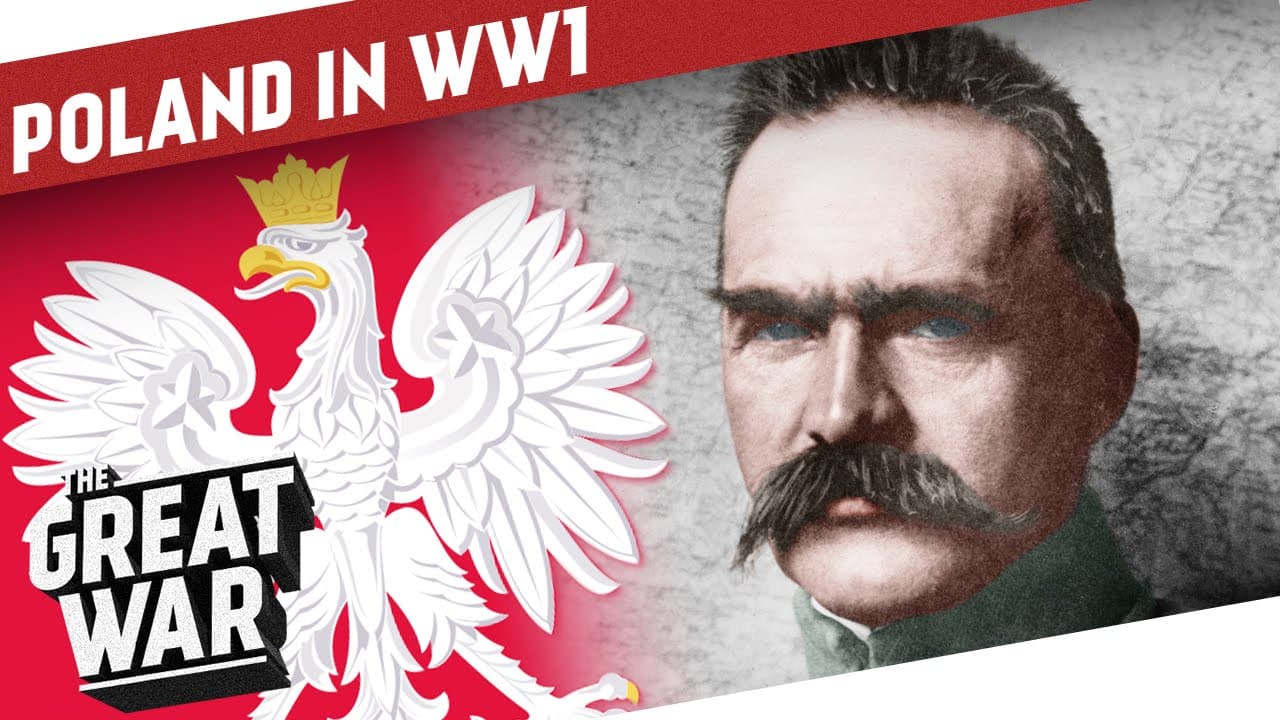
Poland's fight for independence during WW1 was complex and multifaceted.
Transcript
We talk a lot about what was going on in each of the warring countries in our regular episodes, but there are also nations without borders that we should look at to see their contributions and sufferings too. One such nation is the huge expanse of Poland. I’m Indy Neidell; welcome to a Great War Special episode about Poland in the First World War. ... Read More
Key Insights
- Poland was partitioned among Russia, Germany, and Austria-Hungary during WW1, leading to Poles serving in different armies, often against each other.
- The Eastern Front campaigns were largely fought on Polish lands, causing significant destruction and civilian casualties.
- Jozef Pilsudski believed active Polish participation in the war could lead to independence, forming Polish legions within the Austro-Hungarian army.
- Germany and Austria attempted to win Polish loyalty by establishing a nominal Polish kingdom in 1916, but it lacked real governance or defined borders.
- The Entente powers recognized a Polish National Committee in exile, boosting the Polish independence movement's legitimacy.
- Woodrow Wilson's 12 points included the reestablishment of Poland, influencing international support for Polish independence.
- By 1917, a provisional government formed in Poland, and by the armistice, a Polish Republic was established with Pilsudski as head of state.
- Poland's struggle for independence was marked by internal divisions and external manipulations, reflecting the complex geopolitical dynamics of WW1.
Install to Summarize YouTube Videos and Get Transcripts
Explore YouTube Video Summarizer or Get YouTube Transcript Extractor
Questions & Answers
Q: What was the status of Poland during World War 1?
During World War 1, Poland did not exist as a sovereign state. Its territory was divided among three empires: Russia, Germany, and Austria-Hungary. This division resulted in Poles serving in different armies, often against each other, and the Eastern Front campaigns being fought on Polish lands, causing significant destruction and civilian casualties.
Q: How did Jozef Pilsudski contribute to the Polish independence movement?
Jozef Pilsudski played a crucial role in the Polish independence movement during WW1. He believed that active Polish participation in the war could lead to independence. Pilsudski led the Galician Riflemen and formed Polish legions within the Austro-Hungarian army, aiming to liberate Russian-occupied Galicia. His efforts were instrumental in maintaining the momentum for Polish independence.
Q: What was the significance of the Two Kaisers Proclamation?
The Two Kaisers Proclamation in 1916 was an attempt by Germany and Austria to win Polish loyalty by establishing a nominal Polish kingdom. This proclamation created a hereditary Polish monarchy with a constitution but lacked a government or defined borders. It was largely seen as a puppet state for the Central Powers, but it marked a step towards recognizing Polish aspirations for sovereignty.
Q: How did the Entente powers support Polish independence?
The Entente powers supported Polish independence by recognizing a Polish National Committee in exile, which provided legitimacy to the Polish independence movement. Additionally, US President Woodrow Wilson's 12 points included the reestablishment of Poland, influencing international support for Polish sovereignty. This recognition and support were vital in the eventual establishment of an independent Polish state.
Q: What role did the provisional government play in Poland's path to independence?
The provisional government formed in Poland in 1917 played a significant role in the country's path to independence. It marked the beginning of a structured political framework within Poland, paving the way for the establishment of the Polish Republic after the armistice. This government, with Jozef Pilsudski as a key figure, was crucial in transitioning from occupation to sovereignty.
Q: How did Poland's geopolitical situation affect its independence movement?
Poland's geopolitical situation during WW1 was complex, with its territory divided among powerful neighboring empires. This division led to Poles being caught in the crossfire of conflicting interests and serving in opposing armies. Despite these challenges, Polish leaders navigated these dynamics to push for independence, ultimately achieving sovereignty through strategic alliances and international support.
Q: What challenges did Polish civilians face during the war?
Polish civilians faced immense challenges during WW1, as the Eastern Front campaigns were largely fought on Polish lands. This resulted in widespread destruction of property and significant civilian casualties. The constant shifting of control among the occupying armies further exacerbated the suffering of Polish civilians, who were caught in the crossfire of the war's devastation.
Q: How did international recognition impact the Polish independence movement?
International recognition significantly impacted the Polish independence movement by providing legitimacy and support. The Entente powers' recognition of the Polish National Committee in exile and Woodrow Wilson's inclusion of Poland's reestablishment in his 12 points were crucial. This recognition helped galvanize support for Polish sovereignty, ultimately leading to the establishment of an independent Polish state after the war.
Summary & Key Takeaways
-
During WW1, Poland was partitioned among three empires, leading to Poles fighting on multiple sides. This complex situation was marked by internal divisions and significant civilian suffering. Despite these challenges, Polish leaders like Jozef Pilsudski pushed for independence, forming military units and political committees to achieve this goal.
-
In 1916, Germany and Austria attempted to establish a Polish kingdom to gain Polish loyalty, but it was largely a puppet state without real power. The Entente powers later recognized a Polish National Committee, providing international support for the Polish independence movement.
-
By the end of the war, Poland was on the path to independence, with a provisional government forming in 1917 and a Polish Republic officially established after the armistice. The struggle involved navigating complex geopolitical dynamics and internal divisions, ultimately leading to a sovereign Polish state.
Read in Other Languages (beta)
Share This Summary 📚
Summarize YouTube Videos and Get Video Transcripts with 1-Click
Try YouTube Summary with ChatGPT & Claude or YouTube Transcript Generator
Explore More Summaries from The Great War 📚
Summarize YouTube Videos and Get Video Transcripts with 1-Click
Try YouTube Summary with ChatGPT & Claude or YouTube Transcript Generator