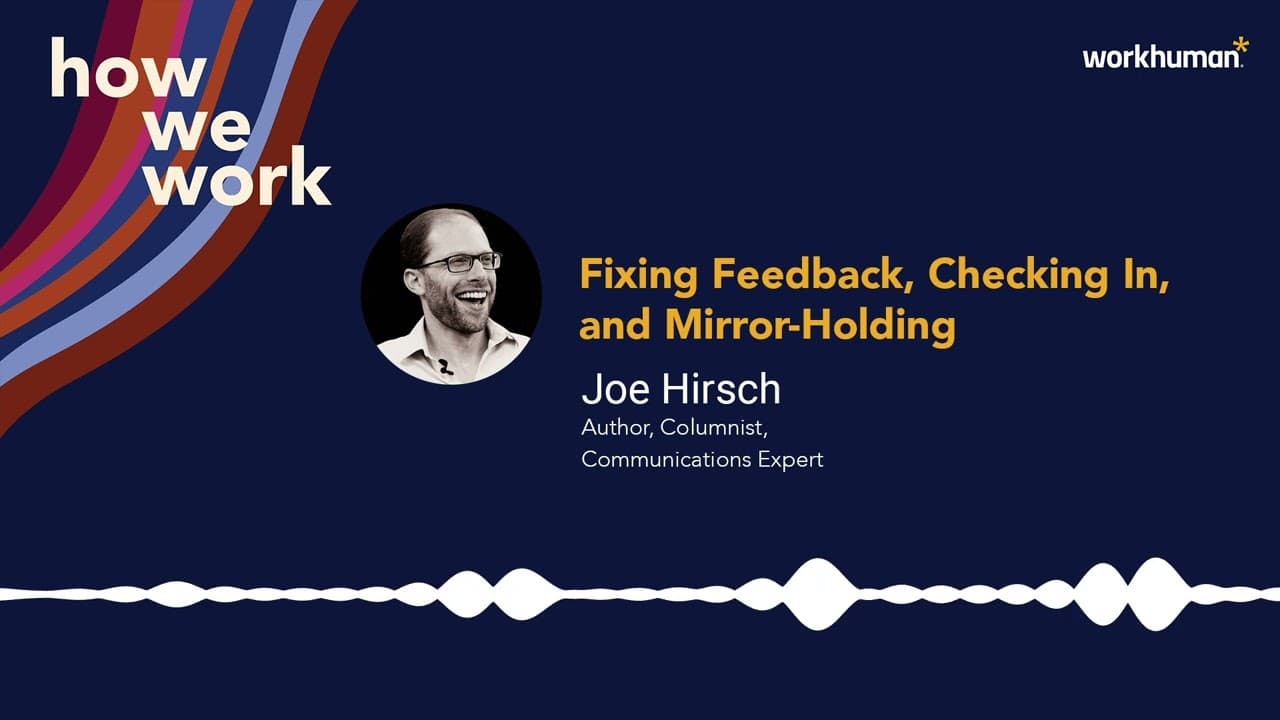
How We Work Podcast: Joe Hirsch on Fixing Feedback, Checking-in & Mirror Holding | Workhuman
TL;DR
Performance management and feedback have made a comeback, focusing on authentic conversations and empathy, leading to increased collaboration and connection in the workplace.
Transcript
welcome to how we work a podcast about the very real and very human dynamics that shape the way we work I'm your host Mike Lovett and this week we are talking about fixing Performance Management in a new world of work and to do that I am joined by one of the featured speakers of work human live he is the managing director of semica Partners the aut... Read More
Key Insights
- ❓ Feedback and performance management have evolved from focusing solely on messaging to prioritizing the impact and value of feedback.
- 🤩 Authentic conversations and empathy are key elements of a healthy feedback culture, fostering deeper connections and collaboration among employees.
- ⚾ Tailoring feedback based on expertise levels and individual needs promotes growth and development.
- ❓ Establishing a regular cadence for feedback conversations improves clarity and eliminates miscommunications.
- 🧑⚕️ Hybrid workers should receive greater attention and connection-building efforts from leaders to combat feelings of disconnection and stress.
- 💨 Vulnerability and courage are crucial in feedback conversations and can pave the way for more authentic and collaborative interactions.
- 💩 The "feedback rap" technique, which involves a structured approach to feedback conversations, helps create a safe and meaningful space for dialogue.
Install to Summarize YouTube Videos and Get Transcripts
Explore YouTube Video Summarizer or Get YouTube Transcript Extractor
Questions & Answers
Q: How has the focus on the impact and value of feedback improved workplace relationships?
By shifting from messaging to mattering, feedback has led to more candid, caring, and collaborative conversations, fostering stronger connections among employees regardless of their physical presence.
Q: How does feedback frequency and timing factor into its effectiveness?
While feedback cadence can vary among organizations, what matters most is the quality of feedback. Clear, candid, compassionate, and collaborative feedback that is delivered regularly helps eliminate miscommunications and keeps everyone on the same page.
Q: How can leaders be mindful of the pressures faced by hybrid workers?
Leaders should approach work with humility and curiosity, actively engaging in conversations with remote workers to understand their achievements, challenges, and needs. This promotes connection, engagement, and a sense of belonging.
Q: What are the benefits of creating a feedback culture rooted in authenticity and empathy?
Organizations that embrace authentic and empathetic feedback experience increased productivity, morale, engagement, and a sense of shared success among colleagues. It also leads to greater happiness and fulfillment at work.
Summary & Key Takeaways
-
Feedback has shifted from focusing solely on messaging to prioritizing the impact and value of feedback, leading to more candid and collaborative conversations.
-
The shift in feedback culture has resulted in a return to authentic conversations and a resurgence of empathy in the workplace, creating deeper connections among employees.
-
Tailoring feedback based on individuals' expertise level (expert or novice) and needs (progress or reassurance) promotes growth and development.
Read in Other Languages (beta)
Share This Summary 📚
Summarize YouTube Videos and Get Video Transcripts with 1-Click
Try YouTube Summary with ChatGPT & Claude or YouTube Transcript Generator
Explore More Summaries from How We Work Podcast 📚





Summarize YouTube Videos and Get Video Transcripts with 1-Click
Try YouTube Summary with ChatGPT & Claude or YouTube Transcript Generator