What Is VSEPR Theory and How Does It Predict Molecular Shapes?
TL;DR
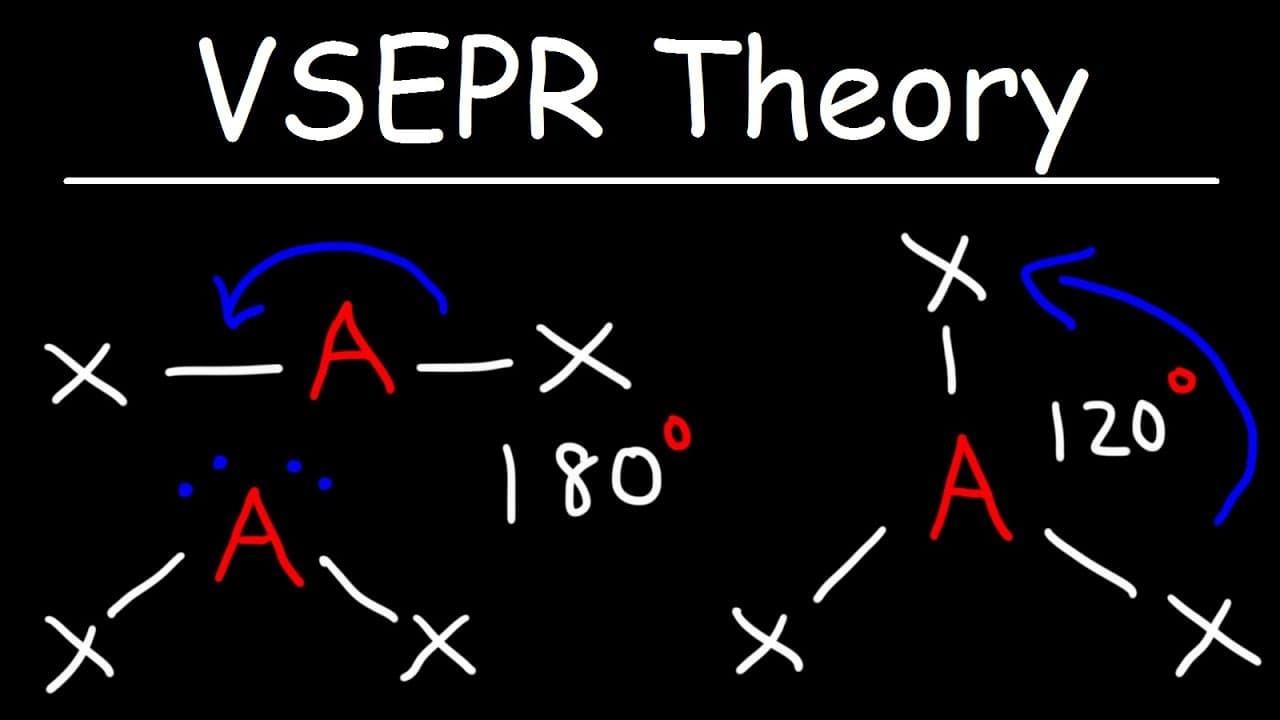
VSEPR theory predicts molecular shapes by stating that electron pairs repel each other, leading to specific geometries. For example, linear structures have a bond angle of 180 degrees, trigonal planar structures have an angle of 120 degrees, and tetrahedral structures have an angle of approximately 109.5 degrees. The presence of lone pairs can alter these angles and influence the overall molecular shape.
Transcript
in this video we're going to talk about a vespa theory and what it has to do with molecular geometry perhaps you've seen this word in your textbook it stands for valence shell electron pair repulsion and the basic idea is that we can predict the shape of the molecule based on the fact that electrons repel each other so electrons they want to be as ... Read More
Key Insights
- ⚾ VESPR theory predicts molecular geometry based on electron repulsion.
- 🔺 Linear molecules have a bond angle of 180 degrees.
- 🔺 Trigonal planar structures have a bond angle of 120 degrees, and tetrahedral structures have a bond angle of approximately 109.5 degrees.
- 🌀 The presence of lone pairs can affect the bond angles in molecular geometry.
- 🫀 Different atoms and combinations of atoms result in different molecular shapes.
- 👥 Group 3A elements tend to have trigonal planar structures, while group 5A elements tend to have trigonal pyramidal structures.
- 💦 Bent molecular structures, such as water, have bond angles less than 120 degrees.
Install to Summarize YouTube Videos and Get Transcripts
Explore YouTube Video Summarizer or Get YouTube Transcript Extractor
Questions & Answers
Q: What is VESPR theory and how does it predict molecular shapes?
VESPR theory states that electron pairs repel each other, causing them to arrange themselves in three-dimensional space. This arrangement determines the molecular shape.
Q: What is the bond angle for linear molecular geometry?
The bond angle for linear molecules is 180 degrees.
Q: Give an example of a molecule with a trigonal planar structure.
COCl2 is an example of a molecule with a trigonal planar structure. It has a carbon double bonded to an oxygen and attached to two chlorine atoms.
Q: What are the characteristics of a tetrahedral molecular structure?
A tetrahedral structure consists of an atom surrounded by four other atoms. The bond angle for tetrahedral structures is approximately 109.5 degrees.
Summary & Key Takeaways
-
VESPR theory predicts molecular shapes based on the repulsion between electron pairs.
-
Linear molecular geometry consists of a straight line with a bond angle of 180 degrees.
-
Trigonal planar structures are flat, with a bond angle of 120 degrees, and tetrahedral structures have a bond angle of approximately 109.5 degrees.
Read in Other Languages (beta)
Share This Summary 📚
Summarize YouTube Videos and Get Video Transcripts with 1-Click
Try YouTube Summary with ChatGPT & Claude or YouTube Transcript Generator
Explore More Summaries from The Organic Chemistry Tutor 📚





Summarize YouTube Videos and Get Video Transcripts with 1-Click
Try YouTube Summary with ChatGPT & Claude or YouTube Transcript Generator