Do Droughts Make Floods Worse?
TL;DR
Droughts can exacerbate floods due to hydrophobic soil effects.
Transcript
Do you remember the summer of 2022 when a record drought had gripped not only a large part of the United States, but most of Europe too? Reservoirs were empty, wildfires spread, crop yields dropped, and rivers ran dry. It seemed like practically the whole world was facing heatwaves and water shortages. But there was one video that warned agains... Read More
Key Insights
- Droughts can lead to hydrophobic soil conditions, which may initially repel water and exacerbate flooding.
- Soil moisture plays a crucial role in determining how much rainfall infiltrates the ground versus running off.
- Hydrologic models, like the Curve Number method, help engineers estimate flood risks based on soil and land conditions.
- Antecedent conditions, such as prior soil moisture levels, significantly influence runoff and flood severity.
- Fires can create hydrophobic soil layers, dramatically increasing flood risks due to reduced infiltration.
- While dry soil can increase infiltration, certain dry conditions can lead to increased runoff due to hydrophobic effects.
- Flood models often assume infiltration increases as soil moisture decreases, potentially overlooking hydrophobic soil effects.
- Understanding flood dynamics requires a combination of theoretical knowledge and practical experimentation.
Install to Summarize YouTube Videos and Get Transcripts
Explore YouTube Video Summarizer or Get YouTube Transcript Extractor
Questions & Answers
Q: How do drought conditions affect flooding?
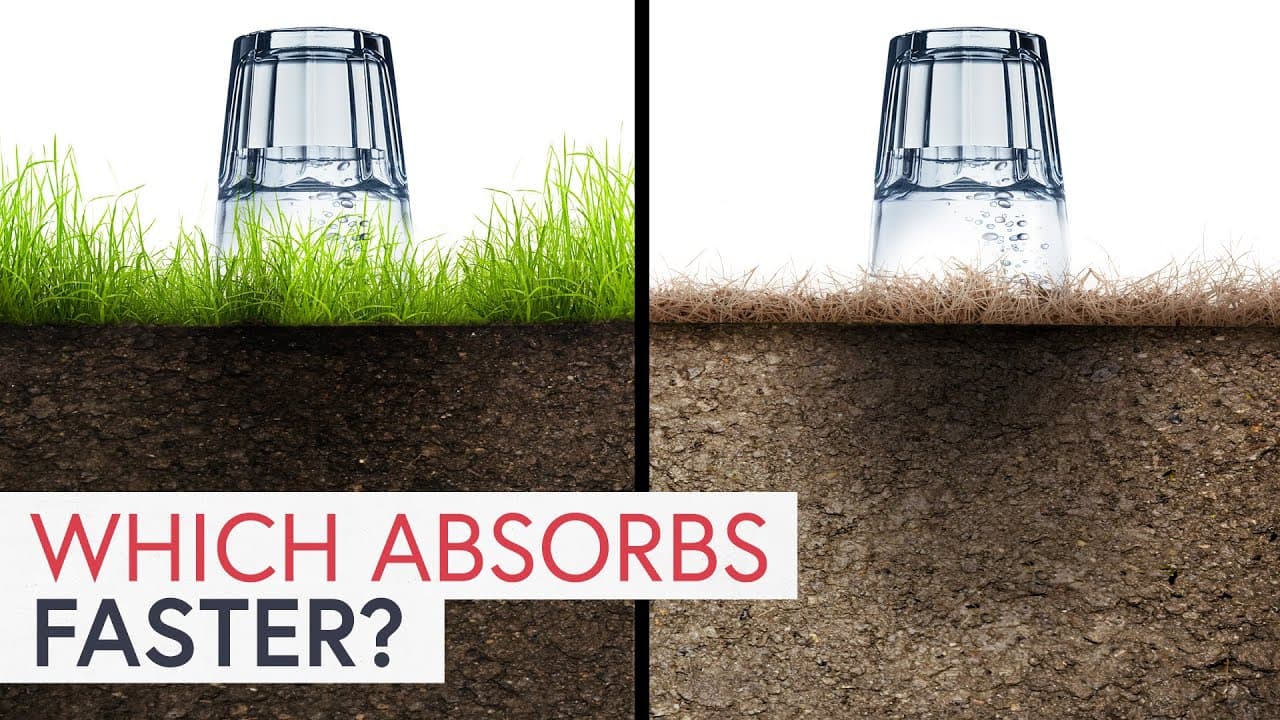
Drought conditions can lead to soil becoming hydrophobic, meaning it repels water, which can exacerbate flooding when rain eventually falls. This is because the water is less able to infiltrate the soil, leading to increased runoff and potentially more severe flooding.
Q: What role does soil moisture play in flood dynamics?
Soil moisture is a critical factor in flood dynamics, as it influences how much rainwater can infiltrate the ground versus running off. Wet soil absorbs less additional water, leading to more runoff, while dry soil generally absorbs more, unless it becomes hydrophobic.
Q: What is the Curve Number method used for?
The Curve Number method is used by engineers to estimate infiltration rates and predict flood risks. Developed by the Soil Conservation Service, it ties infiltration rates to soil types and land uses, providing a practical and straightforward approach for hydrologic modeling.
Q: How do antecedent conditions affect flooding?
Antecedent conditions, such as the soil's moisture level before a storm, significantly affect flooding. Wet soil leads to more runoff and potentially severe flooding, while dry soil typically absorbs more rain, unless it becomes hydrophobic, which can increase runoff.
Q: Why can soil become hydrophobic during droughts?
During droughts, certain soils can become hydrophobic due to the accumulation of waxes, plant root excretions, and microbial actions that create a surface layer repelling water. This condition is more pronounced in very dry soils and can temporarily reduce water infiltration.
Q: How do fires influence flood risks?
Fires can significantly increase flood risks by creating hydrophobic soil layers that reduce infiltration and increase runoff. The loss of vegetation further exacerbates this effect, leading to higher potential for floods, mudslides, and erosion following rainfall.
Q: What limitations exist in current flood models?
Current flood models often assume infiltration increases as soil moisture decreases, which may overlook hydrophobic effects in very dry soils. Additionally, models may not fully account for the complex interactions of factors like fires or extreme antecedent conditions.
Q: Why is practical experimentation important in understanding floods?
Practical experimentation is crucial because it allows for observation and testing of theoretical concepts in real-world scenarios. It helps validate models and provides insights into complex phenomena like hydrophobic soil effects, which are not easily captured in theoretical models alone.
Summary & Key Takeaways
-
The video explores the complex relationship between droughts and floods, highlighting how dry soil can sometimes exacerbate flooding due to hydrophobic conditions. It also discusses how engineers use models to predict flood behavior based on soil and land conditions.
-
Hydrologic models, such as the Curve Number method, are essential tools for engineers to estimate flood risks. These models take into account various factors, including soil type, vegetation, and antecedent conditions, to predict how rainfall will infiltrate or runoff.
-
The video emphasizes that while dry soil typically increases infiltration, certain conditions can lead to hydrophobic soil, which repels water and increases runoff. This phenomenon is particularly significant after fires, which can create hydrophobic layers that reduce soil's water absorption capacity.
Read in Other Languages (beta)
Share This Summary 📚
Summarize YouTube Videos and Get Video Transcripts with 1-Click
Try YouTube Summary with ChatGPT & Claude or YouTube Transcript Generator
Explore More Summaries from Practical Engineering 📚





Summarize YouTube Videos and Get Video Transcripts with 1-Click
Try YouTube Summary with ChatGPT & Claude or YouTube Transcript Generator