American Firearms - Machine Guns of WW1 I THE GREAT WAR Live feat. C&Rsenal
TL;DR
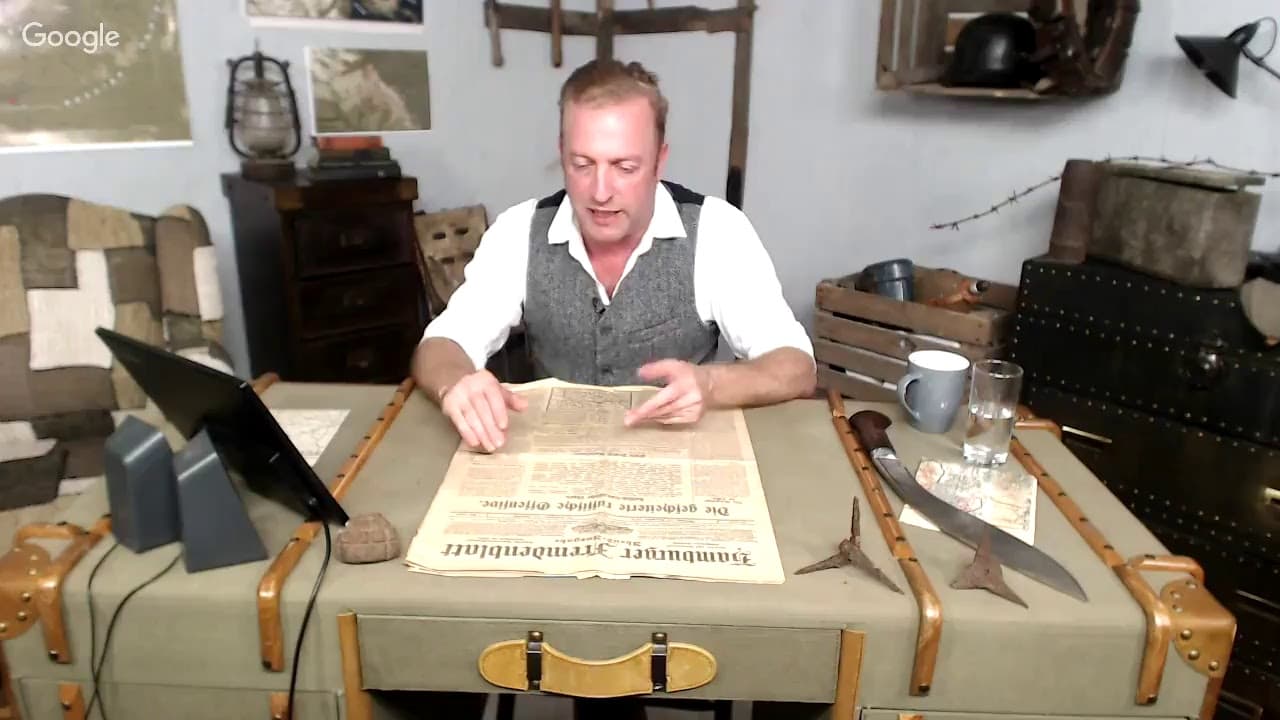
Exploration of American machine guns used during WW1.
Transcript
and I gotta hit play on that string yeah hit record on audio we are alive are they like clap alright no this doughnuts opinion yes of course I just tell me I know thighs just tell me when to go we're recording on okay I got both we're good to go okay yeah wait let me doubled your audio still good red light absolutely certain it's going who's accoun... Read More
Key Insights
- The US Model 1911 was a standard issue handgun known for its stopping power, despite its heavy recoil.
- The Colt New Army revolver was less common but notable for its mechanical issues, affecting its reliability.
- The Springfield 1903 rifle, derived from the Mauser, was highly favored for its accuracy and strength.
- The US Model 1917 rifle was more common than the Springfield 1903, known for its heavy build and accuracy.
- Shotguns like the Remington Model 10 were used but faced issues with paper cartridges swelling in trench conditions.
- The Lewis gun was a light machine gun favored for its air-cooled design and portability, used effectively in assaults.
- The MP 18.1 was among the first submachine guns, used by German forces in 1918 for close-quarters combat.
- Aircraft machine guns were modified versions of ground models, adapted for aerial use with cooling modifications.
Install to Summarize YouTube Videos and Get Transcripts
Explore YouTube Video Summarizer or Get YouTube Transcript Extractor
Questions & Answers
Q: What was the main advantage of the US Model 1911?
The US Model 1911 was primarily valued for its stopping power, using a .45 ACP cartridge. Despite its heavy recoil, it was appreciated for its reliability and effectiveness in combat. Its design was ahead of its time, remaining in service with minimal modifications for many years.
Q: How did the Springfield 1903 compare to other rifles of the era?
The Springfield 1903 was a highly accurate and strong rifle, derived from the Mauser design. It featured a powerful 30-06 cartridge and was favored for its precision and reliability. It was considered superior to many contemporary rifles, although it wasn't the most common US rifle in WW1.
Q: What issues did the Colt New Army revolver face?
The Colt New Army revolver had mechanical issues related to its timing, where the cylinder could rotate out of alignment with the barrel. This led to reliability concerns, as misalignment could cause metal shaving or even detonation issues, making it less favored in combat situations.
Q: Why were shotguns not widely used in WW1 trenches?
Shotguns faced significant issues in WW1 trenches due to the use of paper cartridges, which would swell in the wet, muddy conditions, causing jams. Although effective in close combat, these reliability issues limited their widespread use, despite their potential effectiveness.
Q: What made the Lewis gun effective in WW1?
The Lewis gun was effective due to its air-cooled design, allowing for portability and ease of use in assaults. It was used to provide suppressive fire during attacks and was favored for its reliability and ability to be operated by a single soldier or a small crew.
Q: What was significant about the MP 18.1?
The MP 18.1 was one of the first submachine guns, introduced by Germany in 1918. It was designed for close-quarters combat, firing 9mm Parabellum rounds. Its introduction marked a significant development in infantry weapons, offering high rates of fire in a compact, portable design.
Q: How were machine guns adapted for aircraft use?
Machine guns adapted for aircraft use were typically modified to be air-cooled, with water jackets removed or perforated for airflow. These adaptations reduced weight and allowed the guns to function effectively in the high-speed, windy conditions of aerial combat, ensuring reliable operation.
Q: What was the role of the US Model 1917 rifle in WW1?
The US Model 1917 rifle was the most common American rifle in WW1, outnumbering the Springfield 1903. It was appreciated for its accuracy and heavy build, making it reliable in combat. It featured a rear aperture sight, which improved target acquisition and firing accuracy for soldiers.
Summary & Key Takeaways
-
The discussion covers various American firearms used during WW1, focusing on their design, usage, and effectiveness.
-
The US Model 1911 handgun was praised for its stopping power, while the Springfield 1903 and Model 1917 rifles were noted for their accuracy.
-
Challenges with shotgun ammunition in trench warfare were highlighted, alongside the introduction of submachine guns like the MP 18.1.
Read in Other Languages (beta)
Share This Summary 📚
Summarize YouTube Videos and Get Video Transcripts with 1-Click
Try YouTube Summary with ChatGPT & Claude or YouTube Transcript Generator
Explore More Summaries from The Great War 📚



Summarize YouTube Videos and Get Video Transcripts with 1-Click
Try YouTube Summary with ChatGPT & Claude or YouTube Transcript Generator