Irish War of Independence - WW1 Veterans In A New Battle (Documentary)
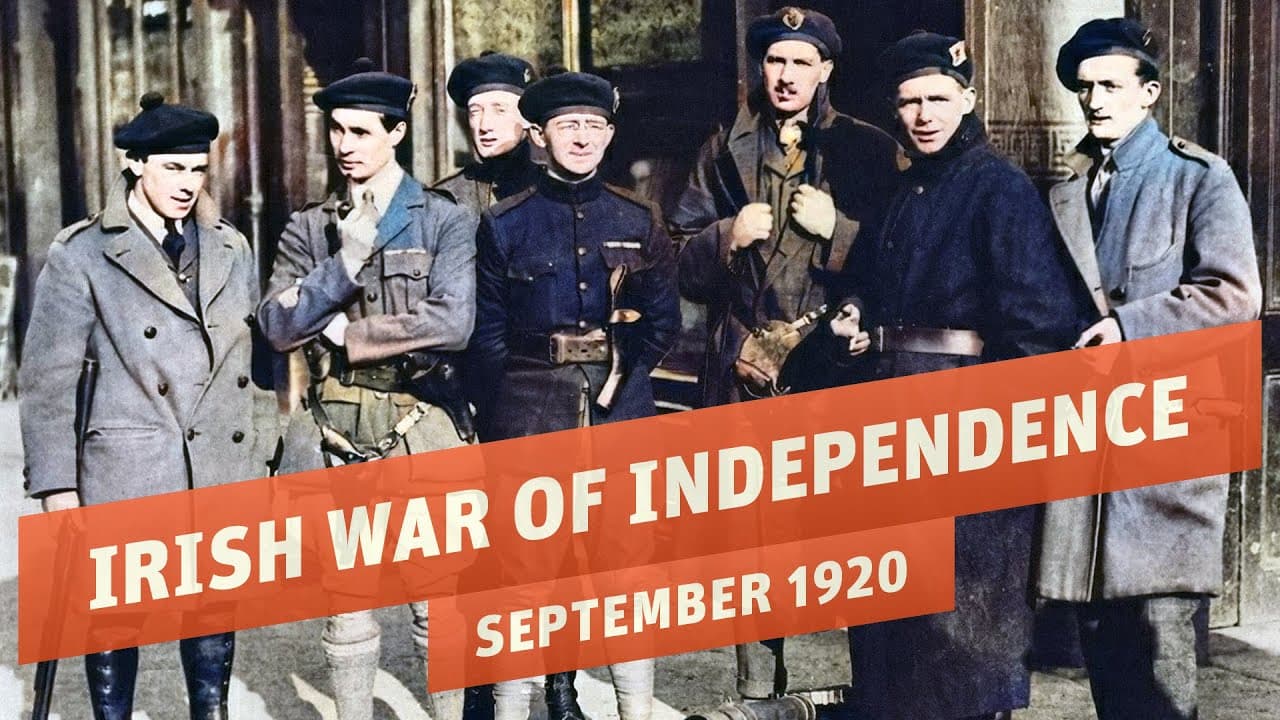
TL;DR
The Irish War of Independence intensified with British veterans' involvement in 1920.
Transcript
By mid-1920, the Irish War of Independence had been going on for the better part of two years. The political fight for Irish independence was led by Sinn Fein, while the guerilla campaign against Britain was carried out by the Irish Republican Army. The British had at first relied on the Royal Irish Constabulary police force to maintain order, but ... Read More
Key Insights
- The Irish War of Independence saw Sinn Fein leading politically and the IRA engaging in guerrilla warfare against British forces.
- The British introduced the Black and Tans, and later the Auxiliary Division, composed of WW1 veterans, to suppress the Irish rebellion.
- Sinn Fein established a shadow government in rural areas, challenging British authority with republican courts and police.
- The British underestimated the IRA's sophistication, viewing them as mere 'murder gangs,' which hindered effective countermeasures.
- The Auxiliary Division, though initially seen as a solution, faced discipline and morale issues, with many veterans resorting to heavy drinking.
- Reprisals by British forces against Irish civilians increased, leading to further support for the IRA and Sinn Fein propaganda.
- Sectarian violence in Ulster highlighted the divide between Protestant unionists and Catholic republicans, complicating the conflict.
- Despite British optimism in late 1920, the conflict's complexity and civilian impact foreshadowed continued unrest and violence.
Install to Summarize YouTube Videos and Get Transcripts
Explore YouTube Video Summarizer or Get YouTube Transcript Extractor
Questions & Answers
Q: What role did the Black and Tans play in the Irish War of Independence?
The Black and Tans were a British paramilitary force introduced to suppress the Irish independence movement. Composed mainly of WW1 veterans, they were notorious for their brutal tactics and reprisals against civilians, which ultimately increased support for the IRA and intensified the conflict.
Q: How did Sinn Fein establish a shadow government?
Sinn Fein capitalized on the British withdrawal from rural areas to set up a parallel government. They established republican courts, police patrols, and taxation systems, effectively challenging British authority and demonstrating their ability to govern independently, which bolstered their legitimacy among Irish citizens.
Q: What challenges did the Auxiliary Division face?
The Auxiliary Division, formed to support the Black and Tans, faced significant challenges, including poor discipline and low morale. Many recruits, disillusioned WW1 veterans, engaged in heavy drinking due to inadequate logistical preparations and a lack of command structure, undermining their effectiveness in countering the IRA.
Q: How did reprisals affect the civilian population?
Reprisals by British forces against civilians, intended to punish communities for supporting the IRA, often involved destroying homes and businesses. These actions, perceived as indiscriminate and unjust, fueled resentment against the British, increasing sympathy for the republican cause and complicating efforts to restore order.
Q: What was the impact of sectarian tensions in Ulster?
In Ulster, sectarian tensions between Protestant unionists and Catholic republicans exacerbated the conflict. The formation of the Ulster Volunteer Force and retaliatory violence against Catholic communities highlighted the deep-rooted divisions, complicating the broader struggle for Irish independence and foreshadowing future conflicts in the region.
Q: Why did the British underestimate the IRA?
The British government underestimated the IRA due to a perception that they were disorganized 'murder gangs.' This view led to inadequate counterinsurgency strategies and a failure to recognize the IRA's sophisticated tactics and widespread support, which hindered British efforts to suppress the independence movement effectively.
Q: How did the IRA use propaganda to their advantage?
The IRA skillfully used British reprisals as propaganda, portraying them as an organized campaign of murder and destruction. This narrative resonated with the Irish population, increasing support for the republican cause and undermining British legitimacy, as even moderate nationalists began to sympathize with Sinn Fein and the IRA.
Q: What were the British authorities' views on the conflict's progress by late 1920?
By late 1920, British authorities were cautiously optimistic, believing that the Auxiliary Division's efforts were gaining control over republican areas. However, this confidence was fragile, as the complex dynamics of civilian reprisals, IRA intimidation, and sectarian tensions indicated that a resolution to the conflict was not yet in sight.
Summary & Key Takeaways
-
By 1920, the Irish War of Independence had escalated with the introduction of the Black and Tans and the Auxiliary Division, composed of WW1 veterans. These forces struggled with discipline and morale, failing to regain control over the increasingly sophisticated IRA and Sinn Fein's shadow government.
-
The conflict saw increased violence against civilians, with British forces conducting reprisals that inadvertently bolstered support for the IRA. The situation was further complicated by sectarian tensions in Ulster, where Protestant unionists and Catholic republicans clashed.
-
Despite some British optimism about regaining control, the complex dynamics of the conflict, including civilian reprisals and IRA intimidation, suggested that a resolution was far from imminent. The struggle for Irish independence continued to be marked by violence and political maneuvering.
Read in Other Languages (beta)
Share This Summary 📚
Summarize YouTube Videos and Get Video Transcripts with 1-Click
Try YouTube Summary with ChatGPT & Claude or YouTube Transcript Generator
Explore More Summaries from The Great War 📚

Summarize YouTube Videos and Get Video Transcripts with 1-Click
Try YouTube Summary with ChatGPT & Claude or YouTube Transcript Generator