Stopping Forest Fires from Space
TL;DR
Salo Sciences uses tech to assess forest fire risks.
Transcript
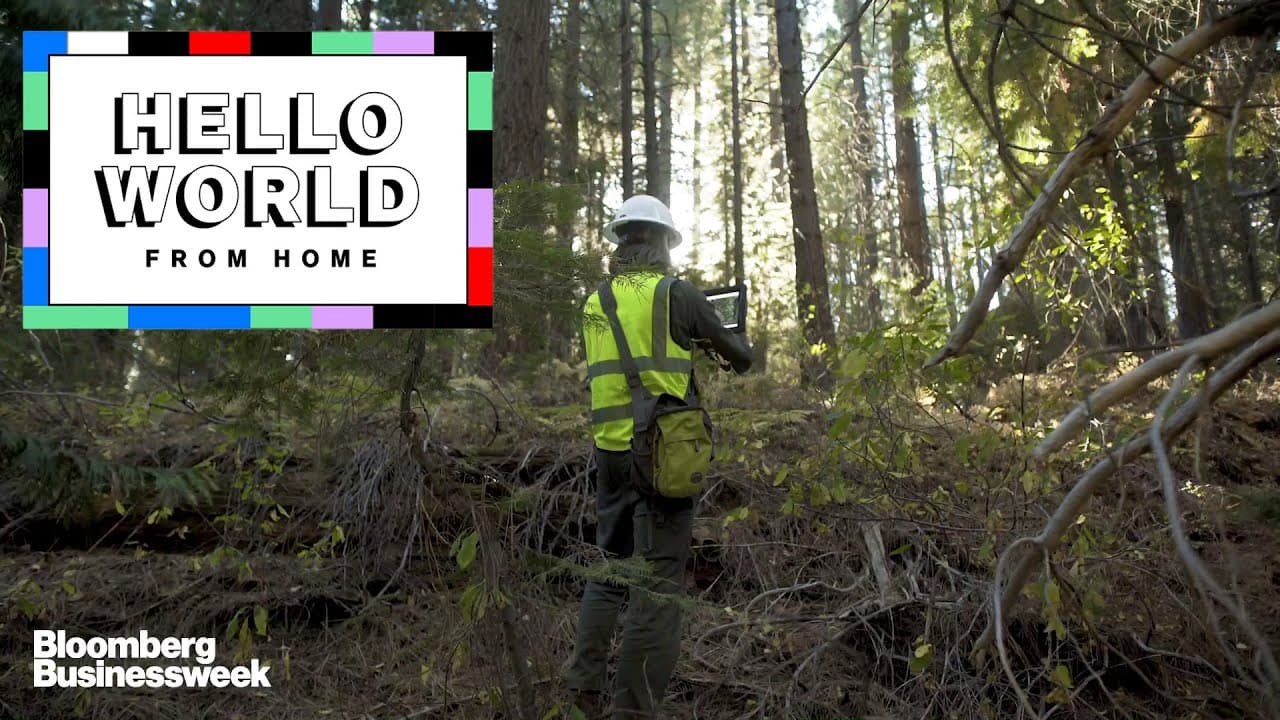
Okay, I am here in Northern California at home where objects like this air quality meter, and this respirator have sadly become pretty common household objects. The fires have been raging in California and the West more broadly for many weeks and destroying homes and people's lives, and ruining the air quality for the rest of us in the process, whi... Read More
Key Insights
- Salo Sciences is leveraging satellite imagery and AI to monitor forest health and predict fire risks, offering a modern solution to an age-old problem.
- The company was founded by forest ecologists who saw the need to apply cutting-edge technology to operationalize nature-based climate solutions.
- Their Forest Observatory uses high-resolution satellite data and deep learning to map and monitor California's landscapes, focusing on wildfire risk areas.
- Recent technological advances, including satellite constellations, affordable cloud computing, and AI, enable comprehensive earth monitoring at an unprecedented scale.
- Salo Sciences' technology helps identify 'ladder fuels' in dense forests, which can exacerbate fires, and guides forest restoration efforts to mitigate such risks.
- The company has created the California Forest Observatory, which provides high-resolution maps to aid in understanding and managing wildfire risks.
- Deep learning allows for scalable application of their models to other regions, such as Australia, with minor adjustments to account for local variations.
- Successful implementation of this technology requires supportive policies and funding to ensure practical, on-the-ground impact in combating climate change.
Install to Summarize YouTube Videos and Get Transcripts
Explore YouTube Video Summarizer or Get YouTube Transcript Extractor
Questions & Answers
Q: How does Salo Sciences use technology to prevent forest fires?
Salo Sciences employs satellite imagery, computer vision, and AI algorithms to assess forest health and predict fire risks. Their technology maps and monitors landscapes to identify areas with high fire risks, aiding in forest management and restoration efforts to prevent catastrophic fires.
Q: What inspired the founding of Salo Sciences?
Salo Sciences was founded by forest ecologists who recognized the need to bring cutting-edge technology out of academia and into practical use. They aimed to operationalize nature-based climate solutions, such as reforestation and land conservation, to combat climate change effectively.
Q: What is the California Forest Observatory?
The California Forest Observatory is a system developed by Salo Sciences using satellite data and deep learning. It provides high-resolution maps of California's landscapes, focusing on wildfire risks, and helps guide restoration efforts by identifying areas with dense 'ladder fuels' that can exacerbate fires.
Q: What technological advancements have enabled Salo Sciences' work?
Salo Sciences' work is facilitated by advancements in satellite constellations, affordable cloud computing, and artificial intelligence. These developments allow for comprehensive monitoring of forest health and fire risks at a large scale, providing valuable insights for forest management.
Q: How does Salo Sciences' technology help in forest restoration?
Their technology identifies dense forest areas with 'ladder fuels' that can worsen fires. By mapping these areas, Salo Sciences aids in planning and executing forest restoration efforts, reducing the potential for catastrophic fires and promoting healthier, more resilient forests.
Q: Can Salo Sciences' models be applied to other regions?
Yes, their models are adaptable to other regions like Australia. While initial training is extensive, the deep learning models can be tweaked to local conditions, allowing for scalable application and effective monitoring of forest health and fire risks globally.
Q: What role do policies play in implementing Salo Sciences' technology?
Policies are crucial for the successful implementation of Salo Sciences' technology. Supportive policies and funding are needed to translate technological insights into practical actions, ensuring on-the-ground impact in forest management and climate change mitigation efforts.
Q: What challenges remain in tackling climate change despite technological advancements?
Despite technological advancements, significant challenges remain, such as the need for systemic global changes and collective decisions across nations and communities. Policies, funding, and collaborative efforts are essential to address climate change effectively and implement technological solutions at scale.
Summary & Key Takeaways
-
Salo Sciences, a San Francisco start-up, uses satellite imagery and AI to assess forest health and predict fire risks. Their technology aims to modernize forest management and reduce wildfire incidences by providing detailed insights into forest conditions and potential danger zones.
-
Founded by forest ecologists, Salo Sciences launched the California Forest Observatory, utilizing satellite data and deep learning to map and monitor state landscapes. This helps identify areas with high fire risks and guides restoration efforts to prevent catastrophic fires.
-
Recent advances in technology, such as satellite constellations and affordable cloud computing, have enabled Salo Sciences to offer scalable solutions for forest fire prevention. Their models can be adapted for other regions, but successful implementation requires supportive policies and funding.
Read in Other Languages (beta)
Share This Summary 📚
Summarize YouTube Videos and Get Video Transcripts with 1-Click
Try YouTube Summary with ChatGPT & Claude or YouTube Transcript Generator
Explore More Summaries from Bloomberg Originals 📚





Summarize YouTube Videos and Get Video Transcripts with 1-Click
Try YouTube Summary with ChatGPT & Claude or YouTube Transcript Generator