How Does Pregnancy Progress from Zygote to Birth?
TL;DR
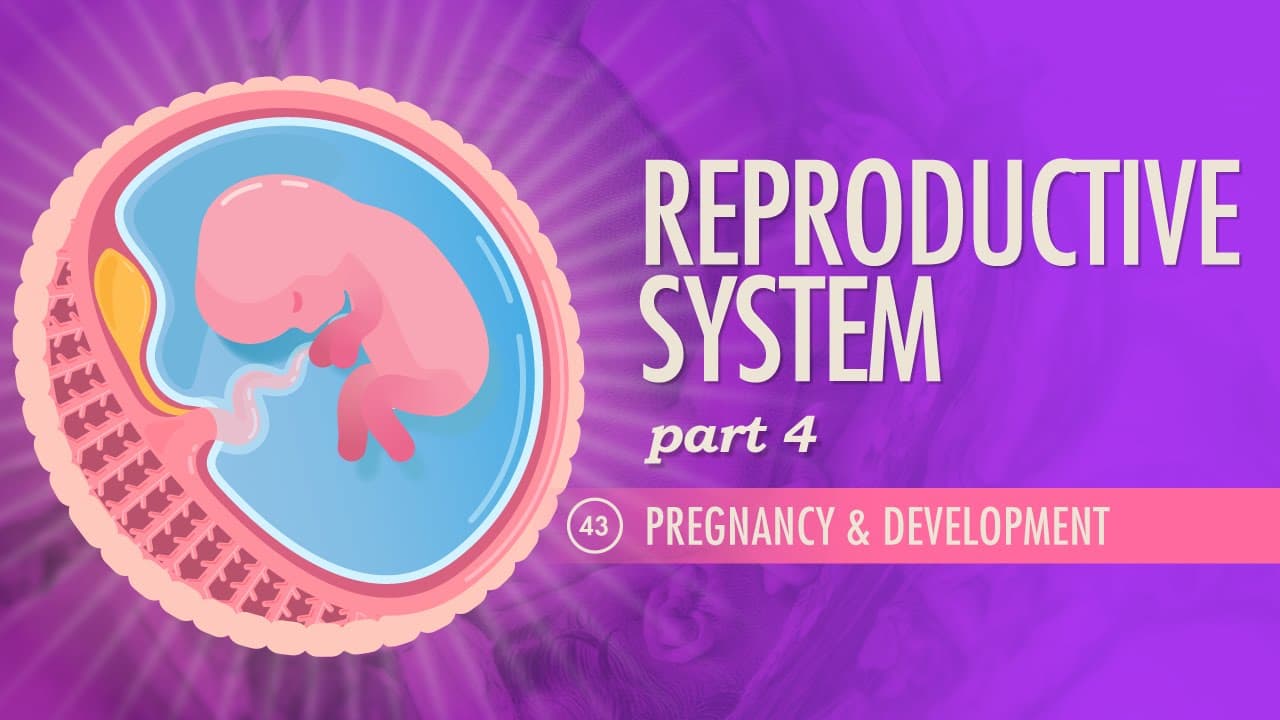
Pregnancy begins with a zygote that undergoes division, differentiation, and development, eventually forming a fetus. Hormones play a crucial role in nurturing and supporting the embryo, leading to significant anatomical changes in the mother. Labor is initiated by hormonal changes, resulting in the birth of a baby after approximately 38 to 40 weeks.
Transcript
You were once the size of the head of a pin. Let’s just start out with that. Two millimeters. At the most. And today -- I don’t know you, but I’m assuming that you’re a lot larger than that. Many, many pin-heads from head to toe. Assuming the average human is about 1.7 meters, it’s safe to say that you’re about 850 times taller than when you starte... Read More
Key Insights
- Pregnancy begins with the formation of a zygote, which divides into blastomeres, forming a morula and then a blastocyst.
- The blastocyst implants into the uterine wall, establishing hormonal control for continued development.
- Hormones like hCG, estrogen, and progesterone are vital for maintaining pregnancy and supporting the embryo.
- The placenta forms as a temporary organ, facilitating nutrient and waste exchange between mother and fetus.
- Significant anatomical changes occur in the mother, including increased blood volume and uterus expansion.
- Labor is initiated by a decrease in progesterone and an increase in estrogen, leading to uterine contractions.
- Oxytocin and prostaglandins play key roles in stimulating and sustaining labor contractions.
- The stages of labor include dilation, expulsion, and placental delivery, culminating in childbirth.
Install to Summarize YouTube Videos and Get Transcripts
Explore YouTube Video Summarizer or Get YouTube Transcript Extractor
Questions & Answers
Q: How does a zygote develop during early pregnancy?
A zygote begins development through a process called cleavage, where it divides into smaller cells known as blastomeres. These cells form a morula, which then becomes a blastocyst. The blastocyst consists of trophoblast cells and an inner cell mass, eventually implanting in the uterine wall to continue development into an embryo.
Q: What role do hormones play in pregnancy?
Hormones are crucial in pregnancy, regulating the development and maintenance of the embryo. Human chorionic gonadotropin (hCG) signals the corpus luteum to produce estrogen and progesterone, which sustain the uterine lining and prevent menstruation. Hormones also trigger changes in the mother's body to support the growing fetus and initiate labor.
Q: What is the function of the placenta during pregnancy?
The placenta is a temporary organ that forms during pregnancy, facilitating the exchange of nutrients, oxygen, and waste between the mother and fetus. It produces hormones like estrogen and progesterone, which support fetal development and prepare the mother's body for labor. The placenta also helps regulate the fetal environment, ensuring optimal growth conditions.
Q: How does labor begin and progress?
Labor begins with a hormonal shift, where progesterone levels decrease and estrogen levels increase, allowing uterine contractions. Oxytocin and prostaglandins further stimulate contractions, leading to the stages of labor: dilation of the cervix, expulsion of the baby, and delivery of the placenta. This process ensures the safe birth of the baby.
Q: What anatomical changes occur in a pregnant woman?
Pregnancy causes significant anatomical changes, including the expansion of the uterus to accommodate the growing fetus. Blood volume increases by up to 40%, supporting increased metabolic demands. The mother's body also produces hormones like relaxin, which loosens joints and ligaments, and human placental lactogen, which prepares the breasts for lactation.
Q: How does the blastocyst implant in the uterus?
The blastocyst implants in the uterus by attaching to the endometrial lining, facilitated by hormonal signals, primarily estrogen and progesterone. These hormones prepare the uterine lining to receive the blastocyst, allowing trophoblast cells to bind to the uterine wall. Successful implantation is crucial for establishing a nutrient-rich environment for the developing embryo.
Q: What is the role of oxytocin in childbirth?
Oxytocin is a hormone that plays a key role in initiating and sustaining uterine contractions during childbirth. It binds to receptors on uterine muscle cells, enhancing their ability to contract. Oxytocin also stimulates the release of prostaglandins, which further strengthen contractions, creating a positive feedback loop that progresses labor and facilitates delivery.
Q: What are the stages of labor and delivery?
Labor is divided into three stages: dilation, expulsion, and placental delivery. Dilation involves the cervix opening to about 10 centimeters. Expulsion is when the baby is pushed through the birth canal. The final stage, placental delivery, occurs when the placenta is expelled from the uterus. Each stage is crucial for the safe delivery of the baby.
Summary & Key Takeaways
-
Pregnancy progresses from a zygote to a blastomere, morula, blastocyst, embryo, and finally a fetus. Hormones like hCG, estrogen, and progesterone are crucial for development and maintaining pregnancy. Significant anatomical changes occur in the mother, including increased blood volume and uterus expansion, to support the growing fetus.
-
Labor begins with a decrease in progesterone and an increase in estrogen, leading to uterine contractions. Oxytocin and prostaglandins further stimulate labor, resulting in the stages of dilation, expulsion, and placental delivery. This hormonal sequence ensures the successful birth of a baby after approximately 38 to 40 weeks.
-
The placenta, a temporary organ formed during pregnancy, facilitates the exchange of nutrients and waste between mother and fetus. It plays a crucial role in sustaining pregnancy and supporting fetal development. The mother's body undergoes profound changes to accommodate and nurture the growing fetus until birth.
Read in Other Languages (beta)
Share This Summary 📚
Summarize YouTube Videos and Get Video Transcripts with 1-Click
Try YouTube Summary with ChatGPT & Claude or YouTube Transcript Generator
Explore More Summaries from CrashCourse 📚




Summarize YouTube Videos and Get Video Transcripts with 1-Click
Try YouTube Summary with ChatGPT & Claude or YouTube Transcript Generator